
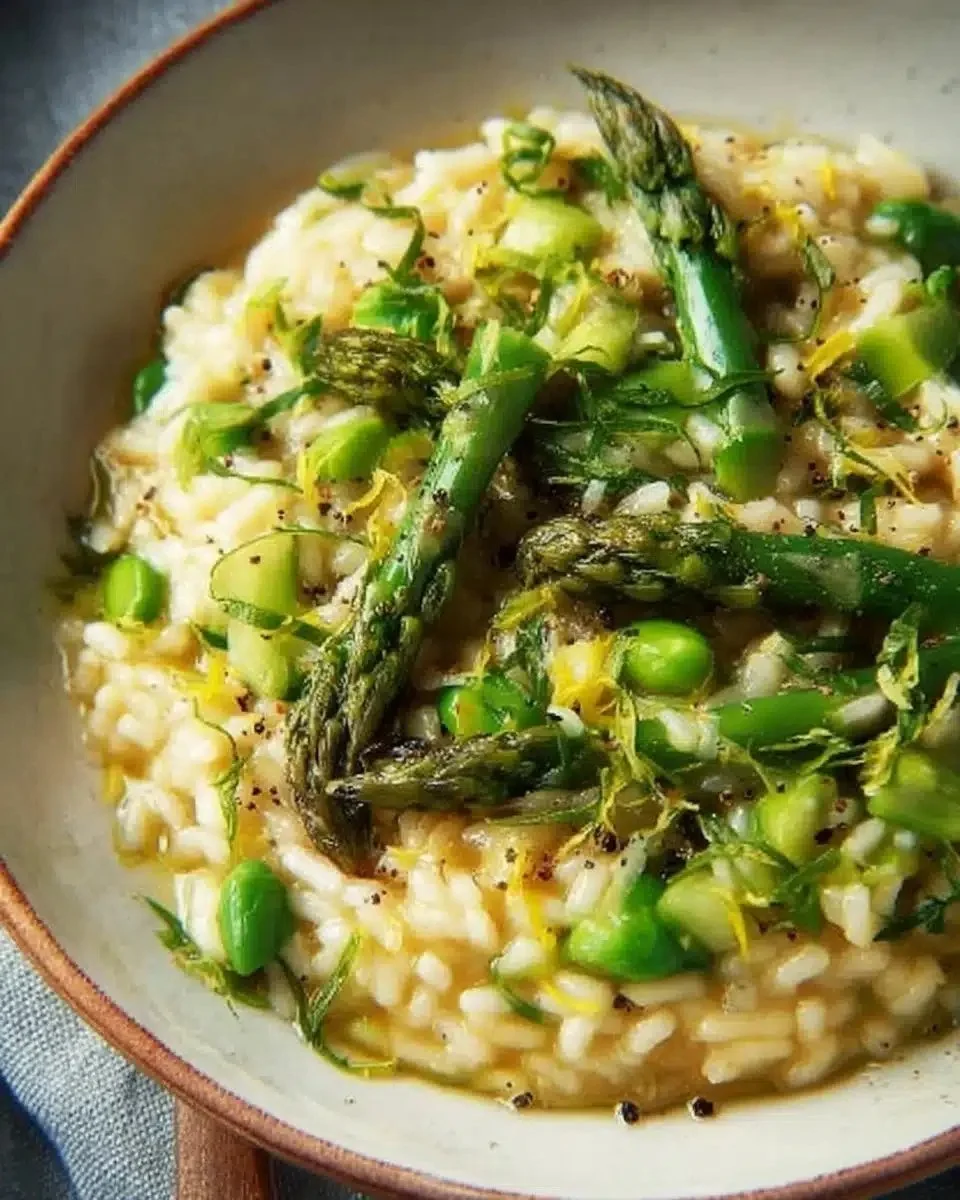
Asparagus risotto — Creamy Spring Dinner in 25 Mins
The first spoonful is silk and lemon-bright, with tender asparagus tips bursting against a creamy bed of rice — this asparagus risotto sings of spring. I developed and refined this version over eight tests in my home kitchen, dialing the stock ratio and finishing technique for the creamiest texture. It’s fast enough for a weeknight and refined enough for guests. If you’re short on time, the method below keeps things simple without sacrificing depth of flavor. Read on for equipment, precise timings, and tips I learned while cooking this for a restaurant service and family dinners alike. For an easy fish main that pairs beautifully, try a baked salmon with asparagus for a complete spring meal with minimal fuss: baked Tasmanian salmon with asparagus.
Why This Recipe Works
- The hot stock is added in small amounts so the rice releases starch slowly, yielding a rich, creamy texture without cream.
- Finishing with cold butter and finely grated Parmesan (mantecatura) emulsifies the sauce for glossy silkiness.
- Brief blanching of asparagus preserves bright color and snap, then a quick finish in the pan ties flavors together.
- A splash of lemon brightens the dish so it never tastes heavy, balancing the cheese and butter.
- Short, frequent stirring promotes even starch release without turning the rice gluey.
Ingredients Breakdown
- Arborio rice (200 g / 1 cup): Short-grain rice that releases starch for creaminess. Do not substitute long-grain rice.
- Vegetable or chicken stock (960 ml / 4 cups): Use low-sodium stock so you control salt. Hot stock keeps the cooking even.
- Dry white wine (120 ml / 1/2 cup): Adds acidity and depth; you can omit and replace with extra stock if you prefer.
- Unsalted butter (28 g / 2 tbsp) + extra (14 g / 1 tbsp) for finishing: Butter at the end helps create a velvet finish.
- Olive oil (30 ml / 2 tbsp): For sautéing; gives flavor and prevents sticking.
- Small yellow onion, finely diced (120 g / 1 medium): Adds sweet base flavor when softened.
- Garlic, minced (6 g / 2 cloves): Briefly cooked so it doesn’t bitter.
- Asparagus (400 g / 14 oz): Trimmed and cut into 2–3 cm (1-inch) pieces; save tips for garnish.
- Parmesan, finely grated (60 g / 3/4 cup): Use fresh Parmigiano-Reggiano for best flavor.
- Lemon (zest and 1 tbsp juice): Balances richness.
- Kosher salt and freshly ground black pepper: I use Diamond Crystal kosher salt; if using Morton’s, use about half the amount.
- Optional: 30 g (1/4 cup) frozen peas for extra sweetness.
Substitutions and impact warnings:
- Swap Arborio for Carnaroli (preferred by pros) for a slightly firmer center; you may need an extra 1–2 minutes of cooking.
- For vegan: replace butter with 30 g (2 tbsp) vegan butter and Parmesan with 30 g (1/3 cup) nutritional yeast — texture will be slightly less silky.
- Using pre-shredded Parmesan will reduce creaminess and flavor; grate fresh.
Essential Equipment
- Heavy-bottomed sauté pan or wide skillet (26–30 cm / 10–12 inches): A wide pan helps evaporate liquid and cook rice evenly.
- Medium saucepan for stock: Keep stock at a gentle simmer; do not boil.
- Wooden spoon or silicone spatula for stirring: Avoid metal spoons that scrape fond.
- Microplane or fine grater for Parmesan and lemon zest.
- Kitchen scale for rice (200 g) and Parmesan (60 g) — weighing gives repeatable results.
- Fine-mesh skimmer or slotted spoon to lift asparagus tips when blanching.
If you don’t have a wide pan, use a deep skillet; cook 1–2 minutes longer as evaporation slows. For students or small kitchens, a simple saucepan works in a pinch.
Step-by-Step Instructions
Makes 4 servings. Prep time 15 minutes. Active cook time 25 minutes. Inactive time None. Total time 40 minutes.
Step 1: Prepare the stock and asparagus
Bring 960 ml (4 cups) stock to a gentle simmer in a medium saucepan and keep warm over low heat. Bring a second pot of water to a boil, salt it, and blanch 120 g (4–5 tips + pieces) of asparagus tips for 30 seconds, then plunge into ice water; reserve tips for garnish. Cut remaining asparagus into 2–3 cm (1-inch) pieces.
Step 2: Sweat the aromatics
Heat 30 ml (2 tbsp) olive oil and 14 g (1 tbsp) butter in a wide skillet over medium heat. Add 120 g (1 medium) finely diced onion and cook until translucent and fragrant, about 5 minutes, stirring every 30 seconds. Add 6 g (2 cloves) minced garlic and cook 30–45 seconds until aromatic.
Step 3: Toast the rice
Add 200 g (1 cup) Arborio rice to the pan and stir to coat with fat. Toast for 1–2 minutes until grains look slightly translucent at the edges and smell nutty. This step helps the rice hold its shape while releasing starch.
Step 4: Deglaze with wine
Pour in 120 ml (1/2 cup) dry white wine and stir until almost fully absorbed, about 1–2 minutes. Cook until you no longer smell raw alcohol.
Step 5: Add warm stock gradually
Add 120–180 ml (1/2–3/4 cup) warm stock and stir frequently until mostly absorbed, about 3–4 minutes. Continue adding stock in 120–180 ml (1/2–3/4 cup) increments, stirring often, for 18–20 minutes total. Rice should be tender with a slight chew (al dente) at the center. Stirring every 30–60 seconds prevents sticking and encourages a creamy release of starch. Do not dump all the stock at once.
Step 6: Finish with asparagus and butter
When the rice is almost done (about 2 minutes left), stir in the asparagus pieces and 30 g (1/4 cup) frozen peas if using. Cook 2–3 minutes until asparagus is tender-crisp. Remove from heat and add 28 g (2 tbsp) cold unsalted butter, 60 g (3/4 cup) finely grated Parmesan, 1 tbsp lemon juice, and 1 tsp lemon zest; stir vigorously to emulsify. Season with kosher salt to taste and freshly ground black pepper. Taste and adjust salt — Parmesan adds saltiness.
Step 7: Plate and garnish
Spoon risotto onto warm plates and top with reserved asparagus tips, extra grated Parmesan, and a drizzle of olive oil. Serve immediately — risotto is best the moment you finish the mantecare.
Expert Tips & Pro Techniques
- Use warm stock: Adding cold stock drops the pan temperature and slows starch release.
- Stir often, not constantly: Frequent stirring (every 30–60 seconds) is enough. Over-stirring cools the pan and can make rice gluey.
- Common mistake — undercooking or overcooking rice: Check at 18 minutes; the center should have a tiny white dot when split. If it’s chalky, cook 1–2 more minutes.
- Mantecatura timing matters: Add cold butter and cheese off the heat to emulsify the sauce for shine.
- Make-ahead: Cook the risotto to just before the final addition of butter and cheese, cool quickly, and refrigerate up to 24 hours. To finish, rewarm gently with 60–120 ml (1/4–1/2 cup) hot stock and complete the mantecare.
- Professional tip for home cooks: Stir in a small ladle of hot stock and immediately whisk briskly to encourage quick starch release, then fold gently.
- Avoid salt overload: Because Parmesan and stock vary, season at the end so you don’t oversalt early.
Storage & Reheating
- Refrigerator: Cool risotto quickly and transfer to an airtight container. Use within 2 days for best texture.
- Freezer: Risotto does not freeze well; freezing makes the rice mealy. I do not recommend freezing.
- Reheating: Reheat gently on the stovetop over low heat with 60–120 ml (1/4–1/2 cup) hot stock or water, stirring until creamy, about 4–6 minutes. Avoid microwaving, which can make the texture uneven.
Variations & Substitutions
- Vegan Version: Replace 42 g (3 tbsp) butter with vegan butter and swap Parmesan for 30 g (1/3 cup) nutritional yeast; finish with a splash of olive oil for shine. Texture will be slightly less creamy.
- Pea & Asparagus: Add 120 g (1 cup) frozen peas when you stir in asparagus for added sweetness; no timing changes needed.
- Lemon-Herb Risotto: Add 2 tbsp finely chopped chives and 1 tbsp minced tarragon at the end for herb-forward brightness.
- Carnaroli swap: Use 200 g (1 cup) Carnaroli for a firmer center; may require 1–2 extra minutes of cooking and an extra 60–120 ml (1/4–1/2 cup) stock.
- Gluten-free: Recipe is naturally gluten-free if you use GF-certified stock.
Serving Suggestions & Pairings
- Light protein: Serve with roasted or pan-seared salmon for a balanced plate. Try the complementary flavors with this baked Tasmanian salmon with asparagus.
- Green side: A simple arugula salad with lemon vinaigrette cuts through the creaminess.
- Bread: Warm crusty bread or garlic-roasted potatoes make a satisfying side; see our cozy stuffing ideas for a bread-based side note: bread stuffing for cozy sides.
- Dessert suggestion: Keep dessert simple and bright — a citrus sorbet or small cookie like these butterfinger balls for everyone for a playful finish.
Nutrition Information
Per serving (serving size: 1 generous plate; 4 servings total)
- Calories: 420 kcal
- Total Fat: 15 g
- Saturated Fat: 7 g
- Cholesterol: 30 mg
- Sodium: 650 mg
- Total Carbohydrates: 58 g
- Dietary Fiber: 3 g
- Sugars: 3 g
- Protein: 12 g
Nutrition values are estimates. Actual values may vary based on specific ingredients and preparation methods.
Frequently Asked Questions
Q: Why did my risotto turn out gluey?
A: Likely you stirred too vigorously or added too little hot stock and overcooked the rice. Stop stirring constantly, use warm stock, and finish the mantecare off the heat.
Q: Can I make this without wine?
A: Yes. Replace the 120 ml (1/2 cup) wine with the same amount of hot stock. You’ll lose a layer of acidity, so add 1/2 tsp lemon juice earlier to balance.
Q: Can I double this recipe for a crowd?
A: Yes. Use a very wide, heavy-bottomed pan and increase stock proportionally (2 cups rice = 960 ml / 8 cups stock). Cook time may increase 2–4 minutes; stir frequently to keep even heat.
Q: Can I prepare this the night before?
A: You can cook to the point just before adding butter and cheese, cool quickly, and refrigerate up to 24 hours. Finish by reheating with a splash of hot stock and completing the mantecare.
Q: How long does leftover risotto keep in the fridge?
A: Store in an airtight container and use within 48 hours. Reheat on the stovetop with a little hot stock for best texture.
Q: Why are my asparagus pieces mushy?
A: Over-blanching or overcooking in the risotto will make them soft. Blanch tips 30 seconds and add cut pieces late in cooking for 2–3 minutes.
Q: Is this recipe suitable for beginners?
A: Yes. The technique is straightforward: toast, add hot stock in batches, and finish with butter and cheese. Follow timing cues and taste as you go.
Conclusion
This asparagus risotto brings spring flavors to the table in under 30 minutes — creamy, bright, and easy to make any night of the week. For more spring-inspired risottos with peas and cashew cream or a classic pea-and-asparagus version, see these helpful recipes: Spring Risotto with Asparagus, Peas + Roasted Garlic Cashew Cream and Creamy Pea and Asparagus Risotto – Lemons & Zest.
Print
Asparagus Risotto
- Total Time: 40 minutes
- Yield: 4 servings 1x
- Diet: Vegetarian
Description
Creamy and bright asparagus risotto, perfect for a spring dinner in under 30 minutes.
Ingredients
- 200 g (1 cup) Arborio rice
- 960 ml (4 cups) vegetable or chicken stock
- 120 ml (1/2 cup) dry white wine
- 28 g (2 tbsp) unsalted butter + 14 g (1 tbsp) extra for finishing
- 30 ml (2 tbsp) olive oil
- 120 g (1 medium) small yellow onion, finely diced
- 6 g (2 cloves) garlic, minced
- 400 g (14 oz) asparagus, trimmed and cut into 2–3 cm (1-inch) pieces
- 60 g (3/4 cup) Parmesan, finely grated
- Lemon zest and 15 ml (1 tbsp) lemon juice
- Kosher salt and freshly ground black pepper to taste
- Optional: 30 g (1/4 cup) frozen peas
Instructions
- Prepare the stock and asparagus: Bring stock to a gentle simmer and keep warm. Blanch asparagus tips for 30 seconds, then plunge into ice water; reserve tips. Cut remaining asparagus into pieces.
- Sweat the aromatics: Heat olive oil and butter in a skillet, add onion and cook until translucent, about 5 minutes. Add garlic and cook until aromatic.
- Toast the rice: Add Arborio rice to the pan and stir to coat, toasting for 1–2 minutes.
- Deglaze with wine: Pour in white wine and stir until almost fully absorbed.
- Add warm stock gradually: Add stock in increments, stirring frequently until mostly absorbed for about 18–20 minutes.
- Finish with asparagus and butter: Stir in asparagus and peas if using, cooking for 2–3 minutes. Add cold butter, Parmesan, lemon juice, and zest; stir to emulsify.
- Plate and garnish: Spoon risotto onto warm plates and top with reserved asparagus tips, extra Parmesan, and a drizzle of olive oil.
Notes
For vegan options, replace butter with vegan butter and Parmesan with nutritional yeast.
- Prep Time: 15 minutes
- Cook Time: 25 minutes
- Category: Main Course
- Method: Stovetop
- Cuisine: Italian
Nutrition
- Serving Size: 1 serving
- Calories: 420
- Sugar: 3g
- Sodium: 650mg
- Fat: 15g
- Saturated Fat: 7g
- Unsaturated Fat: 7g
- Trans Fat: 0g
- Carbohydrates: 58g
- Fiber: 3g
- Protein: 12g
- Cholesterol: 30mg