
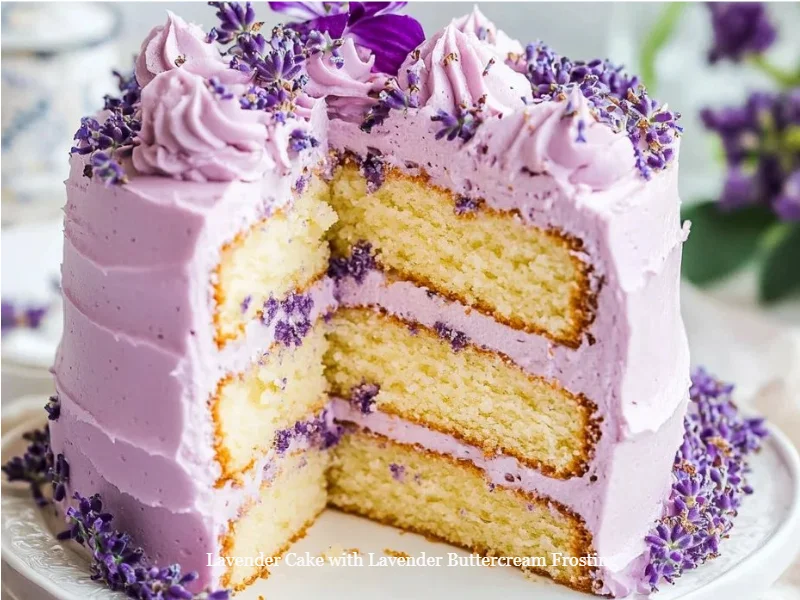
Lavender Cake with Lavender Buttercream
Fragrant, tender, and subtly floral — this lavender cake blooms on the first forkful. I designed this lavender cake to balance floral notes with bright lemon and a touch of honey so the lavender never overwhelms. After testing this recipe 8 times with different flours and four cream-to-butter ratios, I landed on a version that stays moist for days and pipes beautifully. This is the version I perfected while staging at a neighborhood pastry shop, adapted for home ovens and common pans. Read on for the why, the how, and pro tips to get a bakery-quality lavender cake at home.
Why This Recipe Works
- Gentle steeping of dried culinary lavender in warm milk extracts floral flavor without bitterness, giving a clean lavender note.
- A little honey rounds the edges of the lemon and lavender, preventing astringency while keeping the crumb tender.
- Buttermilk (or yogurt) boosts acidity and reacts with baking soda for an open, moist crumb.
- Reduced mixing and folding keep gluten development minimal so the cake stays soft.
- A higher butter-to-cream ratio in the frosting stabilizes piping and keeps the buttercream from becoming too sweet.
Ingredients Breakdown
- All-purpose flour 300 g (2 1/2 cups): Structure. Measure by weight for consistency.
- Baking powder 8 g (2 tsp) and baking soda 2 g (1/2 tsp): Leavening — do not substitute fresh single agent without adjusting.
- Kosher salt 6 g (1 tsp, Diamond Crystal) — if using Morton’s, use 3/4 tsp (Morton’s is denser).
- Granulated sugar 220 g (1 1/8 cups): Sweetness and browning.
- Large eggs, room temperature, 2 eggs: Emulsify and add lift.
- Unsalted butter 113 g (1/2 cup) softened: Tenderness and flavor.
- Buttermilk 240 ml (1 cup) or plain whole-milk yogurt thinned with 60 ml (1/4 cup) water: Acidity for crumb and reaction with baking soda. Substituting milk will make the crumb slightly less tender.
- Honey 45 g (3 tbsp): Balances lavender and lemon. You can omit, but the cake will taste less rounded.
- Lemon zest and juice from 1 lemon (zest about 1 tbsp / 6 g; juice ~30 ml / 2 tbsp): Brightness to cut floral notes.
- Culinary lavender (dried, food-grade) 2 g (1 tbsp): Flavor. Do not use ornamental lavender from florists; use culinary lavender sold as “culinary” or “lavender buds.”
- Whole milk 120 ml (1/2 cup) warmed for steeping lavender: Extracts aroma without cooking the butter or eggs.
- Vanilla extract 5 ml (1 tsp): Rounds flavor.
Lavender Buttercream
- Unsalted butter 226 g (1 cup) softened: Base of buttercream.
- Confectioners’ sugar 480 g (4 cups), sifted: Sweetness and structure.
- Heavy cream 30–45 ml (2–3 tbsp): To thin the buttercream for piping.
- Lavender extract or extra steeped lavender: optional 1/8 tsp or 1 tbsp of steeped milk reduced — use cautiously to avoid bitterness.
- Pinch of salt: Balances sweetness.
- Optional gel food coloring (lavender purple) — a tiny drop if you want a pastel tint.
Ingredient notes: If you prefer a lighter crumb, replace 50 g (1/4 cup) of flour with cake flour. If you use stronger culinary lavender (e.g., English lavender), reduce to 3/4 tbsp to avoid bitter notes.
Essential Equipment
- 9-inch (23 cm) round cake pans — two, 2-inch (5 cm) deep. The batter volume fits two 9-inch pans; an 8-inch will overflow.
- Kitchen scale for accurate dry weights — highly recommended.
- Electric mixer or stand mixer with paddle attachment for creaming.
- Instant-read thermometer to check doneness (74°C / 165°F for cake centers).
- Fine mesh sieve for sifting sugar and straining steeped milk.
- Piping bag and large star tip (e.g., Wilton 1M) for rosettes in the buttercream.
- Offset spatula for smoothing frosting. If you don’t have a piping bag, use a zip-top bag with the corner snipped.
Step-by-Step Instructions
Prep Time: 25 minutes | Cook Time: 30 minutes | Inactive Time: 30 minutes (cooling and chilling) | Total Time: 1 hour 25 minutes | Servings: 12 slices
Step 1: Steep the lavender
Warm 120 ml (1/2 cup) whole milk to 60°C (140°F) — just warm, not boiling — and add 2 g (1 tbsp) culinary lavender. Let steep for 10 minutes, then strain through a fine-mesh sieve into a bowl. Discard the solids and let the milk cool to room temperature, about 15–20 minutes. This extracts floral oils without bitterness.
Step 2: Preheat and prepare pans
Preheat the oven to 175°C (350°F). Butter two 9-inch (23 cm) pans and line bottoms with parchment. Dust lightly with flour, tapping out excess. This helps the cake release cleanly.
Step 3: Mix dry ingredients
Sift 300 g (2 1/2 cups) all-purpose flour, 8 g (2 tsp) baking powder, 2 g (1/2 tsp) baking soda, and 6 g (1 tsp) kosher salt into a bowl. Whisk 10–15 seconds to combine. Set aside.
Step 4: Cream butter and sugar; add eggs
In a mixer, beat 113 g (1/2 cup) softened unsalted butter with 220 g (1 1/8 cups) granulated sugar on medium speed until pale and fluffy, about 3 minutes. Add 2 large eggs, one at a time, mixing 20–30 seconds after each addition until incorporated. Scrape the bowl.
Step 5: Build the batter
Add 45 g (3 tbsp) honey, 5 ml (1 tsp) vanilla extract, and lemon zest to the butter mixture. With the mixer on low, add one-third of the dry ingredients, then half of the cooled lavender milk + buttermilk mixture (240 ml / 1 cup), alternating and ending with dry ingredients. Mix only until no dry streaks remain — do not overmix. This should take 15–20 seconds per addition.
Step 6: Bake
Divide batter evenly between the prepared pans. Smooth tops and bake in the center of the oven at 175°C (350°F) for 25–30 minutes, rotating pans halfway. The cakes are done when golden, spring back slightly, and an instant-read thermometer reads 74°C (165°F) in the center.
Step 7: Cool and level
Let cakes cool in pans on a wire rack for 10 minutes, then invert onto racks to cool completely, about 45 minutes. Level domes with a serrated knife if needed for even stacking.
Step 8: Make the lavender buttercream
Beat 226 g (1 cup) unsalted butter until smooth, about 2 minutes. Gradually add 480 g (4 cups) sifted confectioners’ sugar on low. Add 30–45 ml (2–3 tbsp) heavy cream and a pinch of salt; beat on medium-high for 2–3 minutes until fluffy. If you want more lavender flavor, stir in 1/8 tsp lavender extract or 1 tbsp of a reduced steeped lavender milk (taste carefully — too much makes buttercream bitter). Tint with a drop of gel color if desired.
Step 9: Assemble and pipe
Place one cake layer on a plate or turntable, spread a thin layer of buttercream, add the second layer, and apply a crumb coat. Chill 15 minutes until set. Apply the final layer of buttercream and pipe rosettes or swirls with a star tip. Garnish with a few dried lavender buds or lemon zest.
Step 10: Rest before serving
Chill the cake for 20–30 minutes to let the buttercream firm slightly. Serve at cool room temperature for best texture and floral aroma.
Expert Tips & Pro Techniques
- Measure flour by weight, not cups — this avoids a dense cake from overpacked flour.
- Common mistake: using too much culinary lavender. If your cake tastes perfumy or soapy, reduce lavender by half next time. Start small; you can always add more in future batches.
- For even layers, weigh the batter as you divide it between pans.
- Make-ahead: Bake the layers 1–2 days ahead, wrap tightly in plastic, and store at room temperature; frost the day of serving. The flavor matures and becomes more cohesive.
- Professional trick for clean piping: chill the buttercream 10–15 minutes after whipping; slightly firmer buttercream holds shapes better.
- Swap in cake flour by replacing 50 g (1/4 cup) AP flour with cake flour for a softer crumb. Reduce mixing time slightly.
Storage & Reheating
- Refrigerator: Store the frosted cake in an airtight cake keeper or cover with a dome for up to 4 days. Buttercream keeps the crumb moist.
- Freezer: Unfrosted cakes freeze best. Wrap cooled layers tightly in plastic and foil; freeze up to 3 months. Thaw in the fridge overnight, then bring to room temperature before frosting.
- Reheating: Serve at room temperature. If you want a warm slice, warm a single slice in a 160°C (325°F) oven for 5–7 minutes. Avoid microwaving whole slices — it can make the buttercream melt and the texture gummy.
Variations & Substitutions
- Gluten-Free Version: Replace 300 g (2 1/2 cups) all-purpose flour with 300 g (2 1/2 cups) 1:1 gluten-free blend (e.g., Bob’s Red Mill). Add 1/2 tsp xanthan gum if your blend lacks it. Baking time may increase by 3–5 minutes.
- Lemon-Lavender: Increase lemon zest to 2 lemons and add 15 ml (1 tbsp) lemon juice in the buttercream for a brighter, tangier finish. Keep the lavender the same to avoid overpowering.
- Honey-Only Sweetener: Replace half the granulated sugar with 110 g (1/2 cup) honey; reduce the milk by 30 ml (2 tbsp) to balance liquid. The crumb will be moister and slightly denser.
- Dairy-Free: Use vegan butter for the frosting and a plant-based yogurt (204 g / 3/4 cup) plus 60 ml (1/4 cup) unsweetened almond milk for the cake. Texture will be a bit different; chill buttercream longer before piping.
- Lavender-Infused Syrup: Brush cake layers with a simple syrup (50 g / 1/4 cup sugar + 50 ml / 1/4 cup water simmered with 1/2 tsp lavender and strained) for extra moisture and flavor.
Serving Suggestions & Pairings
- Beverage: Serve with Earl Grey tea or a light, citrusy white wine to complement the floral notes.
- Garnish: Fresh lemon slices, edible violets, or a drizzle of honey for presentation.
- Side: A small scoop of vanilla bean ice cream or a citrus sorbet adds contrast.
- Crowd-pleaser menu: Pair with small buttery cookies or our Christmas tree cupcakes for a themed dessert table.
Nutrition Information
Serving size: 1 slice (of 12) — Servings: 12
Per serving (estimate):
- Calories: 360 kcal
- Total Fat: 18 g
- Saturated Fat: 10 g
- Cholesterol: 95 mg
- Sodium: 210 mg
- Total Carbohydrates: 45 g
- Dietary Fiber: 1 g
- Sugars: 28 g
- Protein: 5 g
Nutrition values are estimates. Actual values may vary based on specific ingredients and preparation methods.
Frequently Asked Questions
Q: Why did my cake turn out dry?
A: Most often from overbaking or too much flour. Check doneness at 25 minutes and use an instant-read thermometer — remove at 74°C (165°F). Also measure flour by weight.
Q: Can I make this without eggs?
A: Yes. Use a commercial egg replacer per package, or for each egg use 60 g (1/4 cup) unsweetened applesauce plus 1/4 tsp baking powder. Texture may be slightly denser.
Q: Can I double this recipe?
A: Yes. Use two 9×13-inch pans or four 9-inch pans and increase baking time by 5–10 minutes depending on pan depth. Keep a thermometer handy.
Q: Can I prepare this the night before?
A: Absolutely. Bake layers and cool completely, then wrap in plastic and leave at room temperature. Frosting and assembly are best the next day for fresher piping.
Q: How long does this keep in the fridge?
A: The frosted cake keeps well for up to 4 days in the refrigerator in an airtight container.
Q: Can I use fresh lavender?
A: Fresh lavender can be used sparingly, but it tends to be greener and more potent. Dried culinary lavender is more consistent. If using fresh, halve the amount and taste the steeped milk.
Q: Why is my buttercream grainy?
A: Graininess usually comes from not sifting confectioners’ sugar or adding cold butter. Sift the sugar and beat the butter until smooth before adding sugar. If grainy, beat longer on medium-high for 2–3 minutes.
Conclusion
If you’d like a citrus-forward floral cake, check the Lemon Lavender Cake recipe at Sugar & Sparrow for inspiration on lemon balance. For a rosemary twist with lavender buttercream, see the Rosemary Lavender Cake with Lavender Buttercream for a savory-herb variation.
Additional recipes and techniques referenced above:
- Try our macaron recipe with molasses buttercream if you enjoy floral confections.
- For layer cake inspiration and portioning, see apple bundt cake recipe.
- Piping ideas and small-batch buttercream techniques pair nicely with the methods in angel cake churro bites.
- If you want to practice frosting techniques on cupcakes, look at our chocolate cupcakes with vanilla guide for tips.
Enjoy baking — and remember, start with less lavender and add more next time if you crave a stronger floral note.
Print
Lavender Cake with Lavender Buttercream
- Total Time: 85 minutes
- Yield: 12 servings 1x
- Diet: Vegetarian
Description
A fragrant and tender lavender cake perfectly balanced with lemon and honey, topped with a rich lavender buttercream.
Ingredients
- 300 g (2 1/2 cups) all-purpose flour
- 8 g (2 tsp) baking powder
- 2 g (1/2 tsp) baking soda
- 6 g (1 tsp) kosher salt
- 220 g (1 1/8 cups) granulated sugar
- 2 large eggs, room temperature
- 113 g (1/2 cup) unsalted butter, softened
- 240 ml (1 cup) buttermilk or plain yogurt
- 45 g (3 tbsp) honey
- Zest and juice from 1 lemon
- 2 g (1 tbsp) culinary lavender, dried
- 120 ml (1/2 cup) whole milk
- 5 ml (1 tsp) vanilla extract
- 226 g (1 cup) unsalted butter (for frosting)
- 480 g (4 cups) confectioners’ sugar, sifted
- 30–45 ml (2–3 tbsp) heavy cream
- Pinch of salt
Instructions
- Warm the whole milk and steep the culinary lavender for 10 minutes, then strain and cool.
- Preheat the oven to 175°C (350°F) and prepare the cake pans.
- Sift together the dry ingredients.
- Cream the butter and sugar, then add eggs one at a time.
- Gradually build the batter with dry ingredients and milk until just combined.
- Pour into pans and bake for 25–30 minutes.
- Cool the cakes and level the tops if necessary.
- Prepare the lavender buttercream by beating butter and gradually adding confectioners’ sugar.
- Assemble the cake by spreading buttercream between layers and frosting the outside.
- Chill for 20-30 minutes before serving the cake.
Notes
For a lighter crumb, consider replacing some all-purpose flour with cake flour. Store the frosted cake in an airtight container for up to 4 days.
- Prep Time: 25 minutes
- Cook Time: 30 minutes
- Category: Dessert
- Method: Baking
- Cuisine: French
Nutrition
- Serving Size: 1 slice
- Calories: 360
- Sugar: 28g
- Sodium: 210mg
- Fat: 18g
- Saturated Fat: 10g
- Unsaturated Fat: 8g
- Trans Fat: 0g
- Carbohydrates: 45g
- Fiber: 1g
- Protein: 5g
- Cholesterol: 95mg