
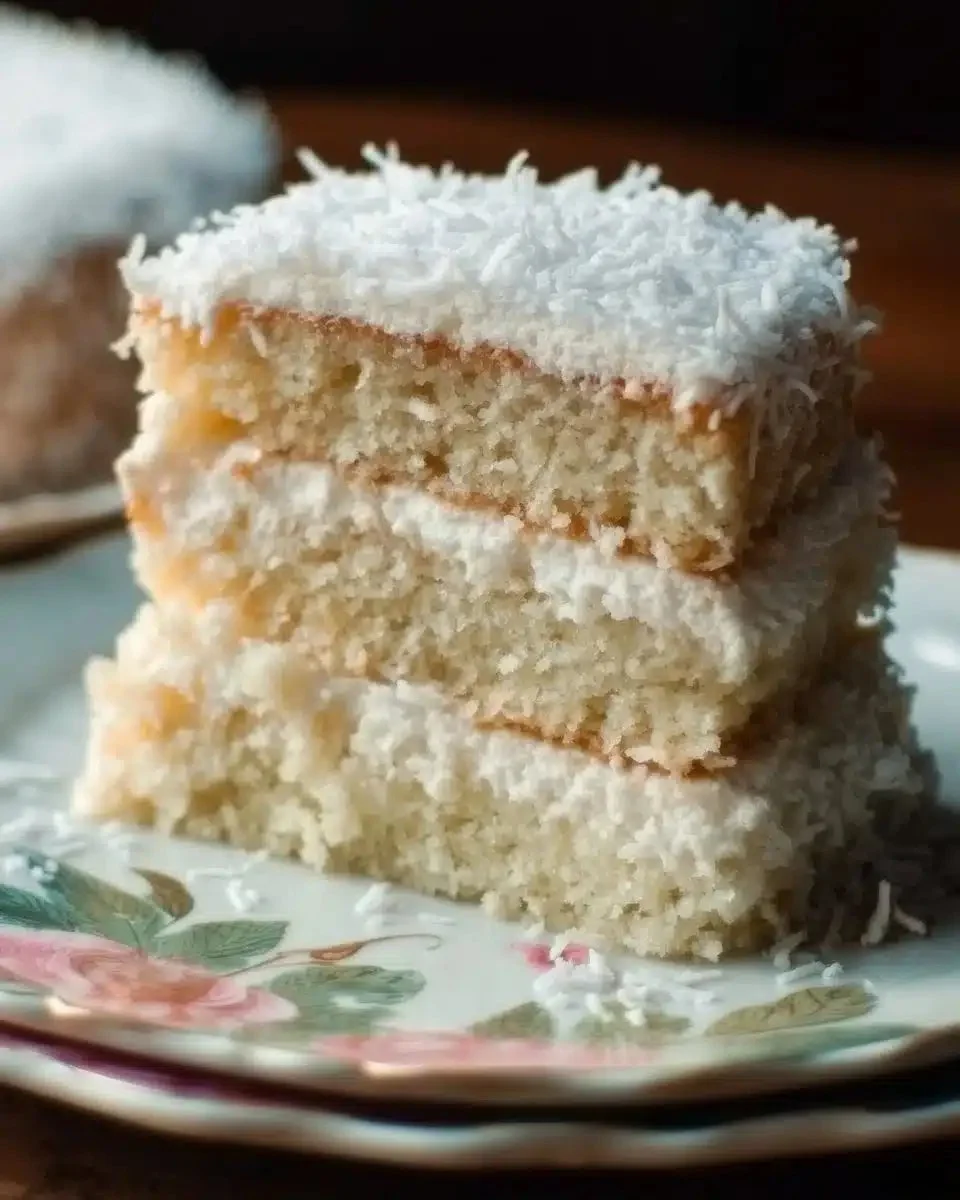
Classic Coconut Cake Recipe — Light, Moist Layer Cake
The first forkful should smell like warm coconut and taste like a cloud—this classic coconut cake hits that note every time. After testing this recipe eight times in home kitchens and refining it while pastry-chefing weekend events, I settled on cake layers that are tender, not dry, with a frosting that’s silky and stable. The method balances creaming, gentle folding, and a simple soak to keep crumb moist without turning gummy. Read on for precise measurements, clear timing, and pro tips that stop common mistakes before they happen — and if you love coconut desserts, try a coconut-raffaello riff for a tropical twist: coconut Raffaello cake.
Why This Recipe Works
- Balanced fat and liquid: combining oil and butter gives tender crumb plus structure for slicing.
- Sour cream keeps the crumb moist without adding tangy flavor that fights coconut.
- A light simple syrup soak (coconut water + sugar) prevents drying and amplifies coconut flavor.
- Toasted coconut in and on the cake adds texture and a toasted note to cut the sweetness.
- Room-temperature ingredients and short, careful mixing prevent a tough cake.
Ingredients Breakdown
- All-purpose flour — 360 g (3 cups): Provides structure. Spoon and level for an accurate measure.
- Granulated sugar — 400 g (2 cups): Sweetness and tenderness. Brown sugar will add moisture but change color and flavor.
- Unsalted butter — 113 g (½ cup) at room temperature: Adds richness and helps the layer hold shape. If using salted butter, omit added salt.
- Neutral oil (vegetable or grapeseed) — 60 ml (¼ cup): Keeps the crumb moist; don’t omit or the cake will be denser.
- Eggs — 4 large (about 200 g total): Room temperature for better emulsion and lift.
- Buttermilk — 240 ml (1 cup) or 240 g: Adds acidity to react with baking soda and tenderize crumb. You can use whole milk plus 1 tbsp lemon juice if needed.
- Sour cream — 120 g (½ cup): Adds tang and moisture. You can substitute Greek yogurt, but expect a slightly tangier flavor.
- Baking powder — 8 g (2 tsp) and baking soda — 3 g (½ tsp): Leavening; do not omit.
- Salt — 5 g (1 tsp) Diamond Crystal kosher salt (use ½ tsp if using Morton): Balances sweetness.
- Coconut extract — 2 tsp: Concentrated coconut aroma. Do not replace entirely with vanilla.
- Vanilla extract — 2 tsp: Rounds the flavors.
- Sweetened shredded coconut — 150 g (1 ½ cups) for batter; additional 120 g (1 cup) for topping: Adds chewy coconut presence. Toast half the topping for texture.
- Simple syrup: 120 ml (½ cup) coconut water + 30 g (2 tbsp) sugar: Keeps the cake moist and enhances coconut flavor.
- Cream cheese — 340 g (12 oz) and unsalted butter — 113 g (½ cup) for frosting: Makes a stable, tangy buttercream that pairs with coconut. Use full-fat cream cheese for best texture.
Essential Equipment
- Two 9-inch (23 cm) round cake pans — lined and greased. Batter volume requires 9-inch pans to avoid overflow.
- Stand mixer or handheld mixer — for reliable creaming. A whisk works but takes longer.
- Kitchen scale — recommended for accurate dry-ingredient weights.
- Instant-read thermometer — to check internal cake temp (target 95–99°C / 203–210°F for doneness in dense cakes).
- Offset spatula and bench scraper — for smooth frosting. If you don’t have an offset spatula, use a butter knife carefully.
- Cooling racks — for rapid, even cooling.
Step-by-Step Instructions
Makes 12 servings. Prep time 25 minutes. Cook time 30 minutes. Inactive time 1 hour chilling. Total time 1 hour 55 minutes.
Step 1: Prep pans and oven
Preheat oven to 175°C (350°F). Grease two 9-inch (23 cm) round pans, line the bottoms with parchment, and lightly dust with flour. Chill pans in the fridge while you measure dry ingredients to help them set.
Step 2: Combine dry ingredients
Whisk together 360 g (3 cups) all-purpose flour, 8 g (2 tsp) baking powder, 3 g (½ tsp) baking soda, and 5 g (1 tsp) salt in a bowl for 30 seconds to aerate and remove lumps. Set aside — this ensures even leavening.
Step 3: Cream butter and sugar, then add fats
In a mixer, beat 113 g (½ cup) unsalted butter and 400 g (2 cups) granulated sugar on medium speed for 2–3 minutes until pale and slightly fluffy. Add 60 ml (¼ cup) neutral oil and beat 30 seconds to incorporate. This combination keeps the cake tender and moist.
Step 4: Add eggs and extracts
Add 4 large eggs, one at a time, beating 20–30 seconds after each addition until incorporated. Mix in 2 tsp vanilla extract and 2 tsp coconut extract. Scrape the bowl — stop mixing as soon as the eggs are incorporated to avoid overworking the batter.
Step 5: Alternate dry ingredients and liquids
With the mixer on low, add the dry mixture in three additions alternating with 240 ml (1 cup) buttermilk and 120 g (½ cup) sour cream, starting and ending with dry ingredients. Mix just until no dry streaks remain — do not overmix. Fold in 150 g (1 ½ cups) sweetened shredded coconut by hand for texture.
Step 6: Bake the layers
Divide batter evenly between prepared pans and smooth the tops. Bake at 175°C (350°F) for 26–30 minutes, rotating halfway, until a toothpick comes out with a few moist crumbs and the internal temperature reads 95–99°C (203–210°F). Let cool 10 minutes in pans, then invert onto racks.
Step 7: Make coconut simple syrup
While cakes bake, heat 120 ml (½ cup) coconut water with 30 g (2 tbsp) sugar over low heat, stirring until sugar dissolves, then cool. Brush syrup over warm layers to infuse moisture — about 2 tbsp per layer. This prevents dryness and boosts coconut flavor.
Step 8: Prepare cream cheese coconut frosting
Beat 340 g (12 oz) cream cheese and 113 g (½ cup) unsalted butter until smooth, 1–2 minutes. Add 480 g (3 ¾ cups) powdered sugar gradually and beat until smooth, about 2–3 minutes. Stir in 1 tsp vanilla and 1 tsp coconut extract. Chill 15 minutes if frosting is too soft to spread.
Step 9: Assemble and finish
Place the first layer on a cake board, spread 1 cup (240 g) frosting evenly, press a light sprinkle of shredded coconut, then top with second layer. Crumb-coat with a thin layer of frosting and chill 20 minutes. Finish with a final coat, then press toasted and untoasted shredded coconut onto the sides and top. Chill at least 1 hour before serving.
Expert Tips & Pro Techniques
- Always weigh flour. Scooping with a cup spoon can add 10–20% more flour and make the cake dry.
- Common mistake: overbaking. Remove the cake when a tester has moist crumbs and the center springs back slightly. If overbaked, brush with extra syrup to revive it.
- Make-ahead: Bake layers up to 24 hours ahead, wrap tightly in plastic, and refrigerate. Bring to room temp before stacking to avoid sweating under the frosting.
- Professional technique for even layers: use a cake leveler or serrated knife to trim domes while warm (about 10 minutes out of the oven) for cleaner stacking.
- For stronger coconut flavor, fold 1 tbsp toasted coconut oil into the batter and increase coconut extract by ½ tsp.
- Avoid a runny frosting by chilling your cream cheese and butter beforehand; warm ingredients make a loose frosting.
Storage & Reheating
- Refrigerator: Store the frosted cake in an airtight cake keeper or wrap the whole cake loosely with plastic wrap. Keeps 3–4 days.
- Freezer: Freeze unfrosted layers wrapped tightly in plastic and foil for up to 3 months. Thaw in the refrigerator overnight, then bring to room temperature before frosting. Frosted cake can be frozen for up to 1 month; wrap carefully to avoid freezer burn.
- Reheating: Serve chilled or bring slices to room temperature for 30–45 minutes. To warm a slice, heat in a 160°C (325°F) oven for 8–10 minutes for a slightly softened crumb; avoid microwaving which can make the frosting separate.
Variations & Substitutions
- Gluten-Free Version: Replace 360 g (3 cups) all-purpose flour with a 1:1 gluten-free blend and add ½ tsp xanthan gum. Bake time may increase by 3–5 minutes. Texture will be slightly crumbly but still moist with syrup.
- Coconut Layer with Pineapple: Fold 120 g (½ cup) drained crushed pineapple into the batter and reduce buttermilk to 200 ml (⅞ cup) to keep batter thickness. Bake as directed; add 2 tbsp pineapple juice to the simple syrup.
- Vegan Adaptation: Use a commercial egg replacer (equivalent of 4 eggs) or 240 g silken tofu pureed, replace butter with coconut oil and sour cream with coconut yogurt. Results will be denser; add 1 tsp baking powder extra.
- Lower-Sugar Option: Reduce granulated sugar to 300 g (1 ½ cups) and increase syrup sweetness to compensate. Frosting can use 300 g (2 ½ cups) powdered sugar with 1 tbsp cornstarch for stability.
- Toasted Coconut Crunch: Stir 60 g (½ cup) finely chopped toasted macadamias into the top layer between frosting and coconut for texture — keep the rest of the method the same.
Serving Suggestions & Pairings
- Pair with a bright, acidic coffee (espresso or a medium roast) to cut the sweetness.
- Add a small scoop of lime sorbet for contrast and a tropical finish.
- Garnish with thin lime zest strips or toasted coconut flakes and serve with a cup of chai for a warming spice match — also try with our baked apple cake for seasonal menus: baked apple heaven cake.
- For a brunch spread, serve slices alongside a citrus fruit salad and buttery scones; see our bundt recipes for companion desserts like apple bundt cake recipe.
Nutrition Information
Per serving (1 slice, recipe makes 12 servings):
Calories: 540 kcal
Total Fat: 30 g
Saturated Fat: 14 g
Cholesterol: 110 mg
Sodium: 320 mg
Total Carbohydrates: 63 g
Dietary Fiber: 1.5 g
Sugars: 42 g
Protein: 6 g
Nutrition values are estimates. Actual values may vary based on specific ingredients and preparation methods.
Frequently Asked Questions
Q: Why did my cake turn out dry?
A: Dry cake usually means too much flour, overbaking, or insufficient fat. Weigh your flour, check doneness early, and brush layers with the coconut syrup while warm.
Q: Can I make this without eggs?
A: Yes. Use 240 g pureed silken tofu or a commercial egg replacer equivalent to 4 eggs, but expect a slightly denser texture. Adjust leavening by adding 1 tsp extra baking powder.
Q: Can I double this recipe?
A: Yes — double all ingredients and bake in two sets of pans or three 9-inch pans. Do not increase pan depth or you’ll need longer bake time and risk underbaking the center.
Q: Can I prepare this the night before?
A: Absolutely. Bake and cool layers, wrap them, and refrigerate. Make the frosting and assemble the next day. Chilled cake slices taste better after settling for a few hours.
Q: How long does this keep in the fridge?
A: A frosted cake keeps 3–4 days in the fridge in an airtight container. If uncut, it will stay fresher at the full 4 days.
Q: Can I use unsweetened coconut in the batter?
A: You can, but sweetened shredded coconut contributes moisture and sweetness. If using unsweetened, add 30–50 g (3–4 tbsp) extra sugar to the batter and consider brushing syrup more liberally.
Q: What is the best way to toast coconut?
A: Spread shredded coconut on a baking sheet and toast at 160°C (325°F) for 6–8 minutes, stirring once, until golden and fragrant. Watch closely — it burns quickly.
Conclusion
If you want a second recipe to compare technique or texture, Sally’s version shows a very light crumb and offers alternate mixing tips in her Fluffy & Moist Coconut Cake – Sally’s Baking Addiction. For a slightly different classic take on frosting and assembly, see the Pancake Princess method at Classic Coconut Cake – The Pancake Princess.
Print
Classic Coconut Cake
- Total Time: 115 minutes
- Yield: 12 servings 1x
- Diet: Vegetarian
Description
A light, moist layer cake with warm coconut flavor, perfect for coconut lovers.
Ingredients
- 360 g (3 cups) all-purpose flour
- 400 g (2 cups) granulated sugar
- 113 g (½ cup) unsalted butter, at room temperature
- 60 ml (¼ cup) neutral oil
- 4 large eggs (about 200 g total)
- 240 ml (1 cup) buttermilk or 240 g whole milk and 1 tbsp lemon juice
- 120 g (½ cup) sour cream
- 8 g (2 tsp) baking powder
- 3 g (½ tsp) baking soda
- 5 g (1 tsp) salt
- 2 tsp coconut extract
- 2 tsp vanilla extract
- 150 g (1 ½ cups) sweetened shredded coconut (for batter)
- 120 g (1 cup) additional sweetened shredded coconut (for topping)
- 120 ml (½ cup) simple syrup (coconut water + 30 g (2 tbsp) sugar)
- 340 g (12 oz) cream cheese
- 113 g (½ cup) unsalted butter (for frosting)
Instructions
- Preheat oven to 175°C (350°F). Grease two 9-inch round pans and line with parchment.
- Whisk together flour, baking powder, baking soda, and salt in a bowl.
- Beat butter and sugar in a mixer until pale and fluffy, then add oil.
- Add eggs one at a time, then mix in vanilla and coconut extract.
- Alternate adding dry ingredients with buttermilk and sour cream until combined.
- Divide batter between pans and bake for 26–30 minutes until a toothpick comes out with moist crumbs.
- Heat coconut water and sugar to make simple syrup, then brush over warm cakes.
- Beat cream cheese and butter, then gradually add powdered sugar and vanilla extract for frosting.
- Assemble the cake layers with frosting between each, then frost the outside and sprinkle with coconut.
Notes
Use a kitchen scale for precise measurements. Ensure all ingredients are at room temperature for best results.
- Prep Time: 25 minutes
- Cook Time: 30 minutes
- Category: Dessert
- Method: Baking
- Cuisine: American
Nutrition
- Serving Size: 1 slice
- Calories: 540
- Sugar: 42g
- Sodium: 320mg
- Fat: 30g
- Saturated Fat: 14g
- Unsaturated Fat: 12g
- Trans Fat: 0g
- Carbohydrates: 63g
- Fiber: 1.5g
- Protein: 6g
- Cholesterol: 110mg