
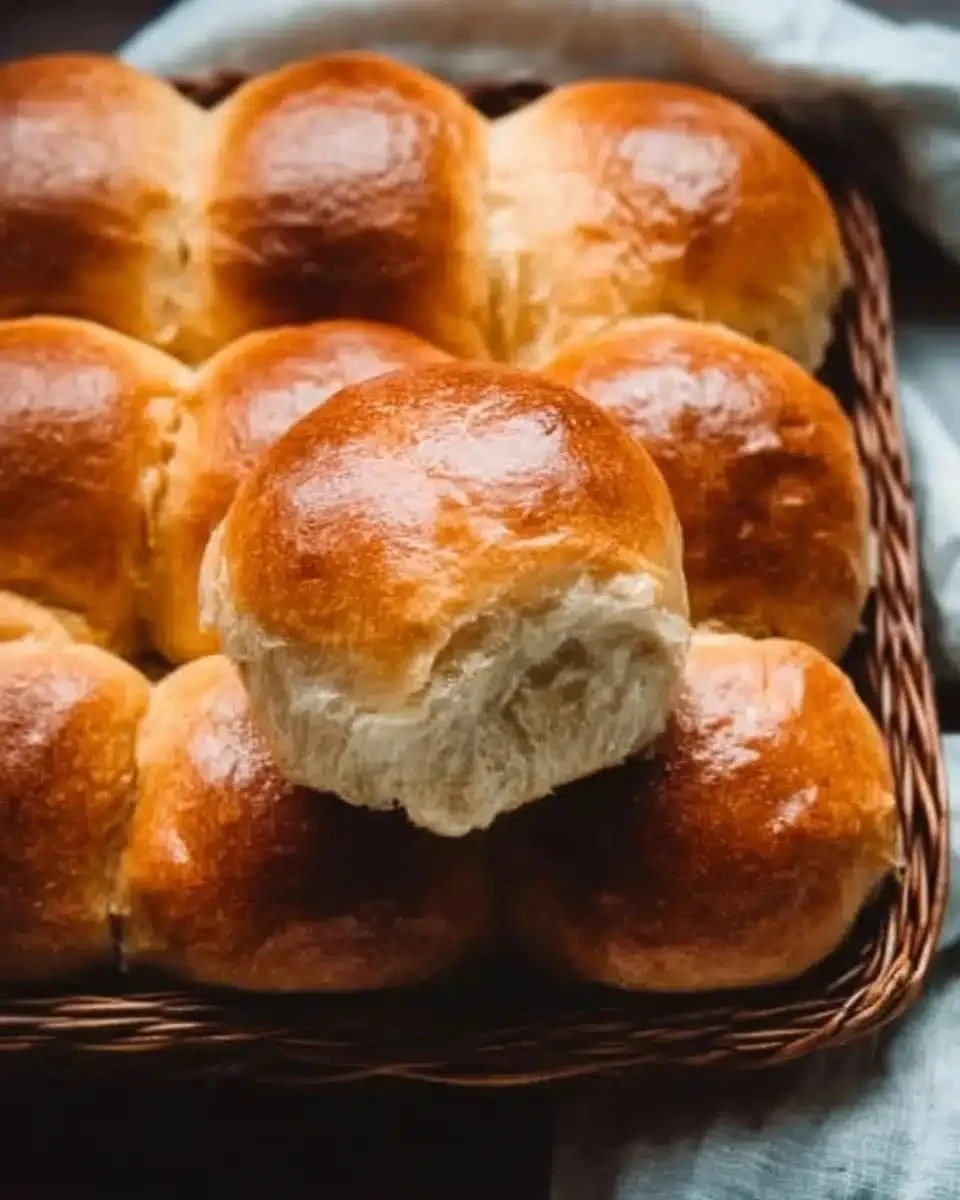
Soft Dinner Rolls — Tender, Fluffy, Easy Recipe
Warm, pillowy soft dinner rolls pull apart with a tender crumb and a lightly browned top. I learned to make reliable rolls during my restaurant years, and after testing this recipe 8 times with different flours and yeast brands, I landed on a simple method that gives consistent results. These rolls use a soft dough enriched with milk and butter, a short proofing schedule, and a gentle fold to build structure without toughness. The result: even rise, a glossy finish, and a melt-in-your-mouth texture that’s just right for weeknights or holiday tables. If you want easy tips for serving them alongside mains, try pairing with garlic parmesan chicken, which complements their buttery flavor. Read on for precise steps, professional tips adapted for home kitchens, and storage instructions so these rolls stay perfect for days.
Why This Recipe Works
- Enriched dough (milk and butter) tenderizes the crumb and adds flavor without making the dough heavy.
- A short, warm proof (about 45–60 minutes total rise) gives lift and avoids yeast overproofing, so rolls stay soft but structured.
- Light kneading plus a gentle fold strengthens gluten without making the texture chewy.
- Brushing with melted butter after baking keeps the crust soft and glossy.
- Using instant (rapid-rise) yeast simplifies timing and reduces the chance of underproofing or overproofing.
Ingredients Breakdown
- All-purpose flour — 500 g (4 cups) provides the right gluten balance for a tender, soft crumb. Bread flour will make chewier rolls; use it only if you prefer more chew.
- Instant yeast — 7 g (2 1/4 tsp) speeds proofing and is easy to mix directly into dry ingredients. If using active dry yeast, proof it in warm milk first.
- Granulated sugar — 50 g (1/4 cup) feeds the yeast and helps browning.
- Salt — 9 g (1 1/2 tsp) balances flavor. Use Diamond Crystal kosher salt as written; if using Morton’s, reduce to 1 tsp.
- Whole milk — 240 ml (1 cup), warmed to 38–43°C (100–110°F), softens the dough and improves browning. Dairy-free milks work but may slightly change browning and flavor.
- Unsalted butter — 56 g (4 tbsp), melted and cooled, adds richness. You can substitute softened coconut oil for a dairy-free version; flavor will be different.
- Egg — 1 large (optional) for a richer crumb and browning. Omit for an egg-free version; add 1 tbsp extra milk to maintain dough hydration.
- Optional: 1 tbsp honey or MAPLE syrup for subtle sweetness.
Substitution notes: You can replace up to 25% of the all-purpose flour with whole-wheat flour, but rolls will be denser and need an extra 1–2 minutes of kneading. If you want a lighter roll without eggs, add 15 g (1 tbsp) more butter and use milk at the same temp.
Essential Equipment
- Mixing bowl (or stand mixer with dough hook). Stand mixer speeds the process but is not required.
- Kitchen scale (highly recommended) for precise flour measurement.
- Measuring cups and spoons for liquids and small ingredients.
- Baking dish or sheet: A 9×13-inch (23 x 33 cm) baking pan yields soft-sided dinner rolls; you can also use a rimmed baking sheet for more crust.
- Instant-read thermometer to check milk temperature and finished dough temperature (target dough temp 24–26°C / 75–78°F).
- Pastry brush for buttering tops; a spoon can work in a pinch.
- Plastic wrap or a clean kitchen towel for proofing.
If you don’t have a scale, spoon and level flour into a 2-cup measuring cup for 250 g; use 4 cups total for 500 g, but results are best with weights.
Step-by-Step Instructions
Prep Time: 25 minutes — Cook Time: 15 minutes — Inactive Time: 1 hour (rising) — Total Time: 1 hour 40 minutes. Makes: 12 rolls. Serving size: 1 roll.
Step 1: Warm the milk and bloom (if needed) the yeast
Warm 240 ml (1 cup) whole milk to 38–43°C (100–110°F) — warm to the touch but not hot, about 1–2 minutes in the microwave. In a bowl, stir milk with 50 g (1/4 cup) sugar and 7 g (2 1/4 tsp) instant yeast; let sit 2 minutes until slightly frothy. If using active dry yeast, let it sit 5–7 minutes until foamy.
Step 2: Mix the dough
In a large bowl combine 500 g (4 cups) all-purpose flour and 9 g (1 1/2 tsp) salt. Add the yeast-milk mixture, 56 g (4 tbsp) melted butter, and 1 large beaten egg (optional). Stir until a shaggy dough forms, about 30 seconds.
Step 3: Knead to a smooth, slightly tacky dough
Knead by hand on a lightly floured surface for 6–8 minutes, or use a stand mixer with a dough hook for 4–5 minutes, until the dough is smooth and elastic and slightly tacky but not sticky. Do not add more flour than necessary — the dough should yield slightly when pressed.
Step 4: First rise (bulk fermentation)
Place dough in a lightly oiled bowl, cover, and proof in a warm place for 30–40 minutes, until doubled in size (about 45 minutes total if your kitchen is cool). Gently press a finger into the dough — if the indentation fills slowly, it’s ready.
Step 5: Shape the rolls
Turn the dough onto a lightly floured surface and divide into 12 equal pieces (about 50 g / 1.8 oz each). Shape each piece into a tight ball by cupping and rolling on the counter, or use the palm-and-tuck method. Place rolls close together in a greased 9×13-inch (23 x 33 cm) pan for soft sides.
Step 6: Second rise
Cover loosely and let the shaped rolls rise for 20–30 minutes until puffy and nearly doubled. This is a short proof — watch for the size, not the clock.
Step 7: Bake
Preheat the oven to 190°C (375°F). Brush tops with a little milk or beaten egg for a glossy finish. Bake for 12–15 minutes, until rolls are golden brown and register 88–90°C (190–194°F) in the center. Rotate the pan halfway through for even browning.
Step 8: Finish and cool
Remove rolls and immediately brush with 1–2 tbsp melted butter for a soft, shiny crust. Cool 10 minutes in the pan before serving — they’re best warm but will keep their texture as they cool.
Expert Tips & Pro Techniques
- Always weigh flour. Volume measurements vary; 500 g yields consistent texture. This avoids dense or gummy rolls.
- Common mistake: overproofing. If rolls flatten in the oven, the dough was overproofed. Use the poke test — if the indentation springs back slowly, bake; if it collapses, the dough is overproofed.
- For extra softness: replace 30 g (2 tbsp) of the flour with potato starch or add 15 g (1 tbsp) dry milk powder for tenderness.
- Make-ahead: Prepare dough through the first rise, punch down, shape into rolls, and refrigerate overnight covered. Let come to room temp and finish the second rise before baking. This improves flavor and spreads out work.
- Professional trick adapted for home: use a slightly warmer oven and shorter bake for a softer crust — 190°C (375°F) for 12 minutes vs 180°C (350°F) for 16 minutes.
- To get uniform rolls, use a kitchen scale and bench scraper to divide dough evenly.
- To revive slightly stale rolls: sprinkle with water and warm at 150°C (300°F) for 5–7 minutes until soft again.
Storage & Reheating
- Refrigerator: Store cooled rolls in an airtight container or zip-top bag for up to 3 days. Bring to room temperature before reheating.
- Freezer: Yes — they freeze well. Wrap cooled rolls individually in plastic wrap, then place in a freezer bag for up to 3 months. To thaw, transfer to the fridge overnight or on the counter for 2 hours.
- Reheating: Preheat oven to 175°C (350°F). For refrigerated or thawed rolls, warm for 8–10 minutes, covered with foil for moistness. For frozen rolls straight from the freezer, bake 12–15 minutes. Avoid microwaving whole rolls for extended times — they become gummy.
Variations & Substitutions
- Egg-Free Version: Omit the egg and add 15 g (1 tbsp) extra melted butter and 15 ml (1 tbsp) extra milk; follow the same times. Texture will be slightly less rich.
- Whole-Wheat Twist: Replace 100–125 g (3/4–1 cup) of all-purpose flour with whole-wheat flour. Knead an extra 1–2 minutes and add 15–30 ml (1–2 tbsp) water if dough feels stiff. Rolls will be heartier.
- Garlic-Herb Rolls: Mix 2 tbsp finely chopped fresh herbs and 1 tsp garlic powder into the dough. Brush tops with garlic butter after baking.
- Make-Ahead Freezing: Bake rolls, cool completely, then freeze in a single layer before transferring to a bag. Reheat from frozen at 175°C (350°F) for 10–12 minutes.
Serving Suggestions & Pairings
- Serve warm with salted butter and a sprinkle of flaky sea salt.
- Pair with soups like creamy mushroom soup for a comforting weeknight meal.
- Use rolls for sliders alongside roasted chicken or white chicken chili for a filling combo.
- For brunch or buffet ideas see our collection of easy summer recipes to round out the table.
Nutrition Information
Per serving: 1 roll (recipe makes 12)
- Calories: 150 kcal
- Total Fat: 4.5 g
- Saturated Fat: 2.5 g
- Cholesterol: 25 mg
- Sodium: 260 mg
- Total Carbohydrates: 23 g
- Dietary Fiber: 1 g
- Sugars: 3 g
- Protein: 5 g
Nutrition values are estimates. Actual values may vary based on specific ingredients and preparation methods.
Frequently Asked Questions
Q: Why did my rolls turn out dense?
A: Dense rolls usually mean the dough was under-kneaded, had too much flour, or didn’t proof long enough. Knead until smooth and elastic, weigh your flour, and wait until the dough doubles in size.
Q: Can I make this without eggs?
A: Yes. Omit the egg and add 15 g (1 tbsp) extra melted butter and 15 ml (1 tbsp) additional milk to keep the dough hydrated. Proof and bake the same way.
Q: Can I double this recipe?
A: Yes — double all ingredients and use two bowls or a very large mixer bowl. Keep dough divided when kneading if your mixer is small, and allow the same proofing times.
Q: Can I prepare this the night before?
A: Absolutely. After the first rise, shape the rolls, cover tightly, and refrigerate overnight. The next day, let them come to room temperature and finish the second rise before baking.
Q: How long do these keep in the fridge?
A: Stored in an airtight container, these rolls stay good for up to 3 days in the refrigerator. For longer storage, freeze for up to 3 months.
Q: Can I use active dry yeast instead of instant?
A: Yes. Proof 7 g (2 1/4 tsp) active dry yeast in the warmed milk with 1 tsp sugar for 5–7 minutes until foamy, then proceed.
Q: My rolls baked but the centers are doughy. What happened?
A: This can happen if the dough was too cold going into the oven or if the rolls were too large. Ensure rolls are puffy and nearly doubled before baking and check internal temp — they should reach 88–90°C (190–194°F).
Conclusion
These soft dinner rolls are a reliable, quick way to get warm, tender bread on the table. For more technique variations and visual step-throughs, check out Mel’s perfect soft and fluffy dinner rolls and the detailed method at Handle the Heat’s ultimate dinner rolls for extra ideas.
Print
Soft Dinner Rolls
- Total Time: 100 minutes
- Yield: 12 rolls 1x
- Diet: Vegetarian
Description
Tender, fluffy dinner rolls that pull apart easily, ideal for weeknights or holiday tables.
Ingredients
- 500 g (4 cups) all-purpose flour
- 7 g (2 1/4 tsp) instant yeast
- 50 g (1/4 cup) granulated sugar
- 9 g (1 1/2 tsp) salt
- 240 ml (1 cup) whole milk, warmed
- 56 g (4 tbsp) unsalted butter, melted
- 1 large egg (optional)
- Optional: 1 tbsp honey or maple syrup
Instructions
- Warm the milk and bloom (if needed) the yeast.
- Mix the dough.
- Knead to a smooth, slightly tacky dough.
- Place dough in a lightly oiled bowl, cover, and proof.
- Turn the dough onto a lightly floured surface and divide into 12 equal pieces.
- Cover loosely and let the shaped rolls rise.
- Preheat the oven and prepare for baking.
- Remove rolls and immediately brush with melted butter.
Notes
For extra softness, replace some flour with potato starch. Can be made ahead and refrigerated overnight.
- Prep Time: 25 minutes
- Cook Time: 15 minutes
- Category: Bread
- Method: Baking
- Cuisine: American
Nutrition
- Serving Size: 1 roll
- Calories: 150
- Sugar: 3g
- Sodium: 260mg
- Fat: 4.5g
- Saturated Fat: 2.5g
- Unsaturated Fat: 2g
- Trans Fat: 0g
- Carbohydrates: 23g
- Fiber: 1g
- Protein: 5g
- Cholesterol: 25mg