
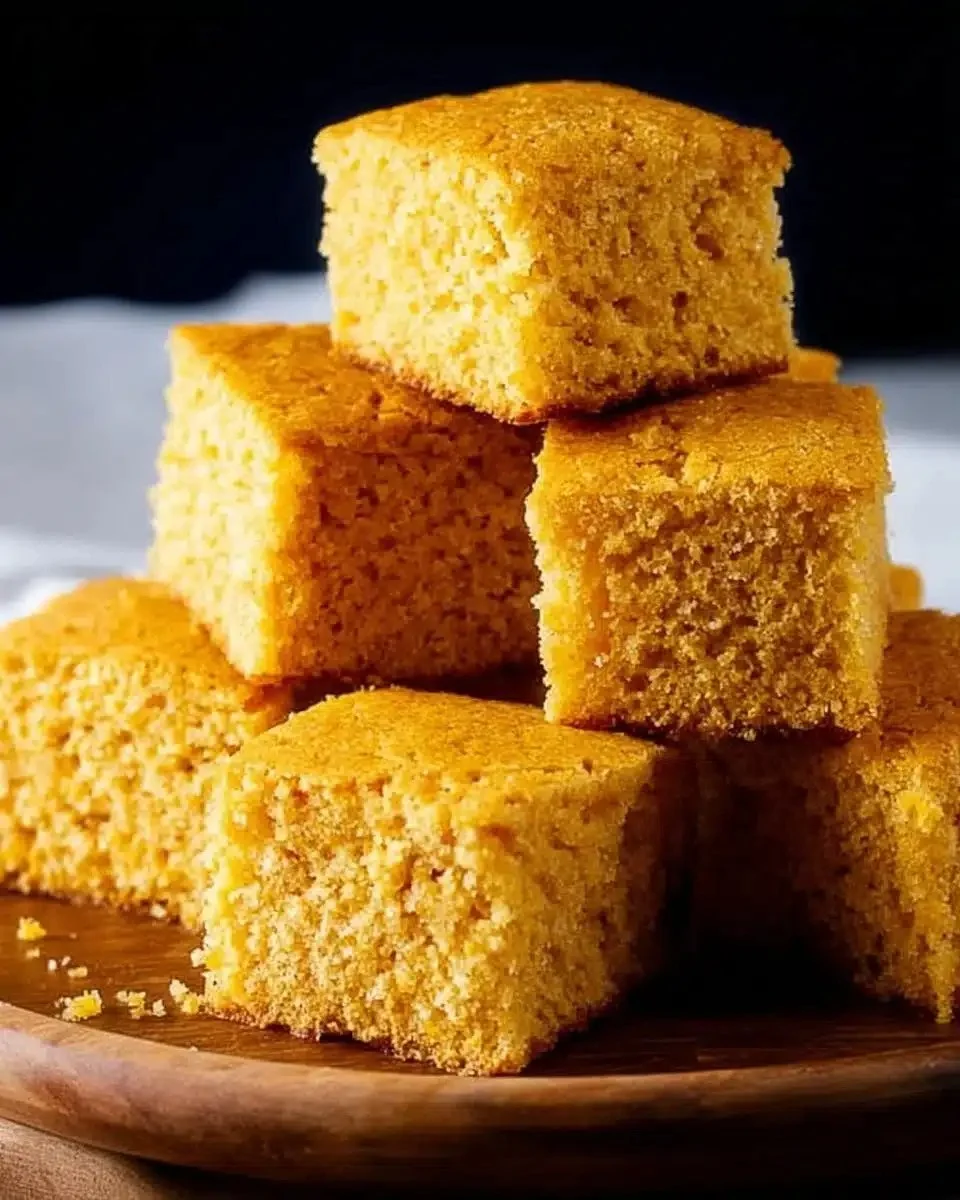
Homemade Cornbread Recipe — Soft, Golden Loaf
Warm, buttery crumbs and a crisp, golden top — this homemade cornbread recipe delivers that every time. After testing it 12 times across different pans and cornmeal grinds, I settled on a simple balance of cornmeal and flour, room-temperature wet ingredients, and a hot pan to get the best rise and crust. This version uses buttermilk and melted butter for moistness and flavor, and the method is forgiving for busy cooks. If you like a sweet, refreshing drink to go with this, try pairing it with some of our best homemade soda recipes while it cools. Read on for clear, metric-and-imperial measurements, timing cues, and pro tips so your loaf comes out soft inside and golden outside. Let’s bake.
Why This Recipe Works
- Hot pan method: heating the skillet before the batter hits it gives an immediate sizzle. That creates a crisp, golden edge without drying the center.
- Buttermilk adds acidity and tenderness. It reacts with a small amount of baking soda to lift the crumb quickly.
- A balanced cornmeal-to-flour ratio (160 g cornmeal to 125 g flour) keeps the texture tender while keeping corn flavor front and center.
- Melted butter folds evenly into the batter, giving richness and a fine, moist crumb.
- Minimal mixing prevents a dense loaf. Stop as soon as the dry ingredients disappear.
Ingredients Breakdown
- 160 g (1 cup) yellow cornmeal, medium grind — provides corn flavor and texture. Do not use stone-ground unless you want extra grittiness.
- 125 g (1 cup) all-purpose flour — lightens the crumb. For whole-grain cornbread, replace 40 g flour with whole-wheat flour (expect a denser loaf).
- 50 g (1/4 cup) granulated sugar — balances cornmeal bitterness and encourages browning. For savory cornbread reduce to 25 g (2 tbsp).
- 8 g (2 tsp) baking powder — main leavening to give rise.
- 2.5 g (1/2 tsp) baking soda — reacts with buttermilk for lift and browning.
- 5 g (1 tsp) kosher salt — use Diamond Crystal for this measure; if using Morton’s, halve to 1/2 tsp because Morton’s is denser.
- 2 large eggs (about 100 g total), room temperature — bind and enrich the batter.
- 240 ml (1 cup) buttermilk, room temperature — tenderizes and adds tang. For a quick substitute, mix 240 ml milk with 1 tbsp lemon juice, rest 5 minutes.
- 85 g (6 tbsp) unsalted butter, melted and cooled slightly — gives flavor and a moist crumb.
Substitutions with impact warnings:
- Dairy-free: swap buttermilk for 240 ml unsweetened almond milk plus 1 tbsp white vinegar; texture will be slightly lighter.
- Gluten-free: use a 1:1 GF flour blend and add 1/2 tsp xanthan gum; expect a slightly crumblier crumb.
- Lower fat: replace 40 g butter with 40 ml vegetable oil; crumb will be less rich but still moist.
Essential Equipment
- 9-inch (23 cm) cast-iron skillet or 8×8-inch (20 x 20 cm) square pan — batter volume fits these sizes without overflowing.
- Mixing bowls (one large, one medium).
- Whisk and rubber spatula — for gentle folding.
- Measuring spoons and a digital scale — weights give the most consistent results.
- Instant-read thermometer (optional) — oven temperatures vary; aim for an internal temp of 74°C (165°F) for doneness.
- Oven mitts and cooling rack.
If you don’t have a skillet, an 8×8-inch square pan works fine; bake time will be similar. For a crispier edge, pour 1 tbsp vegetable oil into the skillet before heating.
Explore easy summer recipes for sides and desserts that pair well with this loaf.
Step 1: Prepare the Oven and Pan
Preheat the oven to 200°C (400°F). Place a 9-inch cast-iron skillet in the oven while it preheats for 10 minutes so the pan is hot when you add the batter. Heat for 10 minutes exactly — a hot pan gives the best crust.
Step 2: Mix Dry Ingredients
In a large bowl whisk together 160 g (1 cup) cornmeal, 125 g (1 cup) all-purpose flour, 50 g (1/4 cup) sugar, 8 g (2 tsp) baking powder, 2.5 g (1/2 tsp) baking soda, and 5 g (1 tsp) salt. Whisk for 15–20 seconds to aerate and distribute leavening. This takes about 1 minute.
Step 3: Combine Wet Ingredients
In a medium bowl beat 2 large eggs (100 g) lightly, then whisk in 240 ml (1 cup) buttermilk and 85 g (6 tbsp) melted butter. Combine for 20–30 seconds until smooth. Room-temperature ingredients mix more evenly and trap less cold air.
Step 4: Fold Wet into Dry
Pour wet into dry and fold gently with a rubber spatula until nearly combined, about 10–15 strokes. Do not overmix — stop as soon as no dry flour is visible. Some small streaks are OK. Overmixing tightens gluten and makes the loaf dense. This step should take 30–60 seconds.
Step 5: Bake
Carefully remove the hot skillet from the oven, brush with 1 tsp melted butter or oil, and pour the batter in. Smooth the top lightly. Bake at 200°C (400°F) for 20–25 minutes, rotating once at 12 minutes if your oven has hot spots. Bake until the top is golden brown and a toothpick inserted into the center comes out with a few moist crumbs. Internal temperature: 74°C (165°F). Total active time: about 10–15 minutes prep, 22 minutes bake.
Step 6: Cool and Serve
Let the cornbread rest in the pan on a cooling rack for 10 minutes. This helps the crumb set. Run a knife around the edge and transfer to a rack to cool another 10 minutes before slicing into 8 wedges. Serve warm with butter or honey.
Prep Time: 10 minutes | Cook Time: 22 minutes | Inactive Time: None | Total Time: 32 minutes | Servings: 8 (1 wedge ≈ 80 g)
Expert Tips & Pro Techniques
- Common mistake: overmixing. To avoid toughness, fold only until the dry streaks disappear. Stop.
- Heat the pan well. A screaming-hot skillet forms a crackly edge within moments, sealing moisture inside.
- Make-ahead: bake the loaf fully, cool completely, wrap tightly, and refrigerate up to 3 days. Reheat in a 175°C (350°F) oven for 10–12 minutes.
- Professional trick for extra rise: beat the eggs first until frothy (30 seconds) and fold them in last. This traps a bit more air for lift.
- If the top browns too quickly, tent loosely with foil after 12–15 minutes.
- To test doneness without a thermometer, a skewer should come out with a few moist crumbs, not wet batter.
Storage & Reheating
- Refrigerator: Wrap leftover slices tightly in plastic or store in an airtight container for up to 3–4 days.
- Freezer: Slice, wrap each piece in plastic, then foil, and freeze up to 3 months. Thaw overnight in the fridge.
- Reheating: Reheat in a 175°C (350°F) oven for 10–12 minutes until warmed through. Avoid microwaving — it can make the crumb gummy and ruin the crust.
Variations & Substitutions
- Gluten-Free Version: Replace 125 g flour with 125 g 1:1 GF blend and add 1/2 tsp xanthan gum. Bake time increases by 2–4 minutes. Texture will be slightly crumblier.
- Dairy-Free Version: Use 240 ml unsweetened almond milk + 1 tbsp lemon juice (rest 5 minutes) instead of buttermilk, and replace butter with 85 ml vegetable oil. Loaf keeps similar moisture but less buttery flavor.
- Savory Cheddar-Jalapeño: Stir in 120 g (1 cup) grated sharp cheddar and 1 finely chopped jalapeño after step 4. Reduce sugar to 25 g (2 tbsp).
- Honey-Sweet Cornbread: Replace sugar with 50 ml (3 tbsp) honey, reduce buttermilk by 30 ml (2 tbsp). Expect a slightly denser crumb and softer browning.
For a bright, fizzy pairing idea, try these lemon-lime fizz recipes with a slice at brunch.
Serving Suggestions & Pairings
- Classic: Serve warm with salted butter and a drizzle of honey.
- Savory meal: Pair with chili or braised beans for a comforting combo.
- Brunch: Add a smear of Amish peanut butter cream for a rich, nutty twist.
- Dessert board: Serve with fresh berries and a slice of apple bundt cake for a seasonal finish.
Nutrition Information
Per serving (1 wedge, recipe yields 8 servings)
- Serving size: 1 wedge (~80 g)
- Calories: 270 kcal
- Total Fat: 11 g
- Saturated Fat: 6 g
- Cholesterol: 55 mg
- Sodium: 360 mg
- Total Carbohydrates: 34 g
- Dietary Fiber: 2 g
- Sugars: 8 g
- Protein: 5 g
Nutrition values are estimates. Actual values may vary based on specific ingredients and preparation methods.
Frequently Asked Questions
Q: Why did my cornbread turn out dry?
A: Most often from overbaking or overmixing. Check at 20 minutes and use a toothpick; remove when a few moist crumbs cling. Also, too much flour or too little fat will dry it out.
Q: Can I make this without eggs?
A: Yes. Use a flax egg for each egg (1 tbsp ground flax + 3 tbsp water, per egg). The texture will be slightly more crumbly and less tender.
Q: Can I double this recipe?
A: Yes. Double ingredients and bake in a 9×13-inch (23 x 33 cm) pan at the same temperature. Baking time will increase to 25–30 minutes. Check doneness with a skewer.
Q: Can I prepare this the night before?
A: You can mix the dry ingredients the night before and store them. For the best rise and texture, combine wet ingredients and bake the same day. Baked cornbread reheats well.
Q: How long does this keep in the fridge?
A: Stored in an airtight container, it keeps 3–4 days in the refrigerator.
Q: Can I use stone-ground cornmeal?
A: Yes, but stone-ground is coarser and can make the crumb grainier. If you prefer a finer texture, use medium-grind yellow cornmeal.
Q: My cornbread is too dense. What went wrong?
A: Likely overmixing or stale leavening. Measure baking powder carefully and don’t beat the batter. Also ensure the oven is hot before baking.
Conclusion
For a quick cast-iron approach with an emphasis on moisture and speed, see Seriously Moist Cast Iron Cornbread (30 minutes), a great companion method to this loaf. If you prefer a sweeter crumb with crisp edges, check Cornbread: moist & sweet with crisp edges. – Baking A Moment for another reliable recipe.
Print
Homemade Cornbread
- Total Time: 32 minutes
- Yield: 8 servings 1x
- Diet: Vegetarian
Description
This homemade cornbread recipe features warm, buttery crumbs and a crisp, golden top, using buttermilk and melted butter for moistness.
Ingredients
- 160 g (1 cup) yellow cornmeal, medium grind
- 125 g (1 cup) all-purpose flour
- 50 g (1/4 cup) granulated sugar
- 8 g (2 tsp) baking powder
- 2.5 g (1/2 tsp) baking soda
- 5 g (1 tsp) kosher salt
- 2 large eggs, room temperature
- 240 ml (1 cup) buttermilk, room temperature
- 85 g (6 tbsp) unsalted butter, melted and cooled slightly
Instructions
- Preheat the oven to 200°C (400°F) and place a 9-inch cast-iron skillet in the oven for 10 minutes.
- Mix together the dry ingredients: cornmeal, flour, sugar, baking powder, baking soda, and salt in a large bowl.
- Combine wet ingredients: beat the eggs lightly, then whisk in buttermilk and melted butter.
- Fold the wet mixture into the dry mixture until nearly combined, stopping before overmixing.
- Bake in the hot skillet for 20–25 minutes until golden brown and a toothpick comes out clean.
- Cool the cornbread in the pan for 10 minutes, then transfer to a rack to cool before slicing.
Notes
For a crispy edge, pour 1 tbsp vegetable oil into the skillet before heating. Store leftovers tightly wrapped in the refrigerator for up to 3–4 days.
- Prep Time: 10 minutes
- Cook Time: 22 minutes
- Category: Bread
- Method: Baking
- Cuisine: American
Nutrition
- Serving Size: 1 wedge (≈ 80 g)
- Calories: 270
- Sugar: 8 g
- Sodium: 360 mg
- Fat: 11 g
- Saturated Fat: 6 g
- Unsaturated Fat: 3 g
- Trans Fat: 0 g
- Carbohydrates: 34 g
- Fiber: 2 g
- Protein: 5 g
- Cholesterol: 55 mg