
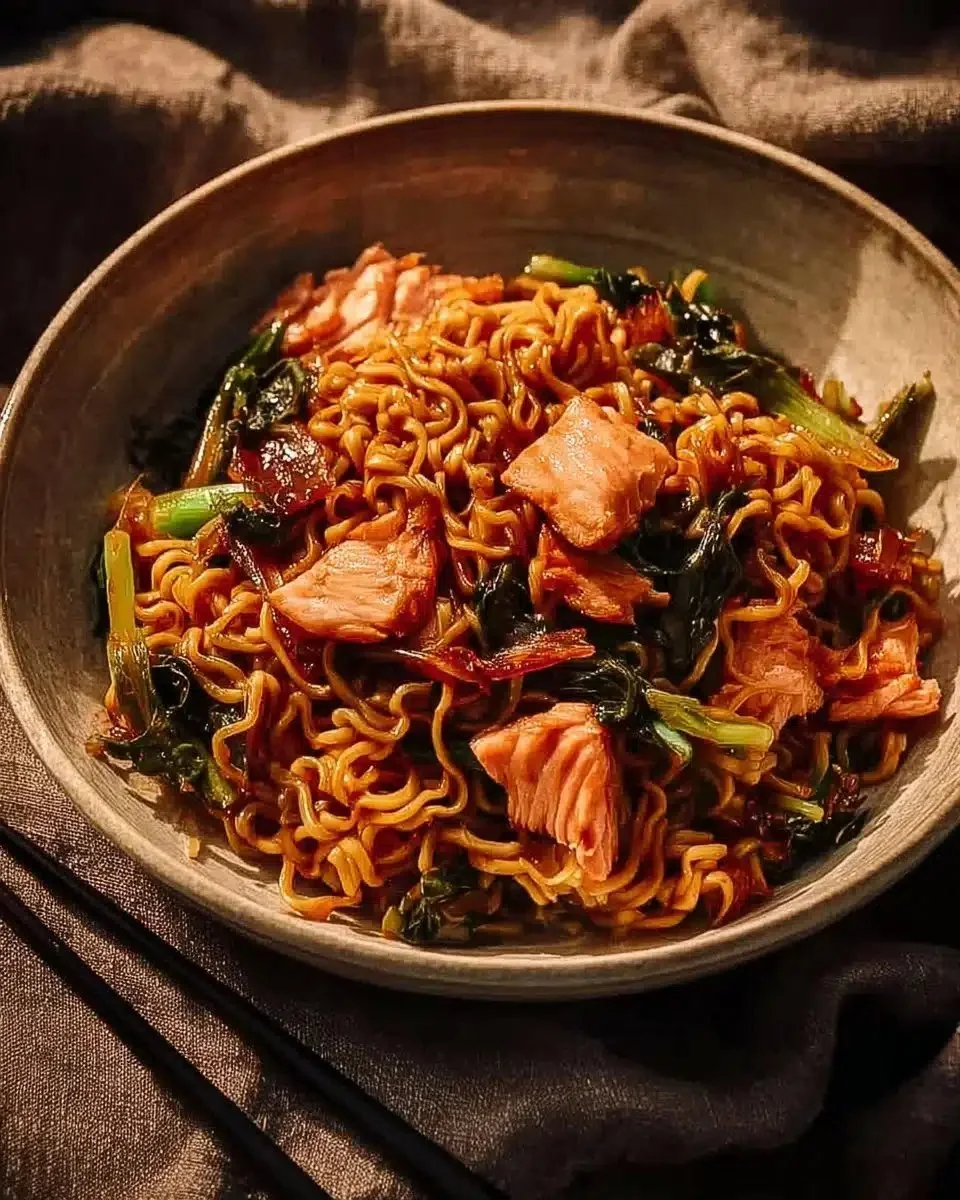
Teriyaki Salmon Noodles with Sesame Veggies
Glazed salmon caramelizes into sticky-sweet flakes while sesame-scented vegetables crackle and smoke. This Teriyaki Salmon Noodles dish is bright, quick, and deeply satisfying; it hits sweet, salty, and umami in every bite. I refined this version over eight test runs, dialing the teriyaki balance and noodle texture until both held up well with the salmon. It’s what I cooked for busy nights at the restaurant and now make at home for guests. If you enjoy citrus contrasts, try the twist in my orange teriyaki salmon for a lively variation. Read on for clear steps, pro tips, and time-saving tricks so your weeknight dinner comes out restaurant-good every time.
Why This Recipe Works
- Balanced sauce: equal parts soy and mirin base with brown sugar gives a glossy, clingy glaze without burning.
- Quick high-heat sear: a hot pan gives the salmon a caramelized exterior and moist interior.
- Noodle timing: cooking and briefly tossing noodles in the pan lets them absorb the sauce without going mushy.
- Sesame veggies add texture and aroma that cut the sweetness and keep the dish lively.
- Simple acid finish (rice vinegar or lemon) brightens flavors and keeps the palate fresh.
Ingredients Breakdown
- Salmon fillets (600 g / 1.3 lb total; 150 g / 5 oz per person): Firm salmon (sockeye, Atlantic, or Tasmanian) holds up best. If using frozen salmon, thaw completely and pat dry to aid browning.
- Substitution warning: flaky canned salmon will not crisp; avoid it for this recipe.
- Tamari or soy sauce — 60 ml (4 tbsp): Provides umami and salt. Use low-sodium soy if watching salt. If using tamari for gluten-free, keep the same volume.
- Mirin — 60 ml (4 tbsp): Adds sweetness and mild acidity. If unavailable, use 45 ml (3 tbsp) sake + 15 ml (1 tbsp) sugar.
- Brown sugar — 30 g (2 tbsp): Deepens caramelization. White sugar will still work but is less complex.
- Sesame oil — 15 ml (1 tbsp) for sauce + 10 ml (2 tsp) for veggies: Strong flavor — a little goes a long way.
- Garlic — 2 cloves (6 g), finely grated: Boosts aroma.
- Fresh ginger — 15 g (1 tbsp), grated: Brightness and bite; don’t skip.
- Rice vinegar — 15 ml (1 tbsp): Finishes the sauce with acid.
- Cornstarch slurry — 10 g (1 tbsp) cornstarch + 30 ml (2 tbsp) water: Thickens glaze so it clings to salmon and noodles.
- Noodles — 320 g (11 oz) dried udon or soba (or 400 g / 14 oz fresh): Choose noodles that hold sauce without falling apart. For a low-carb swap, see zucchini alternatives.
- Tip: If swapping to spiralized zucchini, reduce cook time and toss off heat; see our zucchini noodle techniques.
- Vegetables:
- Broccoli florets — 200 g (7 oz) or snap peas — 150 g (5 oz): Crisp-tender texture contrasts the salmon.
- Carrot — 1 medium (70 g), thin julienne: Adds crunch and color.
- Scallions — 2, sliced on bias for garnish.
- Sesame seeds — 15 g (1 tbsp), toasted: For aroma and crunch.
- Neutral oil for searing — 15 ml (1 tbsp): Use canola or grapeseed for high smoke point.
When brand matters: If using kosher salt, note density differences. Use Diamond Crystal for seasoning by feel or reduce Morton’s by about half for the same saltiness.
Essential Equipment
- Heavy skillet or cast-iron pan (10–12 inch / 25–30 cm): Holds heat for a strong sear.
- Medium pot for noodles with a large volume of water: Prevents sticking.
- Tongs and fish spatula: For careful flipping of salmon fillets.
- Microplane or fine grater for ginger and garlic: Releases juices quickly.
- Small bowl for cornstarch slurry and silicone brush (optional) for glazing.
- If you don’t have a cast-iron, use a heavy stainless-steel pan and preheat well. For spiralized veg, a wide nonstick skillet is ideal to prevent sticking.
- For more on preparing baked salmon if you want an oven route, see the baked Tasmanian salmon with asparagus guide.
Step-by-Step Instructions
Makes 4 servings. Prep time 20 minutes; Cook time 15 minutes; Total time 35 minutes; Inactive time none.
Step 1: Make the teriyaki glaze
Whisk 60 ml (4 tbsp) soy, 60 ml (4 tbsp) mirin, 30 g (2 tbsp) brown sugar, 15 ml (1 tbsp) sesame oil, 2 grated garlic cloves, and 15 g (1 tbsp) grated ginger in a small saucepan. Bring to a simmer over medium heat and stir until sugar dissolves, about 2 minutes. Whisk the cornstarch slurry (10 g cornstarch + 30 ml water) and add; simmer for 1 minute until slightly thickened. Remove from heat and finish with 15 ml (1 tbsp) rice vinegar.
Step 2: Prepare and season the salmon
Pat 600 g (1.3 lb) salmon fillets dry and cut into 4 even pieces. Lightly season with 2–3 g (1/2 tsp) kosher salt and black pepper. Let rest at room temperature while you heat the pan, about 5 minutes.
Step 3: Cook the noodles
Bring a large pot of water to a rolling boil. Add 320 g (11 oz) dried udon or soba and cook per package directions until al dente, usually 6–8 minutes. Drain and toss with 5 ml (1 tsp) sesame oil to prevent clumping. Set aside.
Step 4: Sear the salmon
Heat a heavy skillet over medium-high until shimmering, 2–3 minutes. Add 15 ml (1 tbsp) neutral oil, then place salmon skin-side up (or skin-side down if skin-on) and sear 3 minutes without moving. Flip and sear the other side 2–3 minutes until the surface is deeply caramelized and the internal temperature reaches 50–55°C (122–131°F) for medium-rare, or 60–63°C (140–145°F) for medium, about 2–3 more minutes. Do not overcook — salmon cooks quickly and dries out.
Step 5: Glaze the salmon
Lower heat to medium. Pour half the warm teriyaki glaze over the salmon and spoon it while letting it thicken for 30–60 seconds. Remove salmon to a plate and rest 2 minutes so juices redistribute. This finishing step uses a classic teriyaki glazing technique adapted for delicate fish.
Step 6: Stir-fry the sesame veggies
In the same pan, add 10 ml (2 tsp) sesame oil. Add broccoli or snap peas and julienned carrot. Stir-fry over high heat for 2–3 minutes until bright and crisp-tender. Season with a pinch of salt and 5 ml (1 tsp) soy. Toss in 15 g (1 tbsp) toasted sesame seeds.
Step 7: Toss noodles and finish
Return noodles to the pan with the veggies. Add the remaining glaze and toss for 1 minute until noodles are evenly coated and glossy. Taste and adjust with 5–10 ml (1–2 tsp) rice vinegar or a pinch of sugar as needed. Plate noodles, top with glazed salmon, and sprinkle sliced scallions and more sesame seeds.
Expert Tips & Pro Techniques
- Avoid overcrowding the pan when searing salmon; too many fillets lower the pan temperature and prevent browning. Cook in two batches if needed.
- Common mistake: overcooking salmon. Use an instant-read thermometer and pull the fish 3–5°C (5–10°F) below your target; carryover heat finishes it.
- Make-ahead: Prepare the glaze and chop vegetables up to 24 hours ahead. Store separately in airtight containers. Reheat glaze gently before using.
- Professional trick: reduce the glaze slightly longer for a thicker consistency that clings to noodles. Be careful not to burn sugar — keep heat moderate.
- Home-friendly technique: if you lack a heavy pan, preheat a sheet pan in a 230°C (450°F) oven and roast salmon 7–9 minutes, then brush with glaze and broil 1 minute to finish.
- To keep noodles from sticking when storing, toss with 5–10 ml (1–2 tsp) neutral oil.
Storage & Reheating
- Refrigerator: Store leftovers in an airtight container for up to 3 days. Keep salmon and noodles together; the sauce helps preserve moisture.
- Freezer: Not ideal. Salmon texture degrades when frozen and reheated. If you must, freeze in single portions for up to 1 month in airtight containers; thaw overnight in the fridge.
- Reheating: Gently reheat in a skillet over medium-low for 3–4 minutes, covered, until warmed through. For best texture, avoid microwaving — it can make the salmon dry and the noodles gummy.
Variations & Substitutions
- Gluten-Free Version: Use tamari in place of soy sauce and gluten-free mirin. Use rice noodles instead of udon; reduce toss time by 1–2 minutes.
- Low-Carb / Veggie Swap: Replace noodles with 500 g (1 lb) spiralized zucchini and reduce cook time to 1–2 minutes after stir-frying veggies. Keep the same sauce but drain excess liquid before serving.
- Spicy Teriyaki: Add 5–10 g (1–2 tsp) gochujang or 5 ml (1 tsp) chili paste to the glaze. Taste and adjust sugar to balance heat.
- Oven-Baked Salmon: Roast salmon at 200°C (400°F) for 8–10 minutes, then brush and broil for 1 minute to finish. Use the same glaze and toss noodles separately.
Serving Suggestions & Pairings
- Quick salad side: Serve with a crisp cucumber salad dressed in rice vinegar and sesame oil.
- Rice alternative: A bowl of steamed jasmine rice makes it a homey, filling plate.
- Beverage pairing: A dry Riesling or chilled green tea cuts the glaze’s sweetness.
- Flavor mash-up: Turn leftovers into a sushi bake inspired bowl; try our teriyaki salmon sushi bake for a fun riff.
Nutrition Information
Per serving (serving size: 1 bowl; recipe makes 4 servings):
- Calories: 610 kcal
- Total Fat: 28 g
- Saturated Fat: 5 g
- Cholesterol: 95 mg
- Sodium: 920 mg
- Total Carbohydrates: 58 g
- Dietary Fiber: 6 g
- Sugars: 18 g
- Protein: 34 g
Nutrition values are estimates. Actual values may vary based on specific ingredients and preparation methods.
Frequently Asked Questions
Q: Why did my salmon turn out dry?
A: Most often it’s overcooking. Use an instant-read thermometer and remove the salmon from heat at 50–55°C (122–131°F) for medium-rare or 60–63°C (140–145°F) for medium. Let it rest 2 minutes.
Q: Can I make this without mirin?
A: Yes. Substitute 45 ml (3 tbsp) sake or dry white wine plus 15 ml (1 tbsp) brown sugar. The flavor will shift slightly but remain balanced.
Q: Can I double this recipe for a party?
A: Yes. Double sauce and noodles, but cook salmon in batches to keep the pan hot and avoid steaming pieces. Keep the glaze warm in a small saucepan.
Q: Can I prepare this the night before?
A: You can prep the glaze and chop the veg the night before. Cook salmon and toss noodles just before serving for best texture.
Q: How long does this keep in the fridge?
A: Store in an airtight container for up to 3 days. Reheat gently in a skillet to preserve texture.
Q: Can I use other fish?
A: Firm-fleshed fish like cod or halibut will work, but cook times will change. Thicker pieces may need a few extra minutes; aim for 60–63°C (140–145°F) for cooked-through white fish.
Conclusion
If you want more inspiration or alternate takes, see Sailor Bailey’s spin on the dish at Sailor Bailey’s Teriyaki Salmon Noodles and a bright bowl version at Teriyaki Salmon Bowls with Sesame Greens and Avocado. Try the glaze once, then tweak sweetness and acidity to your taste — it’s an easy route to a weeknight showstopper.
Author: Alex Chen — 12 years professional chef and cookbook author. Date published: 2026-03-10.
Print
Teriyaki Salmon Noodles with Sesame Veggies
- Total Time: 35 minutes
- Yield: 4 servings 1x
- Diet: Gluten-Free
Description
Glazed salmon caramelizes into sticky-sweet flakes while sesame-scented vegetables crackle and smoke, creating a delightful umami experience.
Ingredients
- 600 g salmon fillets
- 60 ml tamari or soy sauce
- 60 ml mirin
- 30 g brown sugar
- 15 ml sesame oil (for sauce)
- 10 ml sesame oil (for veggies)
- 2 cloves garlic, finely grated
- 15 g fresh ginger, grated
- 15 ml rice vinegar
- 10 g cornstarch
- 30 ml water
- 320 g dried udon or soba noodles
- 200 g broccoli florets or 150 g snap peas
- 1 medium carrot, thin julienne
- 2 scallions, sliced
- 15 g toasted sesame seeds
- 15 ml neutral oil (for searing)
Instructions
- Whisk together soy sauce, mirin, brown sugar, sesame oil, garlic, and ginger in a small saucepan and simmer until sugar dissolves.
- Add cornstarch slurry and simmer until thickened.
- Pat the salmon dry, cut into pieces, and season with salt and pepper.
- Boil water in a large pot and cook noodles per package instructions, then drain and toss with sesame oil.
- Heat a skillet and sear the salmon on both sides until caramelized and cooked through.
- Glaze the salmon with half the teriyaki sauce and let it rest.
- Stir-fry the vegetables in the same pan until bright and crisp-tender.
- Toss noodles with the remaining glaze and vegetables, then plate with salmon and garnish with scallions and sesame seeds.
Notes
Avoid overcrowding the pan while searing. Use an instant-read thermometer to prevent overcooking salmon.
- Prep Time: 20 minutes
- Cook Time: 15 minutes
- Category: Main Course
- Method: Pan-searing
- Cuisine: Asian
Nutrition
- Serving Size: 1 bowl
- Calories: 610
- Sugar: 18g
- Sodium: 920mg
- Fat: 28g
- Saturated Fat: 5g
- Unsaturated Fat: 16g
- Trans Fat: 0g
- Carbohydrates: 58g
- Fiber: 6g
- Protein: 34g
- Cholesterol: 95mg