
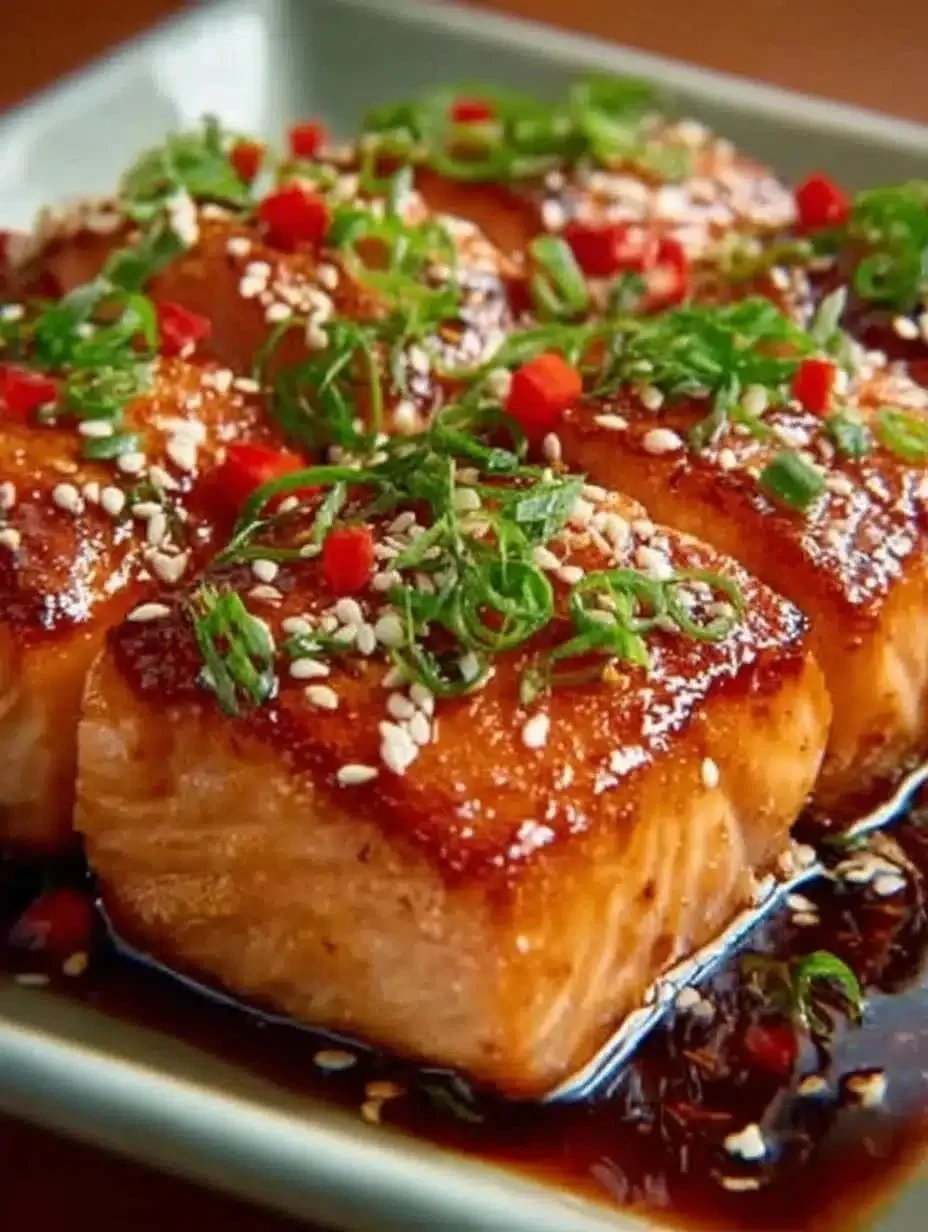
Orange Teriyaki Salmon — Easy Citrus-Glazed Fillets
The pan fills with sweet citrus and warm soy as a glossy glaze clings to flaky salmon — that’s the first bite. Orange Teriyaki Salmon brings bright orange juice and a sticky teriyaki glaze together for an easy dinner that tastes special. I developed this version while testing it eight times to get the balance of acid, salt, and sweetness right. I also refined the timing so fillets stay moist and glossy every time. If you like bold glaze turns, try a related twist such as a teriyaki salmon sushi bake for leftovers or party use. Read on for exact measurements, clear steps, and ways to scale or adapt the dish.
Why This Recipe Works
- The orange juice brightens and balances the soy and sweeteners without masking the salmon’s flavor.
- Browning the skin briefly adds texture and concentrates flavor before the glaze finishes in the oven.
- A small cornstarch slurry thickens the glaze quickly for a glossy, clingy finish.
- Low, quick roasting prevents overcooking and preserves a tender, medium doneness.
- Testing multiple times confirmed the timing and temperatures keep the fillet moist while developing sticky caramelization.
Ingredients Breakdown
- Salmon fillets (4 x 170 g / 6 oz portions): Choose center-cut fillets about 2–2.5 cm (3/4–1 inch) thick for even cook times. Skin-on helps hold the fillet together and crisps nicely.
- Orange juice — 120 ml (1/2 cup) fresh: Fresh juice brightens more than bottled. The citrus acid also helps balance sweetness.
- Low-sodium soy sauce — 60 ml (1/4 cup): Controls saltiness. For gluten-free use tamari (see substitutions).
- Honey — 45 g (3 tbsp): Adds floral sweetness and helps the glaze caramelize. Maple syrup can substitute but will change flavor.
- Light brown sugar — 25 g (2 tbsp): Deepens caramel notes. You can omit sugar if you prefer a less sweet glaze, but color and stickiness will be reduced.
- Rice vinegar — 15 ml (1 tbsp): Adds tang and balances the glaze.
- Sesame oil — 5 ml (1 tsp): A small amount gives toasty aroma.
- Garlic — 2 cloves, minced (about 8 g): Fresh garlic gives a sharper kick than powdered.
- Fresh ginger — 10 g (1 tbsp), finely grated: Adds warmth and brightness.
- Cornstarch — 5 g (1 tsp) mixed with 15 ml (1 tbsp) water: Makes a glossy, clingy glaze quickly.
- Neutral oil (vegetable or canola) — 15 ml (1 tbsp) for searing.
- Salt — 2–3 g (1/2 tsp) to season fillets: Use Diamond Crystal kosher salt for the measure; if using Morton, halve the amount because it’s denser.
- Black pepper — to taste.
- Garnish: sliced green onions and toasted sesame seeds, optional.
Substitutions with impact warnings:
- Tamari for soy sauce will make this gluten-free and slightly less salty.
- Coconut aminos instead of soy will give a milder, sweeter flavor and less salt.
- Using dark brown sugar increases molasses notes and deepens glaze color.
- If you replace honey with a liquid sugar alternative, reduce oven time slightly to prevent over-browning.
Essential Equipment
- Heavy skillet (12-inch / 30 cm) or nonstick skillet for searing; use a stainless pan for better browning. If you don’t have a skillet, a broiler-safe pan works but adjust sear step.
- Oven-safe baking sheet and wire rack to finish in the oven; rack keeps heat circulating under the fillet.
- Small saucepan for making glaze.
- Instant-read thermometer to check doneness — this is the most reliable way to prevent overcooking.
- Whisk, measuring spoons, and small bowl for cornstarch slurry.
- Kitchen brush (or spoon) to glaze the fillets.
If you prefer a fully oven method you can adapt techniques from a similar baked Tasmanian salmon recipe.
Step-by-Step Instructions
Prep Time: 10 minutes | Cook Time: 12 minutes | Inactive Time: None | Total Time: 22 minutes | Serves: 4 (1 fillet per person)
Step 1: Preheat and prepare the salmon
Preheat the oven to 200°C (400°F). Pat 680 g (4 x 6 oz) salmon fillets dry with paper towels and season lightly with 2–3 g (1/2 tsp) salt and pepper. Let them sit 5 minutes while you heat the pan.
Step 2: Make the orange-teriyaki glaze
Combine 120 ml (1/2 cup) fresh orange juice, 60 ml (1/4 cup) low-sodium soy sauce, 45 g (3 tbsp) honey, 25 g (2 tbsp) light brown sugar, 15 ml (1 tbsp) rice vinegar, 5 ml (1 tsp) sesame oil, minced garlic and grated ginger in a small saucepan. Bring to a simmer over medium heat, stirring, for 2–3 minutes until sugar dissolves.
Step 3: Thicken the glaze
Whisk 5 g (1 tsp) cornstarch with 15 ml (1 tbsp) cold water. Slowly whisk the slurry into the simmering glaze and simmer for 1–2 minutes until glossy and slightly thickened. Remove from heat. The glaze should coat the back of a spoon; if it’s too thin, simmer another minute.
Step 4: Sear the salmon
Heat 15 ml (1 tbsp) neutral oil in a heavy skillet over medium-high until shimmering, about 1–2 minutes. Place salmon skin-side down and sear for 2–3 minutes until the skin is crisp and the edges turn opaque. Do not move the fillet while searing — let it develop color.
Step 5: Glaze and finish in the oven
Transfer seared fillets to a wire rack set over a baking sheet, skin-side down. Brush each fillet with half the glaze. Bake at 200°C (400°F) for 6–8 minutes, until the thickest part reaches 50–52°C (122–125°F) for medium-rare to medium, or 60–63°C (140–145°F) if you prefer well-done. Remove and brush with remaining glaze; let rest 2 minutes for carryover cooking.
Step 6: Garnish and serve
Scatter sliced green onions and 1–2 teaspoons toasted sesame seeds per fillet. Serve immediately with a wedge of orange or lime for extra brightness.
Expert Tips & Pro Techniques
- Use an instant-read thermometer: salmon is best at 50–52°C (122–125°F) for tender, slightly translucent center. Overcooking is the most common mistake — stop at target temp.
- Common mistake and fix: if the glaze burns during broiling, lower the oven rack and finish at 180°C (350°F) for a few extra minutes. High sugar content caramelizes fast.
- Make-ahead: Prepare the glaze up to 24 hours ahead and refrigerate. Reheat gently on low before using. Cooked salmon can be glazed and reheated for sandwiches or salads.
- Professional trick for glossy glaze: reduce the glaze slightly more for deeper flavor, then whisk in a small knob of butter (5–10 g) off heat for shine.
- For an air-fryer adaptation, reduce bake time and watch closely; spritz the fillets with a little oil to encourage browning.
- Resting matters: let fillets rest 2 minutes after cooking to even out juices and finish carryover cooking.
Storage & Reheating
- Refrigerator: Store leftover glazed salmon in an airtight container for up to 3 days. Place glaze and fish together to keep the coating moist.
- Freezer: You can freeze cooked salmon for up to 2 months. Wrap tightly in plastic wrap and then foil, or use a vacuum sealer. Thaw overnight in the fridge before reheating.
- Reheating: Reheat in a 175°C (350°F) oven for 8–10 minutes, covered loosely with foil to prevent drying. Avoid microwaving when possible — it can make the texture crumbly and the glaze gummy.
Variations & Substitutions
- Gluten-Free Version: Replace soy sauce with 60 ml (1/4 cup) tamari and use the same quantities. No change to cook time.
- Paleo-Friendly: Use 45 g (3 tbsp) honey and 60 ml (1/4 cup) coconut aminos instead of soy. Expect a slightly sweeter, coconut-tinged glaze.
- Darker, Smoky Glaze: Swap 1 tbsp brown sugar for 1 tbsp molasses. The glaze will deepen and may darken faster during baking; watch closely.
- Air-Fryer Method: After searing, place fillets skin-side down in a preheated air fryer at 200°C (400°F) for 5–7 minutes. Reduce total time by 1–2 minutes and check internal temp early.
- Citrus Swap: Use 120 ml (1/2 cup) mandarin or blood orange juice for a different aroma. Keep acid balance the same.
Serving Suggestions & Pairings
- Pair with steamed jasmine rice or sticky rice to catch the glaze. For a lighter option, serve over mixed greens.
- Roasted or steamed vegetables like broccolini, asparagus, or bok choy balance richness. Try our roasted veggie approach in baked Tasmanian salmon with asparagus for timing ideas.
- Garnish with pickled daikon or quick-pickled cucumber to cut sweetness.
- Beverage pairings: a crisp Sauvignon Blanc, a dry Riesling, or a citrus-forward pale ale works well.
- Leftovers make a great salad topper or sandwich filling; for a soup pairing, try a bright tomato base like in this cilantro salmon tomato soup for contrast.
Also consider using leftover glaze as a dipping sauce for rice bowls or steamed vegetables. If you want a crispy patty variation, check out this air-fryer salmon patties idea for repurposing cooked salmon.
Nutrition Information
Per serving (1 fillet — serves 4)
- Serving size: 1 fillet (approx. 170 g / 6 oz)
- Calories: 420 kcal
- Total Fat: 18 g
- Saturated Fat: 3.5 g
- Cholesterol: 110 mg
- Sodium: 680 mg (varies with soy sauce choice)
- Total Carbohydrates: 24 g
- Dietary Fiber: 0.5 g
- Sugars: 20 g
- Protein: 40 g
Nutrition values are estimates. Actual values may vary based on specific ingredients and preparation methods.
Frequently Asked Questions
Q: Why did my salmon turn out dry?
A: Most likely it was overcooked. Use an instant-read thermometer and remove the fish at 50–52°C (122–125°F) for a moist center. Carryover cooking will raise the temp a few degrees while it rests.
Q: Can I make this without eggs?
A: Yes — this recipe does not use eggs. If you mean replacing egg in a side or binder, use a small amount of mayo or yogurt for moisture, but it’s not needed for the salmon itself.
Q: Can I double this recipe?
A: Yes. Double all glaze ingredients and sear in batches so the pan stays hot. Oven finishing time remains the same but you may need more oven space.
Q: Can I prepare this the night before?
A: You can make the glaze the night before and refrigerate. Do not cook the salmon ahead more than a day; it’s best cooked just before serving for texture and appearance.
Q: How long does this keep in the fridge?
A: Cooked glazed salmon keeps in the refrigerator up to 3 days in an airtight container.
Q: Can I use bottled orange juice?
A: You can, but fresh orange juice gives brighter, fresher flavor. Bottled juice may be sweeter or more muted.
Q: Can I broil instead of oven-finishing?
A: Yes. After brushing glaze, broil 3–4 minutes on high, watching closely so the sugars don’t burn. Keep the rack a little lower to avoid charring.
Conclusion
For another quick orange-glazed approach that trims time further, see this Easy Orange Glazed Salmon (20 Minute Meal!) – Chef Savvy for a fast alternative. If you prefer a paleo-style bake with similar flavors, check this Orange Teriyaki Baked Salmon – Cooked & Loved for a related method and ingredient ideas.
Print
Orange Teriyaki Salmon
- Total Time: 22 minutes
- Yield: 4 servings 1x
- Diet: Gluten-Free
Description
A delightful citrus-glazed salmon dish featuring fresh orange juice and a sticky teriyaki glaze, perfect for an easy yet special dinner.
Ingredients
- 4 salmon fillets (170 g / 6 oz each)
- 120 ml (1/2 cup) fresh orange juice
- 60 ml (1/4 cup) low-sodium soy sauce
- 45 g (3 tbsp) honey
- 25 g (2 tbsp) light brown sugar
- 15 ml (1 tbsp) rice vinegar
- 5 ml (1 tsp) sesame oil
- 2 cloves garlic, minced
- 10 g (1 tbsp) fresh ginger, finely grated
- 5 g (1 tsp) cornstarch mixed with 15 ml (1 tbsp) water
- 15 ml (1 tbsp) neutral oil (vegetable or canola) for searing
- Salt and black pepper to taste
- Optional garnish: sliced green onions and toasted sesame seeds
Instructions
- Preheat the oven to 200°C (400°F). Pat salmon fillets dry and season with salt and pepper. Let them rest for 5 minutes.
- Combine orange juice, soy sauce, honey, brown sugar, rice vinegar, sesame oil, garlic, and ginger in a saucepan. Simmer for 2-3 minutes until sugar dissolves.
- Whisk cornstarch with cold water; then stir it into the simmering glaze and cook for 1-2 minutes until thickened. Remove from heat.
- Heat neutral oil in a skillet over medium-high heat. Sear salmon skin-side down for 2-3 minutes until crisp.
- Transfer salmon to a wire rack on a baking sheet, brush with half the glaze, and bake for 6-8 minutes until desired doneness.
- Garnish with green onions and sesame seeds before serving.
Notes
For a gluten-free version, substitute soy sauce with tamari. Use fresh orange juice for optimal flavor.
- Prep Time: 10 minutes
- Cook Time: 12 minutes
- Category: Main Course
- Method: Baking
- Cuisine: Asian
Nutrition
- Serving Size: 1 fillet
- Calories: 420
- Sugar: 20g
- Sodium: 680mg
- Fat: 18g
- Saturated Fat: 3.5g
- Unsaturated Fat: 14.5g
- Trans Fat: 0g
- Carbohydrates: 24g
- Fiber: 0.5g
- Protein: 40g
- Cholesterol: 110mg