
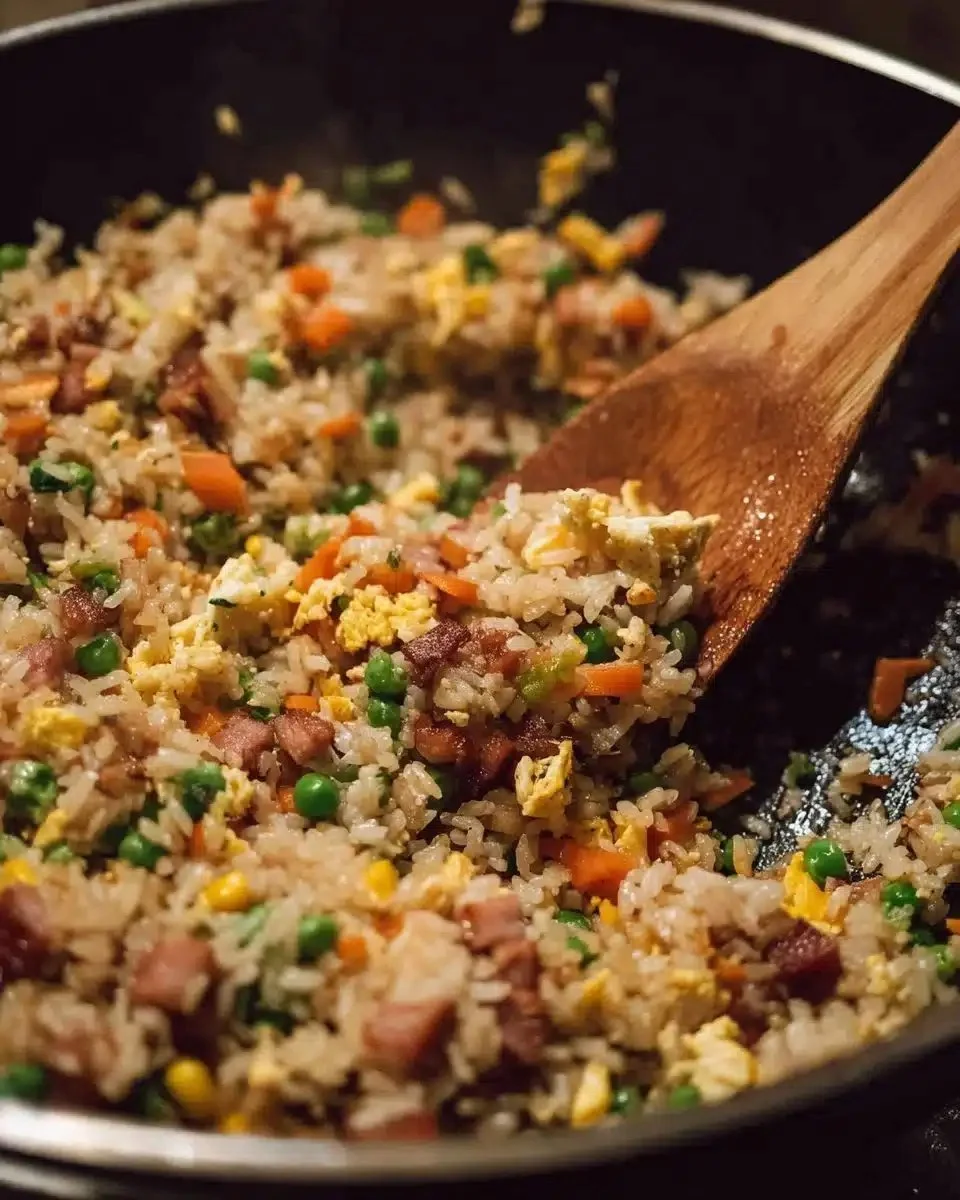
Classic Egg Fried Rice — Easy, Restaurant-Style
Steam-hot grains, glossy eggs, and the smell of toasted sesame oil—this version of classic egg fried rice tastes like your favorite takeout but finishes in 20 minutes. I developed and tested this method in a busy home kitchen, refining it through eight trials until the rice stayed fluffy and the egg ribbons stayed tender. The key is cold, day-old rice and high heat; those two things deliver separate, distinct grains and a light, silky egg texture. This recipe is forgiving for busy cooks and yields reliable results whether you use a wok or a heavy sauté pan. If you want a simple soup to serve alongside, try this comforting turkey rice soup for a bowl-and-rice dinner that’s ready in the same time. Read on for ingredient notes, precise steps with timing and temperatures, and tips that prevent the common pitfalls.
Why This Recipe Works
- High heat and quick cooking push moisture out of the rice so grains separate instead of clumping.
- Cold, day-old rice firms the kernels and firms up surface starches, which prevents mush.
- Beating the eggs creates fine ribbons that cook quickly and stay tender rather than rubbery.
- Salting in stages—rice seasoning and finishing soy—builds a balanced savory profile.
- Minimal oil plus a splash of toasted sesame oil at the end adds aroma without greasiness, like a restaurant fry.
Ingredients Breakdown
- Long-grain white rice (300 g / 1 1/2 cups uncooked; yields about 900 g / 6 cups cooked): Provides fluffy, separate grains when cooled. Do not use freshly cooked, steaming rice—use rice cooked at least 6–24 hours earlier and refrigerated.
- Neutral oil (2 tbsp / 30 ml; vegetable, canola, or peanut): For high-heat frying without burning.
- Eggs (3 large, room temperature): Beat until smooth; eggs add silk and protein. If you prefer baked options, see this baked eggs with spinach for a companion breakfast idea.
- Yellow onion or shallot (1 small; about 70 g / 1/2 cup finely diced): Adds sweetness and body.
- Garlic (2 cloves; 6 g, minced): Adds savory depth—add at the end of sautéing to avoid burning.
- Frozen peas and carrots (100 g peas, 100 g carrots / about 3/4 cup each): Quick, color-contrast vegetables that thaw in the pan.
- Soy sauce (2 tbsp / 30 ml): Salty umami backbone. Use low-sodium for tighter control.
- Oyster sauce (optional, 1 tbsp / 15 ml): Adds sweet-savory depth—skip for vegetarian diets.
- Toasted sesame oil (1 tsp / 5 ml): Aroma only—add at the end.
- Kosher salt (use Diamond Crystal 1 tsp / 6 g here): If using Morton’s, halve the quantity as Morton’s is denser.
- Fresh scallions (2, thinly sliced): Bright finish and garnish.
- White pepper or black pepper (to taste): Traditional white pepper provides a mild heat and peppery aroma.
Substitutions and impact warnings:
- Brown rice: Use the same method but know the grains are denser; you may need a splash more oil and slightly longer high-heat tossing to separate grains.
- Day-old quinoa: Substituting quinoa changes texture and flavor; reduce stirring to avoid grain breakage.
- No eggs: Replace eggs with extra-firm tofu crumbles (200 g / 7 oz) and increase soy by 1 tsp to replace savory depth—this is not an egg-free version in texture.
Essential Equipment
- Wok (preferred) or a 30 cm / 12-inch heavy-bottomed sauté pan: The wok’s sloped sides let you toss at high heat; use a sauté pan if you don’t have a wok.
- Spatula (metal or heatproof wood): For fast flipping and scraping.
- Large bowl for beaten eggs.
- Measuring spoons and scale: For consistent seasoning.
- Rice cooker or pot for cooking rice ahead of time: A rice cooker yields consistent grains; if you don’t have one, cook rice with a tight-fitting lid and cool it on a tray.
If you don’t have a wok, a large cast-iron skillet is a good substitute—heat it thoroughly before adding oil. For work that needs a gentler tool, a silicone spatula helps fold eggs without scratching cookware.
Step-by-Step Instructions
Serves 4 • Prep time 10 minutes • Cook time 10 minutes • Inactive time None (except chilling rice beforehand if prepping) • Total time about 20 minutes.
Step 1: Prepare the rice and eggs
Measure cooked rice: 600 g (about 4 cups cooked). Break up any clumps with your hands or fork. Beat 3 large eggs (about 150 g / 5 oz) lightly with a pinch of salt until smooth, about 20 seconds. Resting rice in the refrigerator for at least 6 hours gives the best texture.
Step 2: Heat the pan and oil
Heat the wok or skillet over high until it’s very hot, about 2–3 minutes on a gas burner. Add 2 tbsp (30 ml) neutral oil and swirl to coat, heating for 10–15 seconds until it shimmers. High heat is essential—don’t be timid.
Step 3: Cook the eggs quickly
Pour beaten eggs into one side of the wok and let them set for 5–10 seconds, then scramble gently until just cooked but still tender, about 20–30 seconds. Transfer eggs to a plate; they will continue to cook with the rice later.
Step 4: Sauté aromatics and vegetables
Add another 1 tbsp (15 ml) oil if the pan is dry. Add 1 small diced onion (70 g) and sauté until translucent and fragrant, about 2–3 minutes. Add 2 minced garlic cloves and cook 15–20 seconds until aromatic—do not brown the garlic.
Step 5: Fry the rice
Add the cold rice (600 g / 4 cups) to the pan and toss or stir-fry for 2–3 minutes, flattening and then stirring to heat through and evaporate surface moisture. Cook until grains look dry and separate, about 3–5 minutes depending on pan temperature.
Step 6: Season and finish
Stir in frozen peas and carrots (each 100 g / about 3/4 cup) and cook 1–2 minutes until heated. Return the eggs to the pan, add 2 tbsp (30 ml) soy sauce, 1 tbsp (15 ml) oyster sauce if using, and 1 tsp (5 ml) toasted sesame oil—toss for 30–45 seconds to combine. Taste and adjust with a pinch of kosher salt if needed. Scatter 2 sliced scallions and serve immediately.
Critical technique: Do not overcrowd the pan. Work in batches for larger quantities to maintain high heat and grain separation.
Expert Tips & Pro Techniques
- Use truly cold rice: Spread freshly cooked rice on a sheet pan to cool quickly or refrigerate overnight for best separation.
- Oil layering: Start with neutral oil for frying, finish with a tiny amount of toasted sesame oil for aroma—too much sesame oil can taste bitter.
- Common mistake: soggy rice. Fix it by stirring more aggressively on high heat to evaporate moisture; if needed, push rice to the side and let excess water steam off for 30 seconds.
- Egg technique: Cook eggs quickly on one side, then break up gently—this creates tender ribbons rather than tiny curds.
- Make-ahead: Prepare the rice and aromatics, store separately, then reheat in a hot pan and finish with eggs just before serving.
- Professional trick adapted for home cooks: Toss rice with a teaspoon of neutral oil before refrigerating; this helps grains separate when you fry them.
Storage & Reheating
- Refrigerator: Store cooled fried rice in an airtight container for 3–4 days. Keep eggs and rice together—flavors meld well.
- Freezer: Fried rice freezes well for up to 2 months. Cool completely, pack in freezer-safe containers or heavy-duty bags (portion into 1–2 cup servings), and freeze flat to save space. Thaw overnight in the refrigerator.
- Reheating: Reheat over medium-high heat in a skillet with a teaspoon of oil, stirring frequently, about 3–5 minutes until steaming through. Alternatively, reheat in a 190°C (375°F) oven for 8–10 minutes. Avoid microwaving for best texture; it can make rice gummy.
Variations & Substitutions
- Vegetarian: Omit oyster sauce and replace with 1 tbsp (15 ml) hoisin or additional soy sauce. Keep eggs or use firm tofu (200 g / 7 oz) for protein.
- Shrimp or chicken: Add 200 g (7 oz) peeled shrimp or thinly sliced chicken breast; cook separately until just done (shrimp 1–2 minutes, chicken 3–4 minutes) and fold in at the end.
- Brown rice version: Use 600 g (about 4 cups cooked) day-old brown rice. Expect slightly firmer texture; you may need an extra 1–2 minutes on high heat to separate grains.
- Leftover dinner makeover: Stir in diced lunchmeat or roasted vegetables for a quick reuse. For a sweet-savory dessert twist, try inspiration from this condensed milk baked rice if you want an after-dinner treat—do not combine with savory elements.
- Low-sodium: Use low-sodium soy and increase aromatics (ginger, scallions) to maintain flavor without extra salt.
Serving Suggestions & Pairings
- Serve alongside a light soup for contrasting textures; a bowl of broth pairs well with the rice’s savory notes.
- Garnish with thinly sliced cucumber, pickled jalapeños, or kimchi for acidity and crunch.
- For a heartier meal, serve with a sandwich or handheld: try our classic Italian meatball subs for a crowd-pleasing combo where the rice acts as a side.
- Beverage pairing: A cold lager or green tea cuts through the savory oil and refreshes the palate.
Nutrition Information
Serving size: 1 cup (about 225 g) — Recipe yields 4 servings.
Estimated per serving:
- Calories: 340 kcal
- Total Fat: 12 g
- Saturated Fat: 2.5 g
- Cholesterol: 155 mg
- Sodium: 780 mg (varies by soy sauce choice)
- Total Carbohydrates: 44 g
- Dietary Fiber: 2 g
- Sugars: 3 g
- Protein: 11 g
Nutrition values are estimates. Actual values may vary based on specific ingredients and preparation methods.
Frequently Asked Questions
Q: Why did my fried rice turn out soggy?
A: Sogginess usually means the rice was too fresh or the pan temperature was too low. Use day-old cold rice and make sure the pan is very hot. Work in smaller batches so the rice can dry and separate.
Q: Can I make this without eggs?
A: Yes. Use firm tofu crumbles (200 g / 7 oz) seasoned with 1 tsp soy and sautéed until browned. The texture will differ but flavor stays satisfying.
Q: Can I double this recipe?
A: You can double the ingredients, but do not double in a single pan unless it’s very large. Cook in two batches to keep high heat and prevent steaming.
Q: Can I prepare this the night before?
A: Absolutely. Cook the rice and aromatics, cool, and refrigerate. Reheat and finish with eggs right before serving for best texture.
Q: How long does this keep in the fridge?
A: Stored airtight, fried rice keeps 3–4 days in the refrigerator. Reheat until piping hot throughout.
Q: Can I use jasmine rice or basmati?
A: Yes—long-grain jasmine or basmati are fine. Jasmine gives a slightly floral aroma; both separate well when chilled.
Q: My eggs turned rubbery. How do I avoid that?
A: Cook eggs quickly on high heat and stop when they’re just set; they should be slightly underdone because they finish cooking when folded into the hot rice.
Conclusion
This method gives reliably fluffy grains and tender egg ribbons—perfect for a quick weeknight dinner. For more technique-focused variations and to compare classic regional styles, see this take on Dad’s Authentic Fried Rice: A Chinese Chef’s Secrets, and for another solid classic approach, read Classic Egg Fried Rice – Dash of Soy Culinary School.
Print
Classic Egg Fried Rice
- Total Time: 20 minutes
- Yield: 4 servings 1x
- Diet: Vegetarian
Description
A quick and easy version of classic egg fried rice that tastes like your favorite takeout, ready in just 20 minutes.
Ingredients
- 300 g long-grain white rice (1 1/2 cups uncooked)
- 2 tbsp neutral oil (30 ml)
- 3 large eggs
- 1 small yellow onion or shallot (about 70 g, finely diced)
- 2 cloves garlic (6 g, minced)
- 100 g frozen peas (about 3/4 cup)
- 100 g frozen carrots (about 3/4 cup)
- 2 tbsp soy sauce (30 ml)
- 1 tbsp oyster sauce (optional, 15 ml)
- 1 tsp toasted sesame oil (5 ml)
- 1 tsp kosher salt (6 g)
- 2 fresh scallions (thinly sliced)
- White pepper or black pepper (to taste)
Instructions
- Prepare the rice: Measure cooked rice (600 g, about 4 cups) and break up any clumps. Beat eggs lightly with a pinch of salt.
- Heat the pan: Heat the wok over high heat for 2–3 minutes, then add oil and let it shimmer.
- Cook the eggs: Pour beaten eggs into the pan, scramble until just cooked, and transfer to a plate.
- Sauté the aromatics: Add diced onion and sauté until translucent, then add garlic and cook until aromatic.
- Fry the rice: Add cold rice to the pan and stir-fry for 2–3 minutes until dry and separated.
- Season and finish: Stir in peas and carrots, return eggs to the pan, add soy sauce, oyster sauce, and sesame oil, then toss and serve.
Notes
For best results, use cold, day-old rice and do not overcrowd the pan for frying.
- Prep Time: 10 minutes
- Cook Time: 10 minutes
- Category: Main Course
- Method: Stir-frying
- Cuisine: Asian
Nutrition
- Serving Size: 1 serving
- Calories: 340
- Sugar: 3g
- Sodium: 780mg
- Fat: 12g
- Saturated Fat: 2.5g
- Unsaturated Fat: 9.5g
- Trans Fat: 0g
- Carbohydrates: 44g
- Fiber: 2g
- Protein: 11g
- Cholesterol: 155mg