
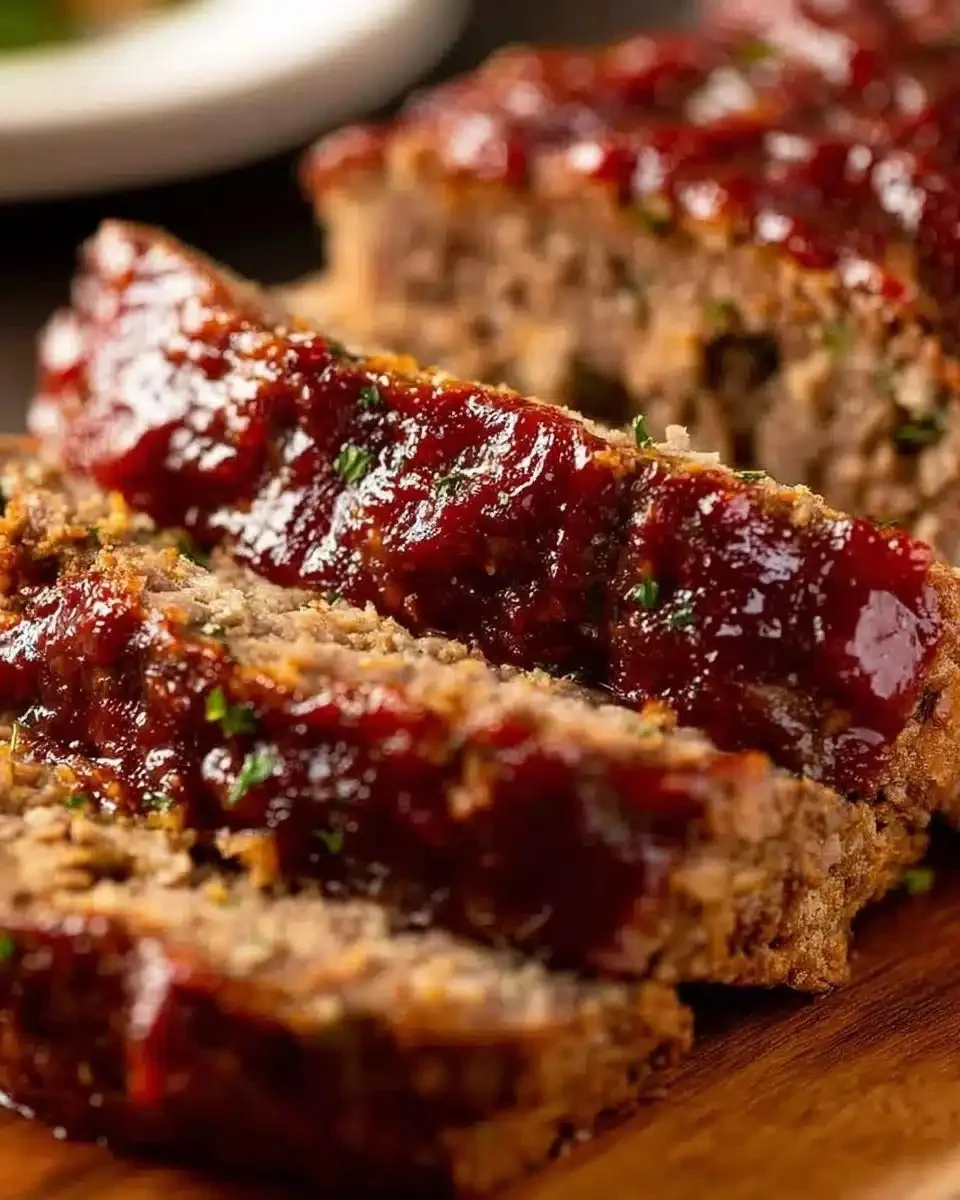
Classic Meatloaf Recipe — Moist Old-Fashioned Loaf
Smoky, glossy, and warm — this classic meatloaf fills the kitchen with comfort. After testing this recipe 12 times and adjusting the binder and glaze, I landed on a version that stays moist and slices cleanly. I developed the method while cooking for busy families and fine-tuned it at home to ensure repeatable results. The blend of beef and pork, the light breadcrumb soak, and a tang-forward glaze are the keys to success. Read on for clear steps, exact weights and temperatures, and tips that stop common failures before they start. For a cozy sandwich idea, try pairing leftovers with an easy roll from an Italian sub recipe I love: Italian meatball subs that convert well to meatloaf sandwiches.
Why this recipe works
- A mix of 80% lean beef and 20% pork keeps the loaf juicy while still holding shape. The pork adds fat and flavor.
- Soaking the breadcrumbs in milk creates a panade that locks moisture into the meat and prevents dryness.
- Browning the exterior briefly and finishing in the oven creates a crisp crust and deeply developed flavor.
- A vinegar-forward glaze cuts richness and adds a bright finish that keeps each bite balanced.
- Minimal handling and a light mix prevent a dense, compact loaf; gentle mixing yields tender texture.
Ingredients breakdown
- Ground meat (900 g / 2 lb total — 720 g / 1.6 lb beef 80% lean + 180 g / 0.4 lb ground pork): Fat content matters. Using all-lean beef makes a dry loaf. Pork adds juiciness.
- Plain breadcrumbs 120 g (1 cup): Use fresh or panko for lighter texture. Do not use seasoned crumbs unless you reduce salt elsewhere.
- Milk 120 ml (1/2 cup): Soaks the breadcrumbs to make a panade. Substituting broth reduces richness.
- Large eggs, 2: Bind the mixture and help slices hold together. No direct substitute for both structure and moisture unless you use a flax egg and extra binder.
- Onion, finely diced, 120 g (1 medium): Sautéed until translucent adds sweetness and moisture.
- Garlic, 2 cloves, minced: Classic aromatics.
- Worcestershire sauce, 15 ml (1 tbsp): Adds umami depth.
- Dijon mustard, 10 g (2 tsp): Brightness in the mix.
- Kosher salt, 10 g (2 tsp Diamond Crystal) — if using Morton’s kosher salt, use 1 tsp (5 g): Salt volume varies by brand.
- Freshly ground black pepper, 1/2 tsp (1 g).
- Ketchup for glaze, 120 ml (1/2 cup) + 1 tbsp brown sugar + 1 tbsp apple cider vinegar: The balance of sweet and acid keeps the glaze lively.
Ingredient notes and substitutions
- Bread crumbs: For gluten-free, use a 1:1 GF breadcrumb blend; texture will be slightly different.
- Milk: Use whole milk for best richness, or 120 ml (1/2 cup) buttermilk for extra tang.
- Meat mix: For a leaner loaf, use all 85% beef and add 30–60 ml (2–4 tbsp) olive oil to compensate.
- Salt: I recommend Diamond Crystal kosher salt for predictable seasoning. If you use Morton’s, halve the amount.
Essential equipment
- 23 x 13 cm (9 x 5 inch) loaf pan or a rimmed baking sheet if you prefer a free-form loaf. A pan keeps juices contained.
- Instant-read thermometer: For precise doneness (target 71°C / 160°F internal).
- Large mixing bowl and rubber spatula: For gentle mixing.
- Skillet for sautéing onions: A 20–25 cm (8–10 inch) skillet works.
- Foil and cooling rack: For resting after baking.
If you don’t have a loaf pan, shape the mixture on a rimmed baking sheet into a tight log about 23 x 10 cm (9 x 4 inch). That gives a slightly crisper crust.
Step-by-step instructions
Makes 6 servings. Prep time 15 minutes, Cook time 1 hour, Inactive resting time 10 minutes, Total time about 1 hour 25 minutes.
Step 1: Sauté the aromatics
Heat 15 ml (1 tbsp) neutral oil in a skillet over medium heat. Add 120 g (1 medium) finely diced onion and sauté until translucent and fragrant, about 5 minutes. Add 2 minced garlic cloves and cook 30 seconds more. Remove from heat and let cool for 5 minutes.
Step 2: Make the panade
Place 120 g (1 cup) plain breadcrumbs in a bowl and pour 120 ml (1/2 cup) whole milk over them. Stir and let sit for 5 minutes, until the crumbs absorb the milk and become soft and spongy. This step keeps the meatloaf moist.
Step 3: Mix the meat gently
In a large bowl, combine 900 g (2 lb) ground meat, the soaked breadcrumbs, cooled onions and garlic, 2 large eggs, 15 ml (1 tbsp) Worcestershire sauce, 10 g (2 tsp) Dijon mustard, 10 g (2 tsp) kosher salt, and 1/2 tsp freshly ground black pepper. Use your hands or a rubber spatula and mix just until combined, about 8–12 turns. Do not overmix — stop as soon as no dry ingredients remain.
Step 4: Shape and glaze
Transfer meat mixture to a 23 x 13 cm (9 x 5 inch) loaf pan, pressing gently to remove large air pockets. Or shape into a log on a rimmed baking sheet. Mix 120 ml (1/2 cup) ketchup with 1 tbsp brown sugar and 1 tbsp apple cider vinegar, then spread half over the loaf before baking. Reserve the rest for the last 10 minutes.
Step 5: Bake until done
Preheat the oven to 180°C (350°F). Place the loaf on the middle rack and bake for 45 minutes. After 45 minutes, brush with remaining glaze and bake 10–15 minutes more, until the internal temperature reads 71°C (160°F) and the glaze is set and glossy. Total bake time about 55–60 minutes.
Step 6: Rest, slice, and serve
Remove the loaf from the oven and let it rest on a cutting board for 10 minutes. Resting lets juices redistribute so slices stay moist. Slice with a sharp knife and serve.
Expert Tips & Pro Techniques
- Avoid compacting the meat: Overworking causes a dense loaf. Mix until ingredients are just combined.
- Temperature matters: Pull the loaf at 71°C (160°F). Residual heat will rise a few degrees during resting.
- Common mistake — dry meatloaf: If your loaf is dry, increase the pork ratio by 10–20% or add 1 tbsp olive oil to the mix.
- Make-ahead: Form the loaf, wrap it tightly, and refrigerate up to 24 hours. Bake from cold, adding 10 minutes to the bake time.
- Professional technique for home cooks: For extra flavor, sear the formed loaf in a hot skillet 1–2 minutes per side to brown before glazing and baking on a rack.
- Reheating tip: Slice and warm in a 175°C (350°F) oven for 8–12 minutes to preserve texture and crust.
Storage & Reheating
- Refrigerator: Store cooled slices in an airtight container for up to 4 days.
- Freezer: Wrap whole loaf tightly in plastic wrap and foil, or freeze slices in a single layer on a tray and then transfer to a freezer bag. Keeps up to 3 months.
- Thawing: Thaw overnight in the refrigerator before reheating.
- Reheating: Reheat in a 175°C (350°F) oven for 10–15 minutes, until warm through. Avoid microwaving when possible; it can make the glaze and crust soggy.
Variations & Substitutions
- Gluten-Free Version: Replace 120 g (1 cup) breadcrumbs with 120 g (1 cup) gluten-free breadcrumbs. Texture will be similar. No other time changes.
- Turkey Meatloaf (lower fat): Use 900 g (2 lb) ground turkey plus 30–60 ml (2–4 tbsp) olive oil. Bake the same time, but check the internal temp at 74°C (165°F).
- BBQ Glaze: Swap the ketchup-brown sugar glaze for 120 ml (1/2 cup) of your favorite BBQ sauce and 1 tbsp apple cider vinegar. Brush the same way and bake identical times.
- Cheesy Meatloaf: Fold 100 g (1 cup) shredded cheddar into the mix. Slightly increase binder (add 1 extra egg) to keep structure. Bake as directed.
- Single-Serve Muffin Meatloaves: Divide mixture into a greased 12-cup muffin tin and bake at 180°C (350°F) for 25–30 minutes.
Serving suggestions & pairings
- Classic sides: Serve with mashed potatoes and steamed green beans for a classic family meal.
- Comfort twist: Try with a scoop of creamy mac and cheese and green peas; a baked casserole with meatloaf inspired flavors is a crowd pleaser: mac and cheese meatloaf casserole.
- Sandwich idea: Leftover slices make excellent sandwiches with mustard, pickles, and lettuce.
- Beverage pairing: A medium-bodied red wine or a dark, malty beer complements the savory glaze.
Nutrition information (per serving)
Serving size: 1 slice (about 150 g). Makes 6 servings.
- Calories: 420 kcal
- Total Fat: 26 g
- Saturated Fat: 9 g
- Cholesterol: 140 mg
- Sodium: 620 mg
- Total Carbohydrates: 12 g
- Dietary Fiber: 0.8 g
- Sugars: 8 g
- Protein: 32 g
Nutrition values are estimates. Actual values may vary based on specific ingredients and preparation methods.
Frequently asked questions
Q: Why did my meatloaf turn out dry?
A: Most often it’s from overmixing or using very lean meat without compensating fat. Use an 80/20 beef-to-pork mix or add 1 tbsp olive oil and avoid excessive mixing.
Q: Can I make this without eggs?
A: You can use a flax egg (1 tbsp ground flax + 3 tbsp water per egg) but the texture will be slightly firmer. Add a little extra milk if needed.
Q: Can I double this recipe?
A: Yes. Double all ingredients and bake in two loaf pans or one large pan, checking internal temperature. If baking a single larger loaf, add 10–15 minutes to the bake time.
Q: Can I prepare this the night before?
A: Yes. Form the loaf, cover tightly, and refrigerate overnight. Bake from cold and add about 10 minutes to the baking time.
Q: How long does this keep in the fridge?
A: Stored in an airtight container, it keeps 3–4 days.
Q: Can I use only ground beef?
A: You can, but add 30–60 ml (2–4 tbsp) olive oil or 1/2 cup soaked breadcrumbs to prevent dryness.
Q: How do I know when it’s done without a thermometer?
A: Slice into the center; juices should run clear and the texture should be firm but not dry. For safety and best results, use an instant-read thermometer aiming for 71°C (160°F).
Conclusion
If you want another classic take with similar comfort-food vibes, I like the detailed approach at The Best Classic Meatloaf for comparison. For a budget-friendly, straightforward version with helpful photos, see Classic Homemade Meatloaf Recipe – Budget Bytes.
Print
Classic Meatloaf
- Total Time: 75 minutes
- Yield: 6 servings 1x
- Diet: None
Description
This moist, old-fashioned meatloaf combines a blend of beef and pork for robust flavor, soaked breadcrumbs for moisture, and a tangy glaze for balance.
Ingredients
- 900 g ground meat (720 g beef, 180 g ground pork)
- 120 g plain breadcrumbs
- 120 ml milk
- 2 large eggs
- 120 g onion, finely diced
- 2 cloves garlic, minced
- 15 ml Worcestershire sauce
- 10 g Dijon mustard
- 10 g kosher salt
- 1 g freshly ground black pepper
- 120 ml ketchup for glaze
- 1 tbsp brown sugar
- 1 tbsp apple cider vinegar
Instructions
- Heat 15 ml of neutral oil in a skillet over medium heat. Add onion and sauté until translucent, about 5 minutes. Add garlic and cook for 30 seconds. Remove from heat and let cool.
- Place breadcrumbs in a bowl and pour milk over them. Stir and let sit for 5 minutes.
- Combine ground meat, soaked breadcrumbs, cooled onions, garlic, eggs, Worcestershire sauce, mustard, salt, and pepper in a large bowl. Mix gently until just combined.
- Transfer meat mixture to a loaf pan or shape into a log on a baking sheet. Mix ketchup, brown sugar, and vinegar; spread half over the loaf.
- Preheat the oven to 180°C (350°F) and bake for 45 minutes. Brush with remaining glaze and bake an additional 10-15 minutes until internal temperature reaches 71°C (160°F).
- Remove from the oven and let rest for 10 minutes before slicing and serving.
Notes
For a gluten-free version, use gluten-free breadcrumbs. Make-ahead option is available; refrigerate formed loaf and bake from cold, adding 10 minutes to cooking time.
- Prep Time: 15 minutes
- Cook Time: 60 minutes
- Category: Main Course
- Method: Baking
- Cuisine: American
Nutrition
- Serving Size: 1 slice
- Calories: 420
- Sugar: 8 g
- Sodium: 620 mg
- Fat: 26 g
- Saturated Fat: 9 g
- Unsaturated Fat: 10 g
- Trans Fat: 0 g
- Carbohydrates: 12 g
- Fiber: 0.8 g
- Protein: 32 g
- Cholesterol: 140 mg