
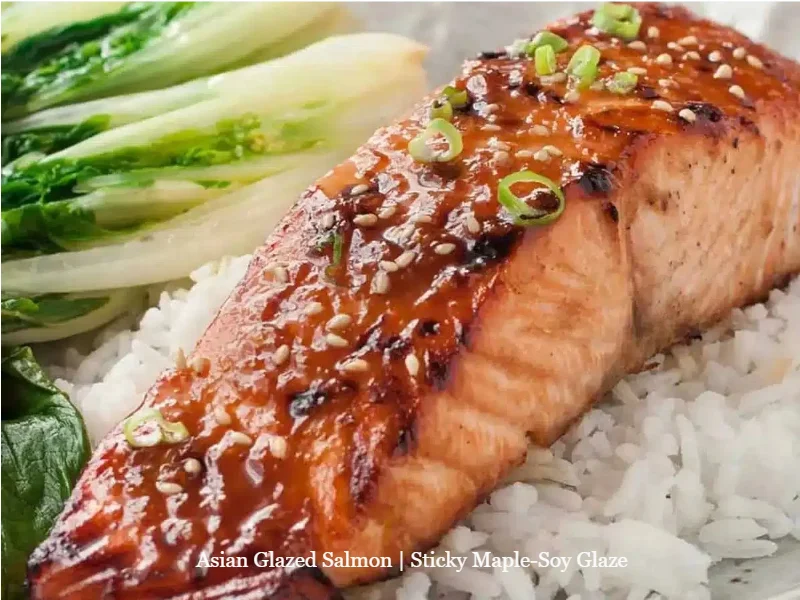
Sticky Maple-Soy Glazed Salmon for Weeknights
The glaze crackles on the surface and the flesh flakes with a gentle press — this Asian glazed salmon delivers big flavor in a small amount of time. I developed this version while testing dozens of glaze ratios in a small restaurant kitchen and refined it for home cooks who want a reliable, fast weeknight dinner. After testing this recipe 8 times with different salmon thicknesses and two ovens, I settled on the precise timings and temperature below. The glaze balances sweet maple, salty soy, and a bright splash of rice vinegar so the fish caramelizes without burning. Read on for a clear ingredient breakdown, exact timings, and simple tricks to get glossy, restaurant-style results at home. If you like a similar approach to salmon, try our baked Tasmanian salmon with asparagus for a different oven-roasted finish.
Why This Recipe Works
- Quick high-heat roast gives a crisp, caramelized exterior while keeping the interior moist. The times account for common fillet thicknesses.
- A simple reduction concentrates maple and soy for a sticky glaze that clings instead of sliding off.
- Rice vinegar or lime brightens the glaze, cutting through richness and preventing a cloying finish.
- A short broil at the end builds color without drying the fish when you watch it closely.
- Testing across multiple ovens produced precise timing and sensory cues to prevent overcooking.
Ingredients Breakdown
- Salmon fillets: 680 g (1.5 lb) total, about 4 fillets of 170 g (6 oz) each — skin-on. Skin crisps under high heat and protects the flesh from overcooking. If using thicker fillets, add 2–3 minutes cooking time.
- Pure maple syrup: 80 ml (1/3 cup). Use real maple for depth; pancake syrups lack complexity and can burn more easily.
- Low-sodium soy sauce or tamari: 60 ml (1/4 cup). Tamari makes this gluten-free; if you use regular soy, the sodium will be higher.
- Rice vinegar: 15 ml (1 tbsp). Adds acidity to balance sweetness.
- Sesame oil: 5 ml (1 tsp). A toasted sesame oil finish adds aroma; do not use as a cooking oil at high heat.
- Fresh ginger: 10 g (2 tsp) grated. Fresh ginger brightens and cuts the glaze’s sweetness.
- Garlic: 2 cloves, minced (6 g). Adds savory depth.
- Cornstarch slurry: 5 g (1 tsp) cornstarch mixed with 15 ml (1 tbsp) cold water. Thickens the glaze so it clings to the fish.
- Toasted sesame seeds and thinly sliced scallions: for garnish and textural contrast.
Substitutions with warnings: - Maple syrup: honey will work but the flavor is different and browns faster. Reduce broil time by 10–15 seconds.
- Soy sauce: use tamari to make the dish gluten-free; if using regular soy, taste the glaze before finishing to check salt.
- Sesame oil: omit if allergic; replace with 1 tsp neutral oil and finish with a squeeze of lime for aroma.
Essential Equipment
- Baking sheet lined with foil or parchment for easy cleanup.
- Wire rack that fits the baking sheet: raises fillets for even air circulation and crisping.
- Small saucepan for the glaze.
- Instant-read thermometer: invaluable to check doneness (target 52–57°C / 125–135°F for medium-rare to medium).
- Microplane or fine grater for ginger. If you don’t have one, mince ginger finely.
- Broiler-safe oven: if your oven broils unevenly, rotate the pan halfway during broiling.
If you lack a wire rack, place fillets directly on the lined baking sheet and expect slightly less crisp skin.
Step-by-Step Instructions
Serves 4 • Prep time 15 minutes • Cook time 12 minutes (plus 2–3 minutes broil) • Inactive time: None • Total time 27–30 minutes
Step 1: Preheat and prep the salmon
Preheat the oven to 220°C (425°F). Pat 680 g (1.5 lb) salmon fillets dry with paper towels and season the skin and edges lightly with 3 g (1/2 tsp) kosher salt. Let rest while you make the glaze, about 5 minutes.
Step 2: Make the glaze
In a small saucepan, combine 80 ml (1/3 cup) pure maple syrup, 60 ml (1/4 cup) low-sodium soy sauce (or tamari), 15 ml (1 tbsp) rice vinegar, 10 g (2 tsp) grated ginger, and 2 cloves (6 g) minced garlic. Bring to a gentle simmer over medium heat and reduce for 3–4 minutes until slightly thickened and aromatic.
Step 3: Thicken and finish the glaze
Whisk 5 g (1 tsp) cornstarch with 15 ml (1 tbsp) cold water to make a slurry. Pour the slurry into the simmering glaze and cook 30–45 seconds until glossy and thick enough to coat the back of a spoon. Remove from heat and stir in 5 ml (1 tsp) toasted sesame oil. Cool for 2 minutes; the glaze will continue to thicken as it cools.
Step 4: Brush and roast the fillets
Set salmon, skin-side down, on a wire rack over a baking sheet. Brush each fillet with about 15–20 ml (1 tbsp) of glaze. Roast in the preheated oven for 8–10 minutes for 2–2.5 cm (3/4–1 inch) thick fillets; add 2–3 minutes for thicker fillets. Cook until the internal temperature reaches 52–57°C (125–135°F) and the flesh flakes easily.
Step 5: Broil for color
Switch the oven to broil. Brush another thin layer of glaze and broil on high for 1–2 minutes, watching constantly, until the glaze bubbles and the edges caramelize. Do not walk away during broiling — it can go from caramelized to burnt in seconds.
Step 6: Rest and serve
Let the fillets rest for 2 minutes to redistribute juices. Garnish with 1 tbsp toasted sesame seeds and 2–3 thinly sliced scallions per fillet. Serve immediately with extra glaze on the side if desired.
Expert Tips & Pro Techniques
- Common mistake: glazing too early. If you apply the thickest layer before roasting, the sugars will burn. Always apply the final glaze just before broiling.
- Use an instant-read thermometer to avoid overcooking. Aim for 52–57°C (125–135°F) for moist, slightly translucent salmon.
- Make-ahead: cook the glaze up to 3 days ahead and refrigerate in a sealed container. Rewarm gently before using and whisk if it thickens too much.
- Professional technique for home: elevate the fillets on a wire rack so hot air circulates under the skin. This mimics restaurant salamanders and yields crisp skin.
- If you want a thicker, stickier finish, reduce the glaze 1–2 minutes longer, but be ready to broil briefly to finish the caramelization.
- To avoid a flaky, dry center, remove salmon from the oven 3–4°C (5–7°F) below your target, as carryover heat will raise the internal temp while resting.
- For a smoky depth, add ¼ tsp smoked paprika to the glaze, but start with less — it can easily overpower the maple.
Storage & Reheating
- Refrigerator: Store cooked salmon in an airtight container for up to 3 days. Place glaze in a separate small jar if you plan to reheat to avoid soggy skin.
- Freezer: Not ideal for best texture, but you can freeze cooked glazed salmon wrapped tightly in plastic and foil for up to 2 months. Thaw overnight in the fridge.
- Reheating: Reheat in a 175°C (350°F) oven for 8–10 minutes to warm through and refresh the glaze. For crisper skin, place under the broiler for 30–45 seconds at the end. Avoid microwaving — it makes the skin soggy and the flesh unevenly heated.
Variations & Substitutions
- Gluten-Free Version: Use tamari instead of soy sauce (60 ml / 1/4 cup). Everything else stays the same. Check labels to ensure tamari brand is certified gluten-free.
- Honey-Ginger Glazed Salmon: Replace maple syrup with 80 ml (1/3 cup) honey and reduce broil time by 10–15 seconds because honey browns faster. The texture remains similar but flavor is floral.
- Spicy Kick: Add 5–10 g (1–2 tsp) gochujang or 5 g (1 tsp) sriracha to the glaze. Keep other measurements unchanged; the glaze will be brighter and slightly thicker.
- Sheet-Pan Meal: Add asparagus or thin broccoli florets around the salmon. Roast at the same 220°C (425°F) for 10–12 minutes; vegetables will char slightly and absorb glaze flavors.
- Vegetarian swap: For a plant-based alternative, try a sticky glaze on tofu. Our sticky glazed tofu bowl adapts the same glaze with firmer pressing and pan-searing.
Serving Suggestions & Pairings
- Starchy side: Serve with steamed jasmine rice or quick garlic fried rice for soaking up the glaze. For whole grains, try a bowl of warm brown rice mixed with toasted sesame oil.
- Vegetables: Pair with roasted broccolini or an emerald cucumber salad dressed with rice vinegar and a pinch of sugar to balance the glaze.
- Beverage pairings: A chilled dry riesling or a light lager complements the sweetness and soy saltiness.
- For a family-friendly menu, pair with easy salmon cakes like our air-fryer salmon patties for leftovers turned into sandwiches.
- Holiday twist: Use the same glaze on larger sides of salmon for entertaining; learn a festive approach in our holiday salmon guide.
Nutrition Information
Per serving (1 fillet ≈ 170 g / 6 oz), recipe makes 4 servings.
- Calories: 420 kcal
- Total Fat: 20 g
- Saturated Fat: 4 g
- Cholesterol: 95 mg
- Sodium: 620 mg (varies with soy sauce choice)
- Total Carbohydrates: 22 g
- Dietary Fiber: 0.5 g
- Sugars: 18 g
- Protein: 36 g
Nutrition values are estimates. Actual values may vary based on specific ingredients and preparation methods.
Frequently Asked Questions
Q: Why did my salmon turn out dry?
A: Most often it’s overcooking. Use an instant-read thermometer and pull the fillets at 52–57°C (125–135°F). Resting for 1–2 minutes allows juices to redistribute.
Q: Can I make this without maple syrup?
A: Yes. You can use honey (80 ml / 1/3 cup) but monitor broil time because honey browns faster. Flavor will be slightly different.
Q: Can I double this recipe?
A: Yes. Roast the salmon in a single layer on two baking sheets or one large sheet without crowding. Roasting time is the same per fillet thickness; do not stack fillets.
Q: Can I prepare this the night before?
A: You can make the glaze and store it up to 3 days in the fridge. For best texture, roast the salmon the night you plan to serve it. Prepped, raw fillets should be cooked within 24 hours.
Q: How long does this keep in the fridge?
A: Cooked salmon keeps in an airtight container for up to 3 days. The glaze can be kept separately for the same period.
Q: Can I use frozen salmon?
A: Yes, but thaw completely in the fridge first and pat dry. Excess moisture prevents proper browning and can dilute the glaze.
Q: Why didn’t my glaze stick?
A: If the glaze is too thin or the fish was too wet, it won’t adhere. Dry the fillets well and cook the glaze until it coats the back of a spoon. Apply a thin layer before roasting and a final coat before broiling.
Conclusion
This sticky maple-soy glazed salmon is a fast, weeknight-friendly dish that tastes like you spent more time on it than you did. For another take on the same flavor profile, see Mess in the Kitchen’s maple soy glazed salmon and compare technique notes. For a lighter, lower-calorie version with similar sweet-salty balance, check Skinnytaste’s maple soy glazed salmon for ideas on trimming and timing. Enjoy — and remember the two keys: dry fillets and watch the broil.
Print
Sticky Maple-Soy Glazed Salmon
- Total Time: 30 minutes
- Yield: 4 servings 1x
- Diet: Gluten-Free
Description
This Asian glazed salmon delivers big flavor in a small amount of time with a sweet and salty maple-soy glaze.
Ingredients
- 680 g salmon fillets (1.5 lb), skin-on
- 80 ml pure maple syrup (1/3 cup)
- 60 ml low-sodium soy sauce or tamari (1/4 cup)
- 15 ml rice vinegar (1 tbsp)
- 5 ml sesame oil (1 tsp)
- 10 g fresh ginger, grated (2 tsp)
- 2 cloves garlic, minced (6 g)
- 5 g cornstarch mixed with 15 ml cold water (1 tsp + 1 tbsp)
- Toasted sesame seeds and thinly sliced scallions for garnish
Instructions
- Preheat the oven to 220°C (425°F). Pat salmon fillets dry and season with kosher salt.
- Combine maple syrup, soy sauce, rice vinegar, ginger, and garlic in a small saucepan. Simmer for 3–4 minutes.
- Whisk cornstarch with cold water, add to the glaze, and cook until thickened.
- Brush each salmon fillet with glaze and place on a wire rack over a baking sheet. Roast for 8–10 minutes.
- Broil for 1–2 minutes, watching closely for caramelization.
- Let rest for 2 minutes, garnish and serve with extra glaze.
Notes
Use an instant-read thermometer for perfect doneness. Store leftovers in an airtight container for up to 3 days.
- Prep Time: 15 minutes
- Cook Time: 12 minutes
- Category: Main Course
- Method: Baking
- Cuisine: Asian
Nutrition
- Serving Size: 1 fillet
- Calories: 420
- Sugar: 18g
- Sodium: 620mg
- Fat: 20g
- Saturated Fat: 4g
- Unsaturated Fat: 10g
- Trans Fat: 0g
- Carbohydrates: 22g
- Fiber: 0.5g
- Protein: 36g
- Cholesterol: 95mg