
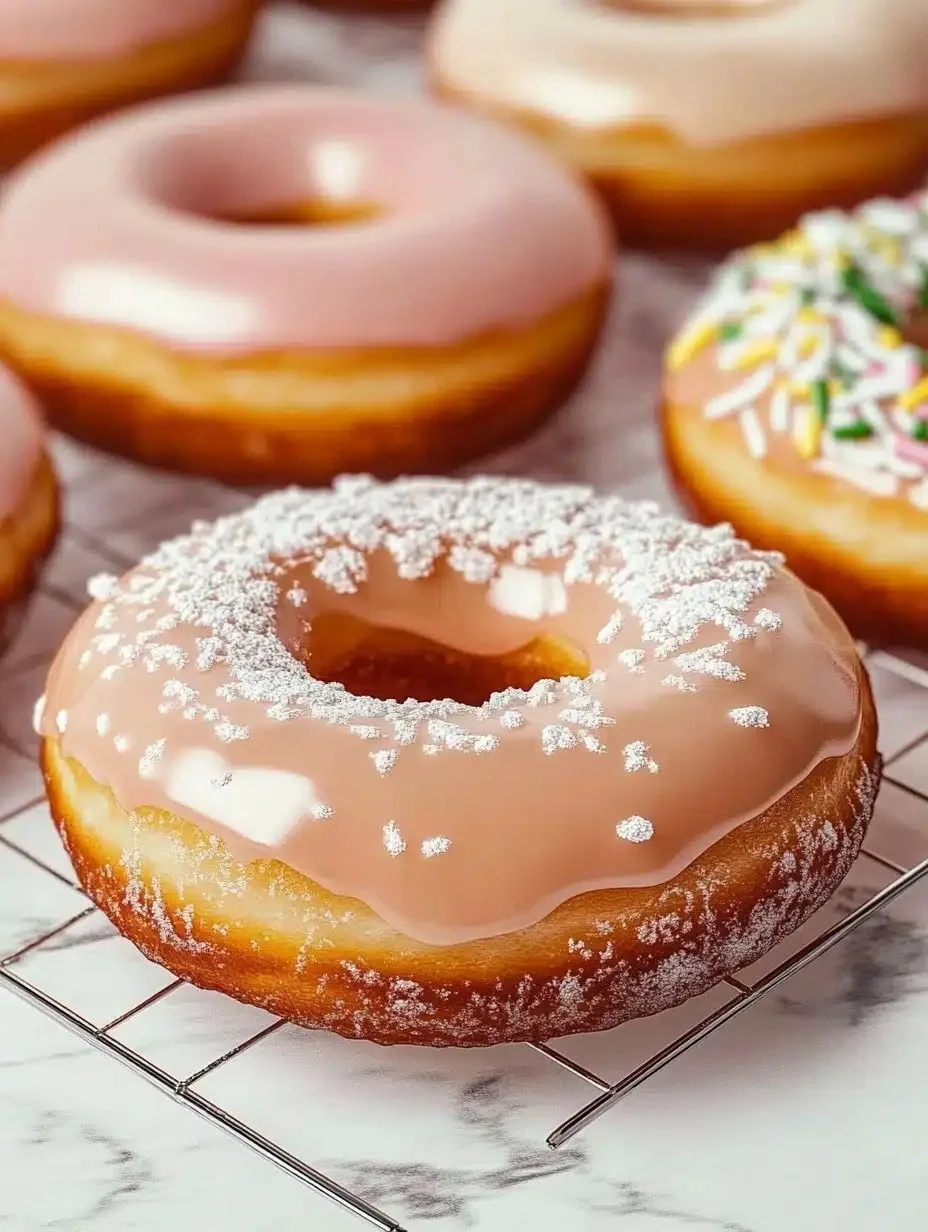
Glazed Donuts Recipe — Soft, Shiny Classic Treat
Warm, pillowy rings that glisten with a simple sugar glaze and smell like a fairground in the morning. These glazed donuts are light, slightly chewy, and have a thin, shiny coating that cracks just enough when you bite in. I developed this version after testing the dough eight times with different flours and rise times to find the best balance of chew and tenderness. The method borrows from classic bakery techniques but is tuned for a home kitchen so you can make consistent batches without pro equipment. Keep reading for exact measurements, precise temperatures, and the one trick that keeps the centers fluffy every time.
Why This Recipe Works
- A slightly sticky, high-hydration dough gives a light, open crumb while keeping enough structure to hold a ring shape.
- Short first rise, chill, then a short second rise improves flavor and control, while reducing overproofing risk.
- Frying at a steady 180°C (350°F) yields a golden crust and minimal oil absorption.
- The simple sugar glaze sets quickly and gives that glossy finish without becoming cloying.
- Using instant yeast and a warm dough temperature speeds proofing and makes the recipe reliable for home cooks.
Ingredients Breakdown
- All-purpose flour: 500 g (4 cups). Provides the structure; brands with moderate protein (10–11%) work best. Higher-protein flour makes chewier donuts.
- Granulated sugar: 100 g (½ cup). Sweetens the dough and feeds the yeast. Do not use powdered sugar in the dough.
- Instant yeast: 10 g (1 packet, 2¼ tsp). Instant yeast can be mixed directly into dry ingredients. If using active dry yeast, proof it first in warm liquid.
- Salt: 8 g (1½ tsp). Balances sweetness and strengthens gluten.
- Whole milk: 240 ml (1 cup), warmed to 38–43°C (100–110°F). Milk enriches the dough and adds tenderness. If your milk is hotter than 43°C (110°F), let it cool to avoid killing the yeast.
- Large egg: 50 g (1 egg). Adds color and structure.
- Unsalted butter: 75 g (5 tbsp), softened. Adds flavor and a tender crumb.
- Neutral oil for frying: enough to fill a pot 7–8 cm (3 inches) deep. Use canola or sunflower oil with a high smoke point.
- For the glaze: powdered sugar 400 g (3¼ cups), milk 120 ml (½ cup), vanilla extract 1 tsp. For a thinner glaze, add milk 1 tsp at a time.
Substitutions with impact warnings:
- You can replace whole milk with 240 ml (1 cup) of non-dairy milk, but the crust will brown slightly less.
- Use Diamond Crystal kosher salt for the listed amount; if using Morton, halve the quantity as Morton’s is denser.
- For a lower-sugar glaze, reduce powdered sugar by 50 g (¼ cup); the glaze will be thinner and less glossy.
Essential Equipment
- Heavy-bottomed pot or Dutch oven for frying (holds oil steadily and resists temperature swings). A 5–6 quart pot works well.
- Candy or deep-fry thermometer (reads to at least 200°C / 400°F). Accurate oil temperature is critical.
- Rolling pin and 7–8 cm (2¾–3 inch) round cutter, plus a 2–3 cm (1 inch) cutter for the hole. If you don’t have cutters, use a glass and a bottle cap.
- Baking sheet lined with parchment and a wire rack for cooling.
- Stand mixer with dough hook makes kneading easier; if you don’t have one, knead by hand for about 10 minutes.
- Slotted spoon or spider for removing donuts. If you lack one, use a metal spatula with care.
Step-by-Step Instructions
Prep Time: 30 minutes active
Cook Time: 20 minutes frying (per batch)
Inactive Time: 1 hour rise + 20–30 minutes chilling
Total Time: about 2½ hours
Servings: 12 donuts — Serving size: 1 donut
Step 1: Warm the milk and mix the wet ingredients
Warm 240 ml (1 cup) whole milk to 38–43°C (100–110°F). In a bowl, whisk the warm milk with 50 g (1) egg and 25 g (2 tbsp) of the sugar until smooth, about 30 seconds. This tempering keeps yeast active and evenly distributed.
Step 2: Combine dry ingredients
In the stand mixer bowl, add 500 g (4 cups) all-purpose flour, the remaining 75 g (⅓ cup) sugar, 10 g (1 packet; 2¼ tsp) instant yeast, and 8 g (1½ tsp) salt. Mix briefly to combine, about 10 seconds, so the salt and yeast are distributed.
Step 3: Form the dough
With the mixer on low, pour the milk-egg mixture into the flour. Mix for 1 minute until shaggy. Add 75 g (5 tbsp) softened unsalted butter and continue mixing 5–7 minutes on medium until the dough is smooth and slightly tacky. If kneading by hand, knead 8–10 minutes until elastic. Do not add extra flour unless the dough is sticking badly. The dough should be soft and slightly sticky.
Step 4: First rise and chill
Place the dough in a lightly oiled bowl, cover, and let rise at room temperature for 45 minutes until it has expanded but not doubled. Punch down gently, then cover and chill in the fridge for 20–30 minutes to firm; chilling makes rolling cleaner and controls overproofing.
Step 5: Roll and cut
Turn the dough onto a lightly floured surface. Roll to about 1.25 cm (½ inch) thickness. Use a 7–8 cm (2¾–3 inch) cutter to stamp rings, then a 2–3 cm (1 inch) cutter for the holes. Re-roll scraps once. Arrange donuts on a parchment-lined baking sheet, spaced 2.5 cm (1 inch) apart. Cover loosely with plastic wrap and let rise for 30–40 minutes until puffy and jiggly.
Step 6: Heat the oil and fry
Heat oil to 180°C (350°F). Fry 2–3 donuts at a time for 45–60 seconds per side until deep golden brown, flipping once. Maintain oil temperature between 175–185°C (347–365°F). Drain on a wire rack set over a baking sheet for 1–2 minutes.
Step 7: Glaze
Whisk 400 g (3¼ cups) powdered sugar with 120 ml (½ cup) milk and 1 tsp vanilla until smooth. For thicker glaze, add less milk. Dip each warm donut into the glaze and return to the rack to set for 2–3 minutes. Glaze sets quickly and forms a shiny finish.
Expert Tips & Pro Techniques
- Use a thermometer and watch oil temperature. If oil is too hot, donuts brown outside and stay raw inside; too cool and they soak up oil.
- Common mistake: overproofing the second rise. If donuts rise until very loose and collapse when touched, they will be flat after frying. Avoid by proofing in a slightly cool spot and checking early.
- Make-ahead: You can shape donuts, freeze them on a tray until firm, then bag and store for up to 1 month. Fry from frozen; add 15–20 seconds per side to frying time.
- Professional trick for even color: fry donuts a few seconds longer on the first side so the top sets and absorbs less oil when flipped.
- If your glaze is grainy, sift the powdered sugar before mixing. Warm the donuts slightly before glazing for the thin, mirror-like finish.
- If you prefer baked versions, see the linked recipes for inspiration on texture and timing; many techniques carry over from yeast donuts to baked variations.
Storage & Reheating
- Refrigerator: Store cooled glazed donuts in an airtight container at room temperature for up to 2 days. If your kitchen is warm, refrigerate up to 4 days, but expect the glaze to soften.
- Freezer: Freeze unfrosted donuts on a tray until solid, then transfer to a freezer bag for up to 1 month. Thaw at room temperature, then reheat briefly and glaze. Donuts glazed before freezing can become sticky; avoid freezing glazed if you want a shiny finish.
- Reheating: Reheat in a 175°C (350°F) oven for 6–8 minutes to restore a slight crisp to the exterior. Avoid microwaving — it makes the texture gummy.
Variations & Substitutions
- Baked glazed version: Replace frying with baking at 190°C (375°F) for 8–10 minutes, turning halfway. Dough will be slightly less rich; brush with melted butter before glazing for extra flavor.
- Apple-fritter inspired donut: Add 80 g (½ cup) finely chopped apple and 1 tsp cinnamon to the dough. Fry and finish with a spiced sugar glaze. For a playful twist, try our apple fritter waffle donuts adaptation.
- Gluten-free: Use a 1:1 gluten-free flour blend (such as Bob’s Red Mill 1:1) with ½ tsp xanthan gum. The dough will be stickier; chill longer and fry carefully. Texture will be denser.
- Egg-free: Replace the egg with 50 g (½ cup) unsweetened applesauce and reduce milk by 30 ml (2 tbsp). The crumb will be slightly more tender and less structured.
- Flavor glazes: Swap vanilla for 1 tsp almond extract or add 30 g (2 tbsp) cocoa powder to the glaze for chocolate glazed donuts. Keep glaze ratios the same.
Serving Suggestions & Pairings
- Pair with a strong coffee or espresso to cut the sweetness.
- Serve alongside fresh berries and whipped cream for a brunch spread.
- Top with flaky sea salt and a small smear of butter for an adult twist.
- For holiday treats, combine with our festive Christmas donuts ideas for seasonal decorating.
Nutrition Information
Per serving: 1 donut — Recipe yields 12 donuts.
- Calories: 320 kcal
- Total Fat: 14 g
- Saturated Fat: 7 g
- Cholesterol: 55 mg
- Sodium: 210 mg
- Total Carbohydrates: 44 g
- Dietary Fiber: 1 g
- Sugars: 20 g
- Protein: 5 g
Nutrition values are estimates. Actual values may vary based on specific ingredients and preparation methods.
Frequently Asked Questions
Q: Why did my donuts turn out greasy?
A: Greasy donuts are usually fried at too low a temperature. Heat oil to 180°C (350°F) and keep it steady. If donuts are overcrowded, the oil temperature drops and they absorb more oil.
Q: Can I make this without eggs?
A: Yes. Replace the egg with 50 g (½ cup) unsweetened applesauce and reduce milk by 30 ml (2 tbsp). The crumb will be softer and slightly less structured.
Q: Can I double this recipe?
A: Yes. You can double the dough ingredients. Work in batches for frying and proofing. If using a mixer, ensure the bowl is large enough to knead doubled dough.
Q: Can I prepare this the night before?
A: Yes. After shaping the donuts, cover and refrigerate overnight. Take them out 30–40 minutes before frying to warm slightly and finish the second rise.
Q: How long does this keep in the fridge?
A: Store in an airtight container for up to 4 days if refrigerated. For best texture, plan to eat within 2 days or freeze for longer storage.
Q: Can I bake these instead of frying?
A: Yes. Bake at 190°C (375°F) for 8–10 minutes rather than frying. Baked donuts will be less rich but still tasty; brush with melted butter before glazing for extra flavor.
Q: My donuts are dense. What went wrong?
A: Dense donuts may be underproofed or overworked. Ensure the dough has had time to relax and rise. Don’t add too much flour when rolling; a slightly sticky dough yields lighter results.
Conclusion
Thanks for reading — I hope this method makes your mornings a little sweeter. For a step-by-step photo tutorial and more glazed donut variations, see the detailed guide at Taste and Tell’s glazed donuts guide. If you want a video-backed recipe and a slightly different technique for shaping, check out Sally’s Baking’s Homemade Glazed Doughnuts.
Print
Glazed Donuts
- Total Time: 150 minutes
- Yield: 12 donuts 1x
- Diet: Vegetarian
Description
Warm, pillowy rings that glisten with a simple sugar glaze and smell like a fairground in the morning. These glazed donuts are light, slightly chewy, and have a thin, shiny coating.
Ingredients
- 500 g (4 cups) all-purpose flour
- 100 g (½ cup) granulated sugar
- 10 g (1 packet, 2¼ tsp) instant yeast
- 8 g (1½ tsp) salt
- 240 ml (1 cup) whole milk, warmed
- 1 large egg (50 g)
- 75 g (5 tbsp) unsalted butter, softened
- Neutral oil for frying
- For the glaze: 400 g (3¼ cups) powdered sugar, 120 ml (½ cup) milk, 1 tsp vanilla extract
Instructions
- Warm the milk and mix the wet ingredients: Whisk warm milk with egg and sugar until smooth.
- Combine dry ingredients: Mix flour, sugar, yeast, and salt in a stand mixer bowl.
- Form the dough: Add milk-egg mixture to flour and mix with butter until smooth and slightly tacky.
- First rise and chill: Allow the dough to rise at room temperature, then chill for 20–30 minutes.
- Roll and cut: Roll dough and cut into shapes, letting them rise until puffy.
- Heat the oil and fry: Fry donuts until golden brown, then drain on a wire rack.
- Glaze: Whisk together glaze ingredients, dip warm donuts in glaze, and return to rack to set.
Notes
Keep oil temperature steady while frying to avoid greasy donuts. Make-ahead options include shaping and freezing donuts.
- Prep Time: 30 minutes
- Cook Time: 20 minutes
- Category: Dessert
- Method: Frying
- Cuisine: American
Nutrition
- Serving Size: 1 donut
- Calories: 320
- Sugar: 20g
- Sodium: 210mg
- Fat: 14g
- Saturated Fat: 7g
- Unsaturated Fat: 7g
- Trans Fat: 0g
- Carbohydrates: 44g
- Fiber: 1g
- Protein: 5g
- Cholesterol: 55mg