
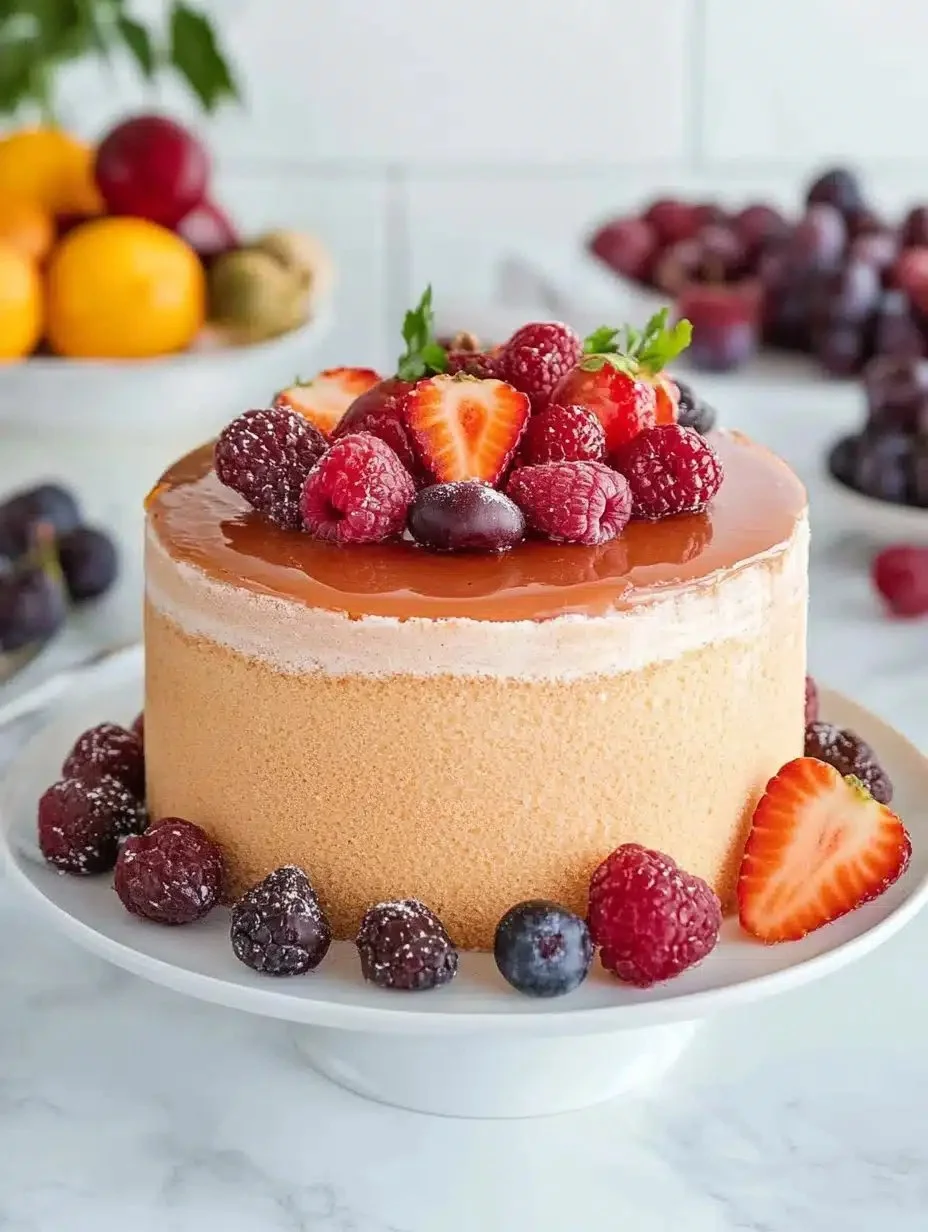
Sangria Soaked Sponge Cake — Try It for Summer Entertaining
Bright red wine, citrus and soft fruit perfume the kitchen as you slice this sangria soaked sponge cake, the syrup sinking into a feather-light crumb. I developed this version after testing the soak and bake method eight times, adjusting sugar, bake time, and fruit ratio until the cake stayed tender without collapsing. The result is a light, reliably moist sponge that tastes bright and grown-up, ideal for summer get-togethers or a weeknight showstopper. I learned the soak timing while staging at a bistro where wine-soaked desserts were a staple; that experience helped me strike the right balance so the cake never turns soggy. Read on for precise measurements, step-by-step timing, and tips to make this in advance for easy entertaining. If you love airy cakes with bright fruit, you might also enjoy our take on angel cake churro bites which use similar egg-whipping technique.
Why This Recipe Works
- Whipped whole eggs and sugar trap air, giving a light crumb that absorbs syrup without collapsing.
- A small amount of melted butter adds flavor and a tender crumb while keeping structure.
- Warm syrup soaks in more evenly; cooling the syrup prevents the crumb from becoming gummy.
- A short simmer of wine, juice, and fruit concentrates flavor without cooking away fresh fruit brightness.
- Chilling the cake for several hours lets the syrup redistribute and the flavors meld for a better bite.
Ingredients Breakdown
- Cake eggs: 6 large eggs (approx. 360 g with shells removed). Eggs provide structure and lift when whipped. Use room-temperature eggs for better volume.
- Granulated sugar (cake): 200 g (1 cup). Sugar stabilizes the whipped eggs and sweetens the crumb.
- All-purpose flour: 180 g (1 1/2 cups). Provides structure; measure by weight for accuracy.
- Cornstarch: 30 g (1/4 cup). Lightens the flour mix for a softer crumb.
- Salt: 1/4 tsp (1.5 g). Enhances flavor.
- Unsalted butter: 60 g (1/4 cup), melted and cooled. Adds richness; omit only if you want a very lean genoise.
- Vanilla: 1 tsp (5 ml) or scrape from one vanilla bean for depth.
- Sangria syrup (soak): Dry red wine (such as Tempranillo or Rioja) 360 ml (1 1/2 cups), orange juice 120 ml (1/2 cup), granulated sugar 100 g (1/2 cup), brandy or orange liqueur 30 ml (2 tbsp). These ingredients make a balanced soak that flavors without dissolving the cake.
- Fruit for the soak: 200 g (1 1/2 cups) mixed berries or chopped stone fruit (peaches, nectarines). The fruit steeps in the syrup and can be served over slices.
- Citrus zest: Zest of 1 orange and 1 lemon. Brightens the soak.
- Optional garnish: Fresh mint, whipped cream, or a dusting of powdered sugar.
Substitutions with impact warnings:
- You can use sparkling wine instead of still red wine for a lighter profile, but carbonation will dissipate—flavor is milder.
- For a lower-alcohol version, replace half the wine with brewed black tea; the result will be less boozy and slightly more tannic.
- Gluten-free: Use a 1:1 gluten-free flour blend and add ½ tsp xanthan gum; texture will be slightly denser.
Note on brands: Use a decent drinking red—no need for top-shelf wine. If you use a very tannic wine, reduce simmer time to avoid bitterness.
Essential Equipment
- 9-inch (23 cm) round cake pan with 2–3 inch (5–7 cm) sides. A 9-inch pan prevents overflow; do not use an 8-inch pan without reducing batter.
- Electric mixer (stand or handheld) capable of whipping eggs to ribbon stage. A whisk alone will be very slow and may underperform.
- Digital kitchen scale for accurate dry measures — weighing flour gives consistent results.
- Saucepan for the syrup and fruit, and a fine-mesh sieve if you prefer a clear soak.
- Skewer or fork to poke holes in the cake for even absorption.
- Cooling rack and shallow baking sheet to catch runoff when you pour the soak.
If you don’t have a 9-inch pan, a 9×2.5-inch springform works as a substitute; reduce bake time by 3–5 minutes and watch closely.
Step-by-Step Instructions
Prep 30 minutes | Cook 25 minutes | Inactive 8 hours (chill) | Total ~9 hours | Serves 10 (1 slice)
Step 1: Preheat and prepare the pan
Preheat the oven to 180°C (350°F). Lightly butter a 9-inch (23 cm) round pan and line the bottom with parchment. This prevents sticking and helps the cake release cleanly.
Step 2: Whip eggs and sugar
Place 6 large room-temperature eggs and 200 g (1 cup) granulated sugar into the bowl of a stand mixer. Whip on medium-high until the mixture triples in volume and falls in a thick ribbon when the beaters are lifted, about 8–10 minutes. This step creates the air that makes the sponge light—don’t rush it.
Step 3: Fold in dry ingredients
Sift together 180 g (1 1/2 cups) all-purpose flour, 30 g (1/4 cup) cornstarch, and 1/4 tsp salt. Gently fold 1/3 of the flour mixture into the whipped eggs with a spatula, then repeat in two more additions. Fold just until no dry streaks remain, about 20–30 strokes each addition. Do not overmix — stop as soon as no dry flour is visible.
Step 4: Add butter and bake
Fold in 60 g (1/4 cup) melted, cooled unsalted butter and 1 tsp vanilla gently to maintain volume. Pour the batter into the prepared pan and smooth the top. Bake at 180°C (350°F) for 22–26 minutes, or until the top is golden and a skewer inserted into the center comes out clean. The cake should spring back slightly to the touch.
Step 5: Make the sangria syrup
While the cake bakes, combine 360 ml (1 1/2 cups) dry red wine, 120 ml (1/2 cup) orange juice, 100 g (1/2 cup) sugar, orange and lemon zest, and 200 g (1 1/2 cups) chopped fruit in a saucepan. Simmer gently for 6–8 minutes until sugar dissolves and fruit softens; cool to warm (not hot). Stir in 30 ml (2 tbsp) brandy or orange liqueur. Simmer timing concentrates flavor without reducing to a syrupy mess.
Step 6: Soak the cake
Cool the cake in the pan for 10 minutes, then transfer to a wire rack over a baking sheet. Using a skewer, poke holes across the top about 1 inch (2.5 cm) apart. Pour the warm (not hot) syrup evenly over the cake, about 120–180 ml (1/2–3/4 cup) initially, then allow 5 minutes for absorption and pour more until the cake is moist but not swimming, about 240 ml (1 cup) total. Warm syrup absorbs best; cold syrup can pool.
Step 7: Chill and finish
Transfer the soaked cake to the refrigerator and chill for at least 8 hours or overnight. Chill time helps the flavors meld and the crumb set. Serve with the macerated fruit and optional whipped cream or mint.
Expert Tips & Pro Techniques
- Common mistake: pouring cold syrup on a warm cake causes pooling. Fix: pour warm syrup in stages and let each stage absorb.
- To test doneness without a thermometer, the top should be golden and the center springy; a skewer should come out clean. If using a thermometer, aim for 96°C (205°F) internal for a fully baked sponge.
- Make-ahead: You can bake the sponge and wrap it tightly, then freeze (unsoaked) for up to 1 month. Thaw overnight, then soak and chill 6–8 hours before serving.
- Professional trick for even soaking: place the cake on a slight incline and pour syrup at the highest point so gravity helps distribute liquid.
- For cleaner presentation, strain the syrup through a fine-mesh sieve to remove small fruit bits; reserve fruit to spoon over slices.
- If you want a lighter finish, swap the red wine for a rosé and reduce sugar by 25 g (2 tbsp).
I also like to keep a stash of recipes for parties in one place; if you need a sweet cookie to serve alongside, see this crumbly option for a crowd-pleaser: birthday cake cookies.
Storage & Reheating
- Refrigerator: Keep the cake in an airtight container or tightly wrapped in plastic wrap for up to 4 days. Store the fruit separately in a sealed container to prevent it from making the top mushy.
- Freezer: This cake freezes best unsoaked. Wrap the baked, fully cooled sponge tightly in plastic and then foil; freeze up to 1 month. Thaw overnight in the refrigerator before preparing the syrup and soaking.
- Reheating: Serve chilled or at room temperature. If you prefer warm slices, reheat in a 160°C (325°F) oven for 6–8 minutes just to take the chill off. Avoid microwaving — it will make the texture gummy.
Variations & Substitutions
- Sparkling Sangria version: Replace 120 ml (1/2 cup) of the wine with sparkling rosé. Keep sugar the same. Pour syrup chilled to preserve bubbles slightly; flavor will be lighter.
- Non-alcoholic: Replace the 360 ml (1 1/2 cups) wine with strong brewed black tea (cooled) and add 30 ml (2 tbsp) orange juice for brightness. The cake will keep and soak similarly.
- Gluten-free: Swap in a 1:1 gluten-free baking blend 180 g (1 1/2 cups) and add 1/2 tsp xanthan gum. Bake time may increase by 3–5 minutes.
- Citrus-forward: Use white wine and increase zest to 2 oranges and 1 lemon. Keep fruit to stone fruit and citrus segments.
- Single-layer shortcake: Bake in a 9×13-inch (23×33 cm) pan for a shallower cake; bake at 180°C (350°F) for 18–22 minutes and increase syrup by 120 ml (1/2 cup).
If you want a denser, bundt-style texture, see how a flavored bundt differs in crumb and technique by checking our apple bundt cake recipe.
Serving Suggestions & Pairings
- Serve slices with macerated fruit from the soak and a dollop of lightly sweetened whipped cream or crème fraîche.
- Wine pairing: A chilled Spanish rosé or a light Garnacha complements citrus and red fruit.
- For a brunch spread, pair with lemon-scented scones and espresso — similar bright notes bind the menu.
- Garnish with mint and a sprinkle of powdered sugar for a pretty finish. For a fruity twist, serve alongside a creamy custard; see our easy tangy pie for a complementary dessert: birthday cake pie.
Nutrition Information
Serving size: 1 slice (1 of 10 slices) | Servings: 10
- Calories: 330 kcal
- Total Fat: 10 g
- Saturated Fat: 5 g
- Cholesterol: 150 mg
- Sodium: 120 mg
- Total Carbohydrates: 52 g
- Dietary Fiber: 1.5 g
- Sugars: 32 g
- Protein: 6 g
Nutrition values are estimates. Actual values may vary based on specific ingredients and preparation methods.
Frequently Asked Questions
Q: Why did my cake turn out dry?
A: Most likely the eggs were under-whipped or you overbaked. Next time whip the eggs to a thick ribbon and check for doneness at 22 minutes. Also ensure you pour warm syrup in stages so the cake gets moisture.
Q: Can I make this without eggs?
A: Eggless sponges won’t have the same lift. You can try a dense butter cake base and soak it, but texture and flavor will change. Consider a vegan olive oil cake soaked similarly for better results.
Q: Can I double this recipe?
A: Yes, double the batter and use two 9-inch pans or a 12-inch pan. Bake times may increase by 5–10 minutes; monitor doneness with a skewer.
Q: Can I prepare this the night before?
A: Absolutely. After soaking, chill the cake overnight — flavors improve and the cake slices cleaner the next day.
Q: How long does this keep in the fridge?
A: Properly stored, 3–4 days. Keep fruit and cream toppings separate until serving to avoid sogginess.
Q: Can I use frozen fruit for the soak?
A: Yes. If using frozen fruit, thaw and drain excess liquid, then add to the simmer. Frozen fruit may make the syrup a touch cloudier but will still taste great.
Q: My cake absorbed too much liquid and is soggy — what went wrong?
A: You likely poured hot syrup or poured too much at once. Use warm—not hot—syrup, pour in stages, and allow the cake to absorb between pours.
Conclusion
If you want to see a visually similar approach with a video walkthrough, check this Summer Fruit Sangria Cake Recipe (video) – Tatyanas Everyday Food for helpful visuals. For another winery-style take on a fruity soak cake, read the Stone Hill Winery version for inspiration: Fruity Sangria Cake – Stone Hill Winery.
Enjoy the bright, wine-soaked slices — this cake is worth the wait.
Print
Sangria Soaked Sponge Cake
- Total Time: 540 minutes
- Yield: 10 servings 1x
- Diet: Vegetarian
Description
A light and moist sponge cake soaked in a flavorful sangria syrup, perfect for summer entertaining.
Ingredients
- 6 large eggs (approx. 360 g with shells removed)
- 200 g (1 cup) granulated sugar
- 180 g (1 1/2 cups) all-purpose flour
- 30 g (1/4 cup) cornstarch
- 1/4 tsp (1.5 g) salt
- 60 g (1/4 cup) unsalted butter, melted and cooled
- 1 tsp (5 ml) vanilla
- 360 ml (1 1/2 cups) dry red wine
- 120 ml (1/2 cup) orange juice
- 100 g (1/2 cup) granulated sugar (for syrup)
- 30 ml (2 tbsp) brandy or orange liqueur
- 200 g (1 1/2 cups) mixed berries or chopped stone fruit
- Zest of 1 orange and 1 lemon
- Fresh mint (optional garnish)
- Whipped cream (optional garnish)
- Powdered sugar (optional garnish)
Instructions
- Preheat the oven to 180°C (350°F). Lightly butter a 9-inch round cake pan and line the bottom with parchment.
- In the bowl of a stand mixer, whip 6 large eggs and 200 g granulated sugar on medium-high until three times in volume and forms a ribbon, about 8–10 minutes.
- Sift together 180 g all-purpose flour, 30 g cornstarch, and salt. Gently fold into the whipped egg mixture in three additions.
- Fold in 60 g melted butter and 1 tsp vanilla. Pour the batter into the prepared pan and smooth the top. Bake for 22–26 minutes until golden and a skewer comes out clean.
- While the cake bakes, prepare the sangria syrup by simmering 360 ml wine, 120 ml orange juice, 100 g sugar, zest, and chopped fruit in a saucepan for 6–8 minutes.
- Cool the cake for 10 minutes, then transfer to a wire rack. Poke holes in the top and pour warm syrup evenly over the cake, allowing it to absorb in stages.
- Refrigerate the soaked cake for at least 8 hours or overnight. Serve with macerated fruit and optional garnishes.
Notes
Ensure that the syrup is warm, not hot, to allow for proper absorption without sogginess.
- Prep Time: 30 minutes
- Cook Time: 25 minutes
- Category: Dessert
- Method: Baking
- Cuisine: Spanish
Nutrition
- Serving Size: 1 slice
- Calories: 330
- Sugar: 32g
- Sodium: 120mg
- Fat: 10g
- Saturated Fat: 5g
- Unsaturated Fat: 3g
- Trans Fat: 0g
- Carbohydrates: 52g
- Fiber: 1.5g
- Protein: 6g
- Cholesterol: 150mg