
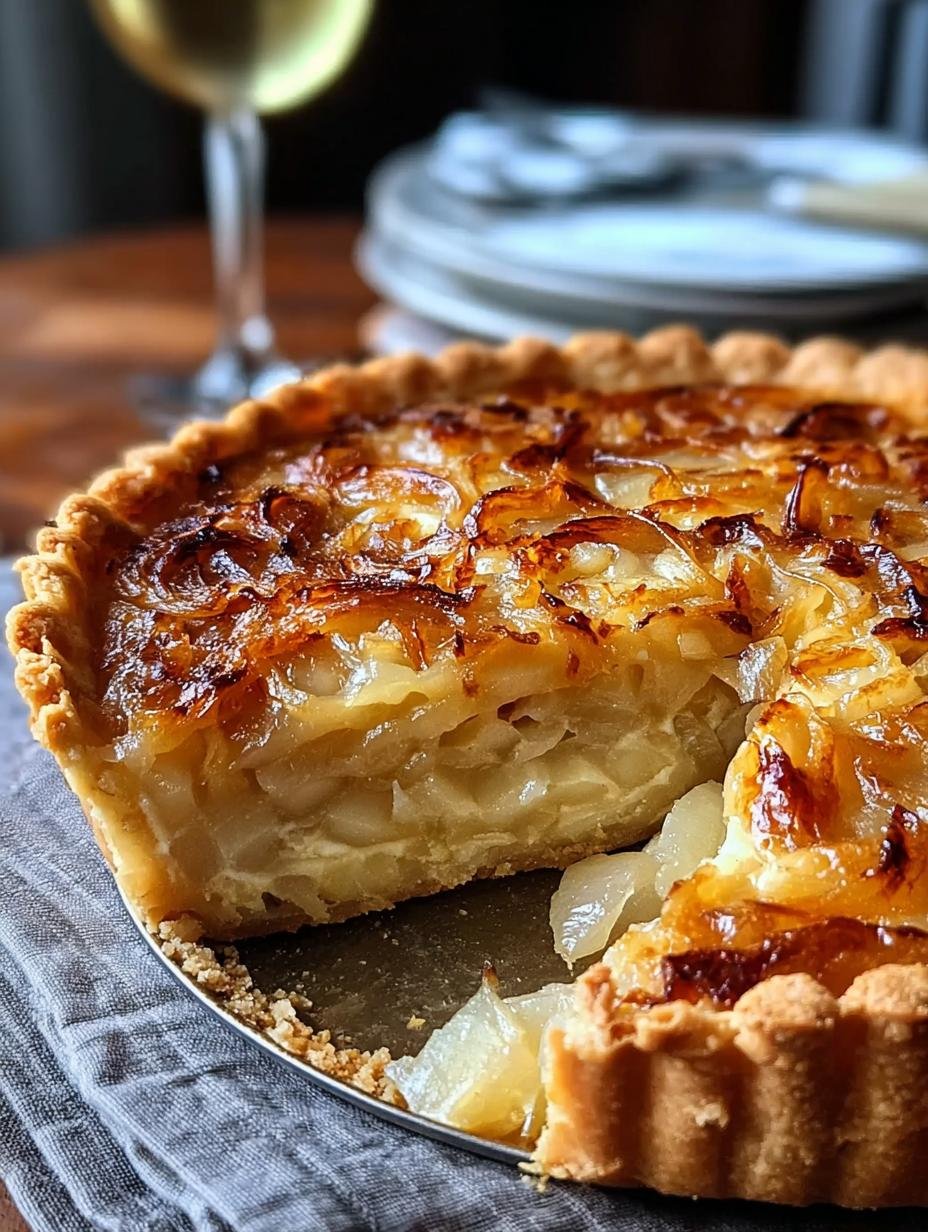
German Onion Tart has always felt like a warm hug on a plate to me. It’s a classic of German baking, and I remember the first time I smelled it baking in my Oma’s kitchen – the sweet, rich aroma of slowly cooked onions filled the entire house, promising something truly special. This isn’t just any tart; it’s a deeply satisfying, savory tart with a crust that’s perfectly flaky and a filling that’s unbelievably creamy. It’s rustic, comforting, and brings a wonderful taste of authentic German culinary heritage right to your table. Let’s get cooking!
Why You’ll Love This German Onion Tart
This Zwiebelkuchen is more than just a meal; it’s an experience! Here’s why it’s a must-try:
- The incredible depth of flavor from slow-cooked caramelized onions.
- A perfectly tender and flaky crust that melts in your mouth.
- It’s incredibly versatile, perfect for brunch, lunch, or a light dinner.
- The creamy custard filling makes every bite rich and satisfying.
- It’s a wonderful way to explore authentic German baking traditions.
- Simple to prepare, making it a great option for weeknights or entertaining.
- The aroma while it bakes is simply divine!
Ingredients for Authentic German Onion Tart
Gathering the right ingredients is key to achieving that classic Zwiebelkuchen flavor. Here’s what you’ll need for this delicious German onion tart:
- 250g all-purpose flour for the dough, providing structure
- 1 teaspoon sugar to feed the yeast
- ½ teaspoon salt for flavor
- 15g fresh yeast (or 1 packet dry yeast), the magic behind a light dough
- 125ml lukewarm milk to activate the yeast
- 1 tablespoon vegetable oil for a tender dough
- 500g yellow onions, finely sliced, the star of our savory tart
- 20g butter to gently cook the onions
- 2 large eggs to bind the custard filling
- 200g crème fraîche or sour cream for a rich, creamy texture
- Salt and pepper, to taste, to enhance all the flavors
- 1 pinch of nutmeg for a subtle warmth
- 1 tablespoon all-purpose flour to thicken the custard
How to Make Zwiebelkuchen (German Onion Tart)
- Step 1: Prepare the Dough. In a small bowl, dissolve the 15g fresh yeast (or 1 packet dry yeast) in 125ml lukewarm milk with the 1 teaspoon sugar. Let this mixture sit for about 10 minutes until it becomes frothy – that’s how you know your yeast is alive and ready! Meanwhile, in a large mixing bowl, combine the 250g all-purpose flour and ½ teaspoon salt. Create a well in the center and pour in the frothy yeast mixture along with the 1 tablespoon vegetable oil. Knead everything together until you have a soft, pliable dough. Place the dough back in the bowl, cover it with a damp cloth, and let it rise in a warm spot for about 1 hour, or until it has doubled in size. The kitchen will start smelling wonderfully yeasty!
- Step 2: Cook the Onion Filling. While the dough is rising, it’s time to focus on the star of our show: the onions. Melt the 20g butter in a large skillet over medium heat. Add your 500g yellow onions, finely sliced. Cook them gently, stirring frequently, for about 15–20 minutes. You’re looking for them to become wonderfully soft and translucent, not browned. This slow cooking coaxes out their natural sweetness, creating those delicious caramelized onions. Once they’re soft, remove the skillet from the heat and let the onions cool slightly.
- Step 3: Prepare the Custard. In a medium bowl, whisk together the 2 large eggs until they are well combined. Add the 200g crème fraîche or sour cream, the 1 tablespoon all-purpose flour, and season generously with salt and pepper to your taste. Don’t forget that crucial 1 pinch of nutmeg for that authentic warmth. Whisk everything until the mixture is wonderfully smooth and creamy. Gently fold in the slightly cooled, softened onions.
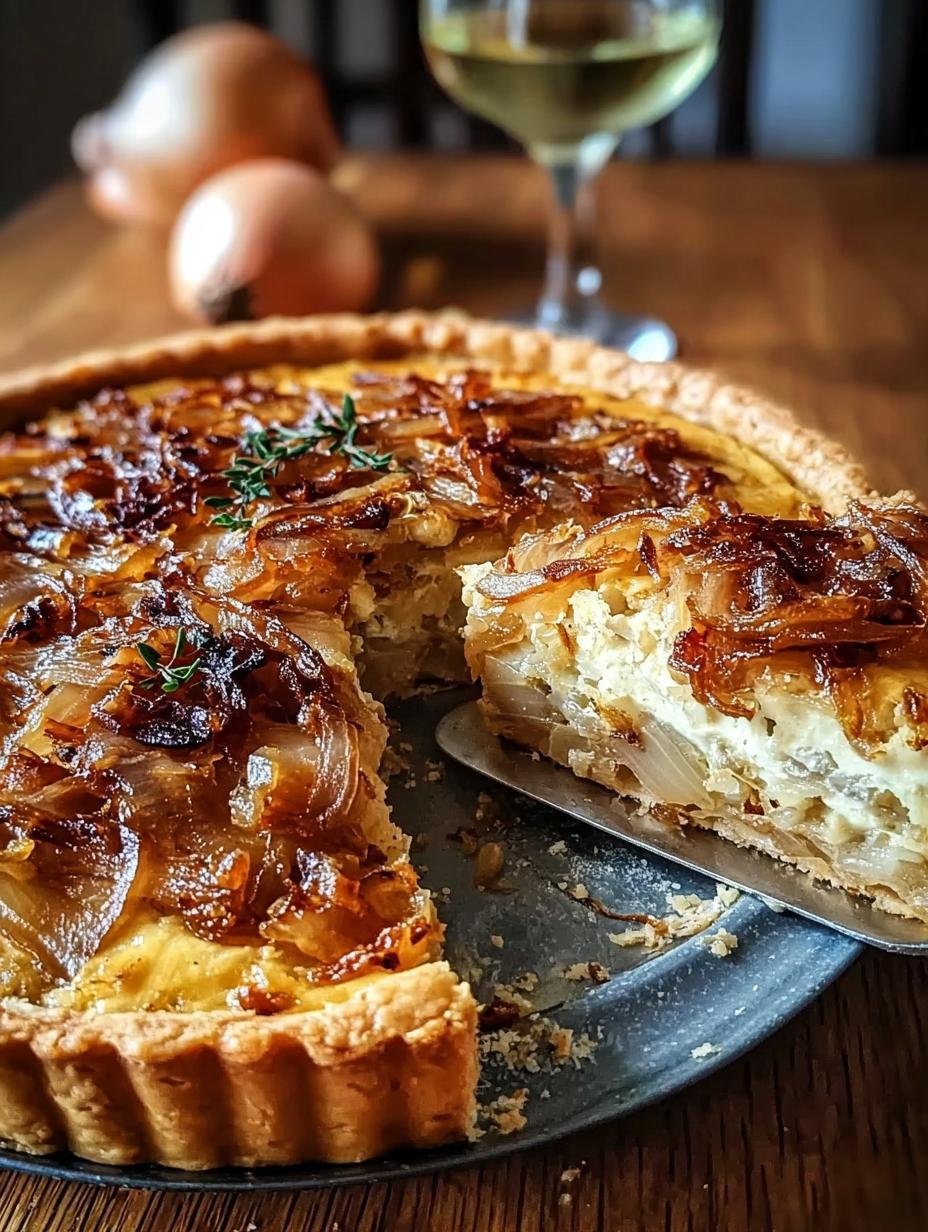
- Step 4: Assemble the Tart. Preheat your oven to 200°C (390°F). Once your dough has finished rising, punch it down gently. Roll out the dough on a lightly floured surface and carefully press it into your tart pan or springform pan. Make sure to bring the dough up the sides a bit to form a crust. Pour the onion and custard mixture evenly over the dough base. This is where your beautiful German Onion Tart starts to take shape!
- Step 5: Bake. Place the assembled tart into the preheated oven. Bake for approximately 35–40 minutes. You’ll know it’s ready when the crust is golden brown and the filling is set. It should have a lovely, slightly jiggly center that firms up as it cools. The aroma filling your kitchen from baking this German onion tart is simply irresistible. Let the tart rest for at least 10 minutes before slicing and serving.
Pro Tips for the Best German Onion Tart
I’ve learned a few tricks over the years that really elevate this classic Zwiebelkuchen. Follow these tips for a truly spectacular German Onion Tart:
- Don’t rush the onion cooking; low and slow is the key to sweetness. I’ve found that adding a tiny splash of water if they start to stick can help them steam beautifully.
- Ensure your dough is well-chilled before pressing into the pan. This helps prevent shrinkage and ensures a crispier crust.
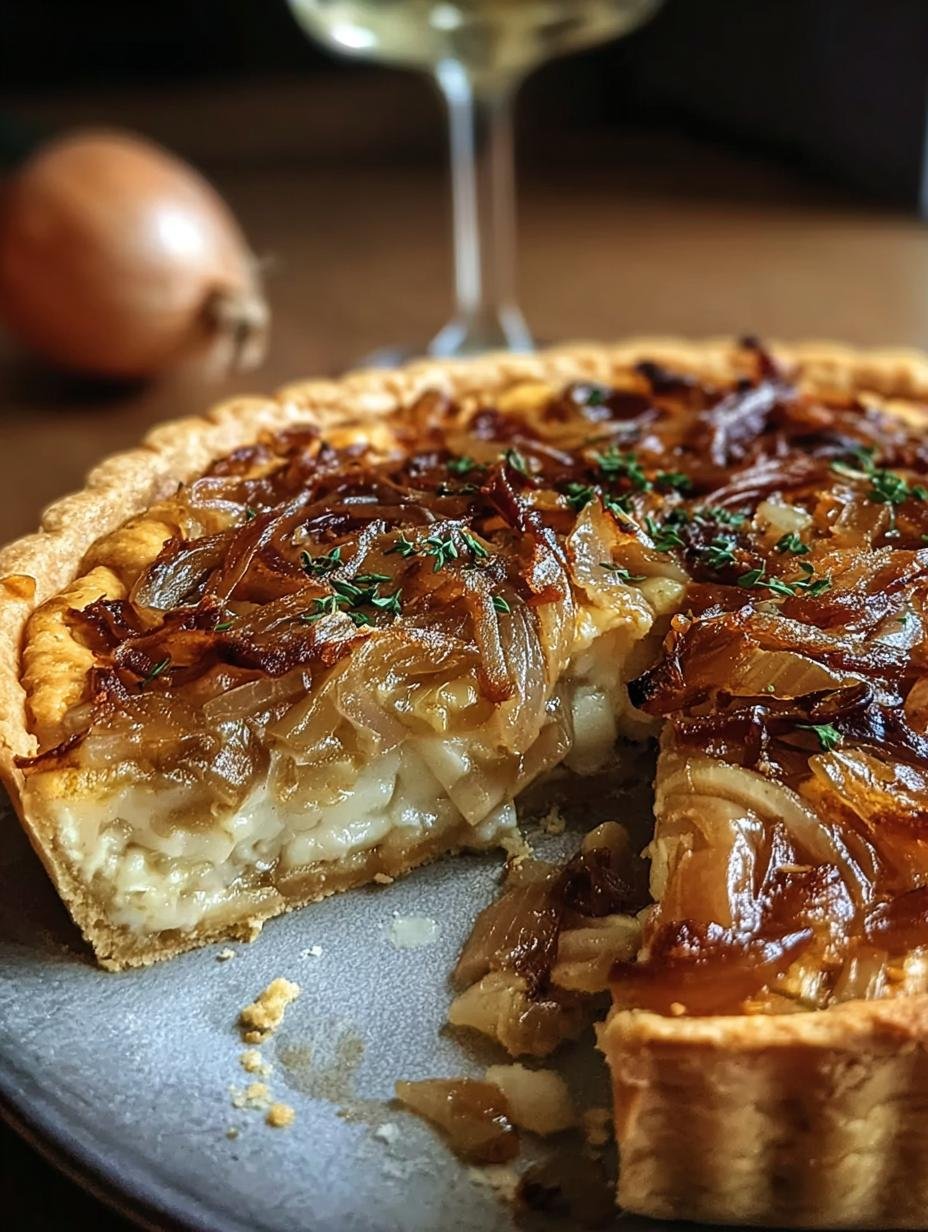
- Let the tart rest for at least 10-15 minutes after baking. This allows the custard to fully set and makes for cleaner slices.
What’s the secret to perfect caramelized onions for the tart?
The secret is patience! Cook the onions over low to medium-low heat, stirring occasionally, for at least 20-30 minutes. This gentle process draws out their natural sugars without burning, creating a deep, sweet flavor essential for a great savory tart. For more on caramelization, check out this guide to caramelizing onions.
Can I make the German Onion Tart dough ahead of time?
Yes, absolutely! You can prepare the dough up to 24 hours in advance. Cover it tightly and refrigerate. Let it sit at room temperature for about 30 minutes before rolling and assembling to make it more pliable. This is a great tip for busy cooks, similar to how you might prepare dough for other baked goods.
How do I avoid common mistakes with German Onion Tart?
A common pitfall is undercooking the onions, which leaves them harsh. Another is overmixing the dough, leading to a tough crust. Finally, make sure your oven is fully preheated to ensure the tart bakes evenly and the crust gets nice and golden.
Best Ways to Serve German Onion Tart
This versatile German Onion Tart is wonderful served warm or at room temperature. It pairs beautifully with a crisp, refreshing green salad dressed with a light vinaigrette, which offers a nice contrast to the richness of the tart. For a more substantial meal, consider serving it alongside some roasted potatoes or a side of sauerkraut, embracing the spirit of a traditional German recipe. It’s also fantastic as part of a brunch spread or a light supper with a glass of crisp white wine or a German beer. If you’re looking for other delightful drink pairings, you might enjoy these lemon-lime fizz recipes.
Nutrition Facts for German Onion Tart
Here’s a look at the estimated nutritional breakdown for this delicious German Onion Tart per serving:
- Calories: 365
- Fat: 18g
- Saturated Fat: 6g
- Protein: 28g
- Carbohydrates: 21g
- Fiber: 3g
- Sugar: 5g
- Sodium: 730mg
Nutritional values are estimates and may vary based on specific ingredients used.
How to Store and Reheat German Onion Tart
Properly storing your delicious German Onion Tart ensures you can enjoy this piece of German baking for days. Once it’s completely cooled (this is important to prevent sogginess!), wrap any leftovers tightly in plastic wrap or place them in an airtight container. It will stay fresh in the refrigerator for about 3 to 4 days. If you want to keep it even longer, this savory tart freezes beautifully. Wrap individual portions securely in plastic wrap, then in aluminum foil, and freeze for up to 3 months. Thaw overnight in the refrigerator before reheating.
To reheat, place a slice in a preheated oven at 350°F (175°C) for about 10-15 minutes, or until warmed through. This method helps maintain the flaky crust. You can also reheat it gently in a microwave for a quicker option, though the crust may be softer. For more baking tips, explore our about me page.
Frequently Asked Questions About German Onion Tart
Is German Onion Tart a sweet or savory dish?
This German Onion Tart is decidedly savory! While the onions caramelize and develop a natural sweetness, the overall profile is rich, herbaceous, and satisfyingly salty, making it a perfect main course or appetizer rather than a dessert. It’s a hearty classic of German baking.
Can I add bacon or other meats to the German Onion Tart?
Absolutely! While the traditional recipe focuses on onions, you can certainly add crispy cooked bacon bits or small cubes of ham to the onion mixture before adding the custard. This adds another layer of flavor and heartiness to your savory tart, making it even more substantial. Consider pairing it with a refreshing drink like watermelon lemonade.
What’s the best way to slice a German Onion Tart?
For the cleanest slices, always let your German Onion Tart cool for at least 10-15 minutes after it comes out of the oven. Use a sharp knife and a gentle sawing motion. If the tart is still warm, the custard might be a bit soft, but it will still taste delicious!
Where does German Onion Tart come from?
German Onion Tart, known as Zwiebelkuchen, is a beloved dish originating from the southern regions of Germany, particularly Alsace and the Rhine-Pfalz areas. It’s often enjoyed during autumn harvest festivals, especially around the wine harvest season, and is a staple of traditional German baking.
Variations of German Onion Tart You Can Try
While the classic Zwiebelkuchen is divine, don’t be afraid to explore some delicious variations of this traditional German recipe! These twists can cater to different tastes and dietary needs, making this savory tart even more adaptable.
- Lorraine-Style: Add crispy cooked bacon or lardons to the onion mixture for a richer, heartier flavor profile.
- Vegetarian Deluxe: Incorporate finely chopped mushrooms or leeks along with the onions for added depth and texture.
- Gluten-Free Crust: Experiment with a crust made from almond flour or a mixture of gluten-free baking flours for a dietary-friendly option.
- Herb Infusion: Mix fresh herbs like chives, parsley, or thyme into the custard or sprinkle them over the top before baking for an aromatic boost.

Perfect German Onion Tart: 1 Amazing Recipe
- Total Time: 2 hours
- Yield: 4 – 6 servings 1x
- Diet: Vegetarian
Description
A rustic, savory German Onion Tart (Zwiebelkuchen) with a flaky crust, sweet caramelized onions, and a creamy custard filling. This traditional German bake is perfect for brunch, lunch, or a light dinner, offering a taste of authentic German culinary heritage.
Ingredients
- For the Dough:
- 250g all-purpose flour
- 1 teaspoon sugar
- ½ teaspoon salt
- 15g fresh yeast (or 1 packet dry yeast)
- 125ml lukewarm milk
- 1 tablespoon vegetable oil
- For the Filling:
- 500g yellow onions, finely sliced
- 20g butter
- 2 eggs
- 200g crème fraîche or sour cream
- Salt and pepper, to taste
- 1 pinch of nutmeg
- 1 tablespoon all-purpose flour
Instructions
- Prepare the Dough: Dissolve yeast in lukewarm milk with sugar. Let sit for 10 minutes until frothy. Combine flour and salt in a mixing bowl. Add yeast mixture and oil, knead into a soft dough. Cover and let rise in a warm place for about 1 hour, or until doubled in size.
- Cook the Onion Filling: Melt butter in a large skillet over medium heat. Add sliced onions and cook gently for 15–20 minutes until soft and translucent. Stir frequently. Let cool slightly.
- Prepare the Custard: Whisk together eggs, crème fraîche, flour, nutmeg, salt, and pepper until smooth. Fold in the cooled onions.
- Assemble the Tart: Preheat oven to 200°C (390°F). Roll out dough and press into a tart or springform pan. Pour onion mixture evenly on top.
- Bake: Bake for 35–40 minutes, until golden and set. Let rest before slicing and serving.
Notes
- Slice onions finely for even cooking.
- Let onions cool before mixing with custard to prevent curdling.
- Use fresh yeast for authentic flavor, dry yeast is an acceptable substitute.
- Do not overbake; the filling should be set but moist.
- This German Onion Tart is already vegetarian.
- For a lactose-free version, use lactose-free cream or plant-based alternatives.
- A low-carb crust can be made with almond flour or a cauliflower crust.
- Prep Time: 20 minutes
- Cook Time: 1 hour 40 minutes
- Category: Dinner
- Method: One-Pot / Braised
- Cuisine: German
Nutrition
- Serving Size: 1 bowl
- Calories: 365
- Sugar: 5g
- Sodium: 730mg
- Fat: 18g
- Saturated Fat: 6g
- Unsaturated Fat: 9g
- Trans Fat: 0g
- Carbohydrates: 21g
- Fiber: 3g
- Protein: 28g
- Cholesterol: 85mg